Read More
Fire Services Department (FSD) officials testified Wednesday that the handling of flammable construction materials—such as styrofoam and scaffolding nets, which are believed to have caused the Wang Fuk Court fire—falls outside their department's responsibility.
ADVERTISEMENT
SCROLL TO CONTINUE WITH CONTENT
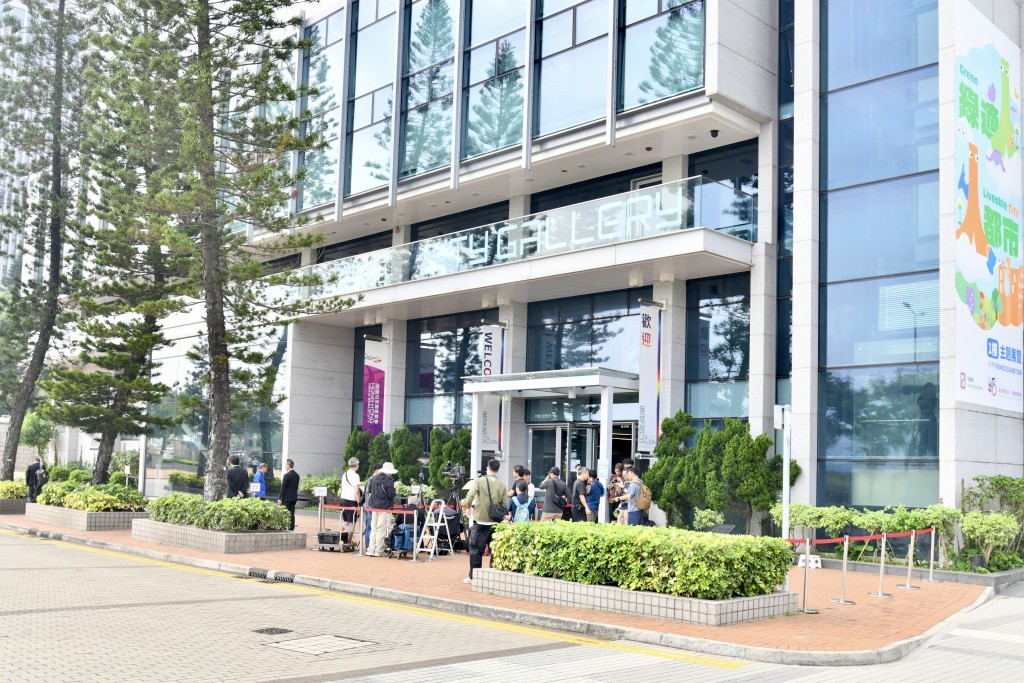
The statements were made during the 17th evidential hearing held by the Independent Committee investigating the fire at Wang Fuk Court in Tai Po.
The hearing summoned four FSD representatives, focusing heavily on the division of responsibilities for building fire safety.
Testifying first, Assistant Director (Fire Safety) Michael Yung Kam-hung faced questioning regarding which department was ultimately responsible for addressing various complaints made by Wang Fuk Court residents before the fire.
Yung stated that complaints regarding styrofoam, scaffolding nets, and staircase access openings at the site should be managed by the Housing Bureau's Independent Checking Unit (ICU).
Complaints regarding workers observed smoking on the construction site are the responsibility of the Labour Department, he added.
According to Yung, passive fire protection installations, which include fire escape staircases and refuge floors, are considered part of the building's structural integrity and fall under the jurisdiction of the Buildings Department (BD) and the ICU.
Active systems, such as fire alarms, automatic sprinklers, and hose reels, are under the FSD's supervision.
When the committee's Senior Counsel, Victor Dawes, further asked whether the FSD had a duty to advise on exterior walls or construction materials that pose an obvious fire risk, Yung stated that passive installations are more appropriately handled by the relevant dedicated departments.
"If citizens see a large accumulation of flammable materials during estate maintenance, should that also be the responsibility of the ICU and BD?" Dawes asked. Yung agreed, adding that the quantity and placement of flammable materials should be handled by the ICU and BD.
He clarified that the FSD only steps in if flammable materials physically obstruct escape routes and claimed that premature advice from the FSD might cause the engineering project to halt.
"We would consider referring the case back to other dedicated departments to handle," he said.
Yung also agreed that future fire hazard complaints involving Home Ownership Scheme (HOS) estates should be directed to the ICU.
"The FSD fully understands that citizens will naturally contact the FSD first when they spot a fire hazard," Yung acknowledged. "We will actively review the existing referral mechanism."
Yung also agreed with Judge David Lok Kai-hong regarding the room for improvement in communication between the FSD, BD, and Housing Bureau. He stated that the FSD is currently in close discussions with the BD to refine the division of labor and overhaul the referral process.
In response, a spokesman noted that FSD has optimized its referral mechanism for misdirected cases starting in April, strengthening the referral, follow-up, and monitoring of complaints and inquiries related to fire safety in buildings to ensure that public complaints and inquiries regarding building fire safety are properly handled.
He said under the new mechanism, any cases involving fire safety in buildings that fall under the jurisdiction of other government departments, the FSD will proactively refer them to the most appropriate department for follow-up with the complainant's consent.
If the relevant department has objections to the FSD's referral, the case will be escalated to the deputy director of Fire Services for cross-departmental coordination with senior management of the relevant department. Follow-up work will be carried out according to the coordination results.
(Updated at 11.08pm)