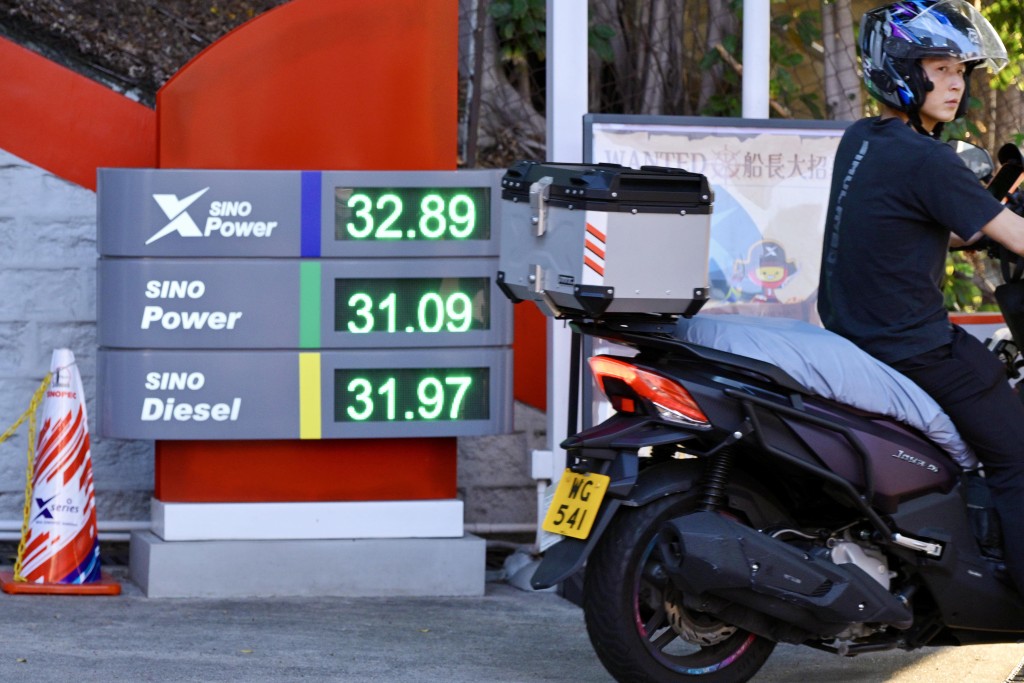
Politicians are urging the government to speed up the release of fuel subsidies and strengthen monitoring of pricing practices after the National Development and Reform Commission lowered mainland retail prices for gasoline and diesel on Wednesday, cutting 555 yuan (HK$637) and 530 yuan per ton, respectively.
This is the eighth price adjustment window this year and the first price cut since the beginning of the year.
Earlier, the HKSAR government introduced short-term targeted measures to address rising fuel prices affected by the Middle East tensions, including reducing tunnel tolls by 50 percent for all commercial vehicles and providing a two-month subsidy of HK$3 per liter of diesel for commercial vehicles and vessels.
However, on whether Hong Kong can follow the mainland’s example, some politicians believe the government has limited room to regulate market prices and cannot directly intervene in pricing in the same way as mainland authorities.
Jeffrey Lam Kin-fung, a member of the Hong Kong General Chamber of Commerce Chamber Council and the Executive Council, said Hong Kong’s fuel supply is largely determined by import prices, making it difficult to directly compare with the mainland.
He added that the government should continue monitoring whether oil companies raise prices quickly but cut prices slowly, and should improve transparency.
“If you only start lowering fuel prices four days after other regions have already done so, that is a problem,” he said. Lam also noted that the government’s weekly updates on fuel-price changes are helpful for public monitoring.
Lawmaker Adrian Pedro Ho King-hong noted that the HK$3 diesel subsidy was already a major market intervention under limited resources and urged faster disbursement.
Economist Simon Lee Siu-po added that Hong Kong’s reliance on imports makes it difficult to intervene directly in pricing, unlike the mainland with its refineries, and suggested targeted subsidies for bus and minibus operators to ease pressure.