Read More
Hong Kong Customs has arrested seven individuals and seized approximately HK$500,000 worth of equipment in a month-long operation targeting the sale of illegal karaoke players and the use of pirated songs in party rooms and bars.
ADVERTISEMENT
SCROLL TO CONTINUE WITH CONTENT
A territory-wide anti-piracy operation, codenamed "Magpie," has resulted in the arrest of five men and two women, aged 26 to 69, for suspected violations of the Copyright Ordinance.
The operation, which ran from March 16 to April 15, is part of an ongoing effort by Hong Kong Customs to protect intellectual property rights.
The crackdown targeted businesses providing customers with karaoke songs without proper licensing, as well as online sellers of karaoke machines pre-loaded with infringing content.
Customs officers, aided by big-data analysis and intelligence from copyright holders, raided 14 party rooms and a bar across various districts, including Central, Mong Kok, Kwun Tong, and Tsuen Wan.
Additionally, residential units in Choi Hung and Yau Tong, belonging to two online sellers, were searched.
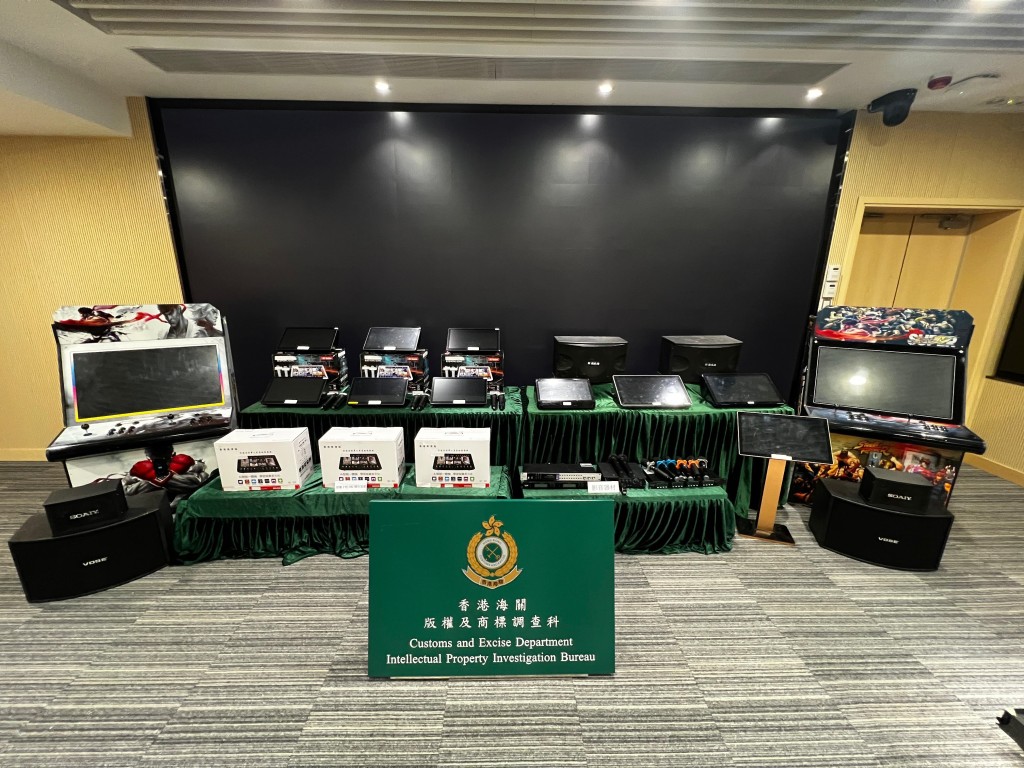
In total, authorities seized 28 karaoke players containing suspected infringing songs, four gaming consoles with pirated video games, and a variety of other audio and video equipment. The total estimated market value of the confiscated goods is around HK$500,000.
Among those arrested were a person-in-charge of a business, four staff members, and two online sellers.
All have been released on bail as the investigation continues, with customs not ruling out the possibility of further arrests.
Under Hong Kong's Copyright Ordinance, any individual who possesses infringing copies of a copyrighted work for business purposes without the copyright owner's license commits a criminal offense.
The penalties upon conviction are severe, with a maximum fine of HK$50,000 per infringing copy and up to four years in prison. The same penalties apply to those who sell or possess infringing copies with the intent to sell.
Customs has reiterated its commitment to combating intellectual property theft and reminds business operators to ensure they are properly licensed for any music or visual recordings used in their establishments.