





Read More










Hong Kong a conduit for mainland, French firms
26-05-2026 06:00 HKT

Trump in excellent health with leg swelling, hand bruising, doctor says
30-05-2026 15:29 HKT


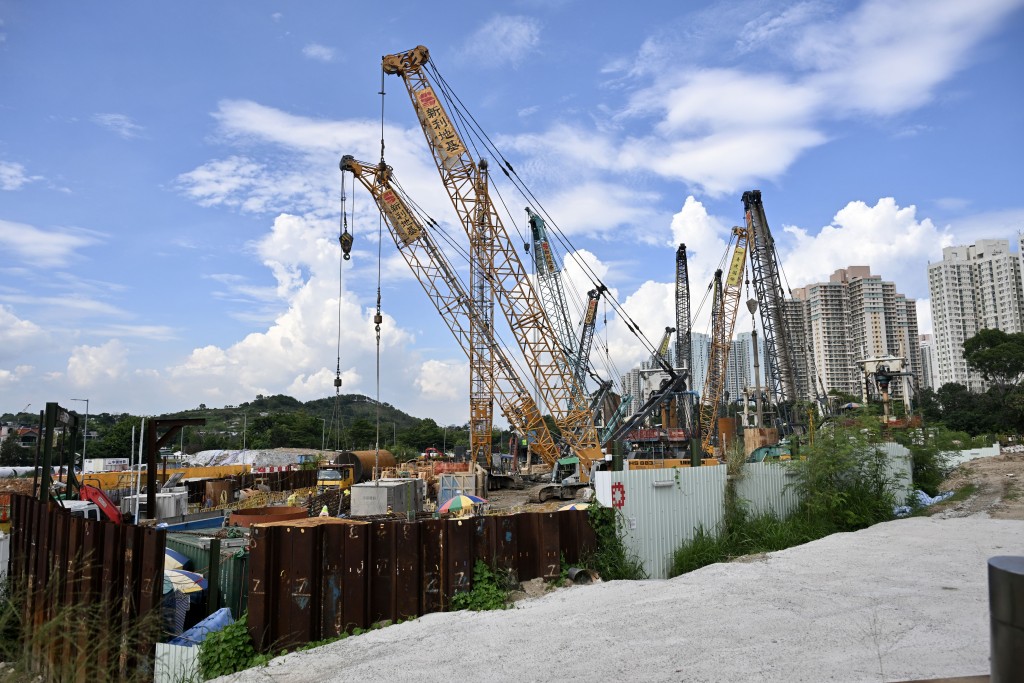
Hong Kong's construction industry is poised for steady growth, with total project output expected to reach as high as HK$360 billion by the 2030/31 financial year, according to a new forecast. However, the industry faces significant labor shortages in specialized fields like machinery operation and electrical and mechanical installation, prompting new government and industry initiatives to boost training and technology adoption.
The Construction Industry Council (CIC) yesterday released its "Construction Expenditure Forecast" and "Construction Manpower Forecast," painting a robust long-term picture for the sector.
The total value of construction work is projected to steadily increase, reaching an estimated HK$305 billion to HK$360 billion by the 2030/31 fiscal year.
In response, a spokesperson for the Development Bureau affirmed the government's commitment to collaborating with the CIC to manage the industry's manpower needs and promote professional development through a multi-pronged strategy.
While the overall outlook is positive, the industry is facing a shifting labor landscape. A surge in major infrastructure projects, including land formation for the Northern Metropolis and new railway lines, alongside the growing adoption of advanced technologies like Modular Integrated Construction (MiC), is creating significant manpower gaps in specific trades.
The most acute shortages are expected for machinery operators, riggers, and trades related to electrical and mechanical (E&M) installation.
Conversely, labor tightness in other areas, such as steel-fixing, formwork, concreting, and plastering, has recently eased.
Despite these shifts, the overall demand for a skilled workforce is expected to remain high over the next five years as total construction output continues to climb.
The Development Bureau stated it will use the CIC's forecast data to refine its strategies, which prioritize the employment of local workers. The government will continue to support local training in partnership with the CIC and push for wider technology adoption to enhance overall productivity.
The existing labor importation scheme will be used as a supplementary measure to dynamically address manpower needs as they arise.
The government expects the CIC to build on its efforts by utilizing government funding and its own resources to help workers upskill and transition into new roles through training subsidies and employment services, emphasizing multi-skilled training.
To cultivate professional talent, the latest government budget proposed a HK$65 million allocation to increase the number of on-the-job training positions for graduates in relevant government departments to 260 by 2026.
Furthermore, with government support, the CIC will contribute an additional HK$180 million in the 2026-27 fiscal year to subsidize in-service training for a total of 3,000 graduates in the construction sector.
The government also reiterated its support for adopting advanced construction technology to boost productivity. Having previously injected HK$2.2 billion into the Construction Innovation and Technology Fund (CITF) in 2018 and 2022, the government has proposed a further HK$1 billion injection in this year's budget, which will be supplemented by HK$400 million from the CIC.
This combined HK$1.4 billion will continue to support the industry's broader use of innovative methods like MiC, Mechanical, Electrical and Plumbing (MEP) integration, artificial intelligence, and construction robotics.