Read More












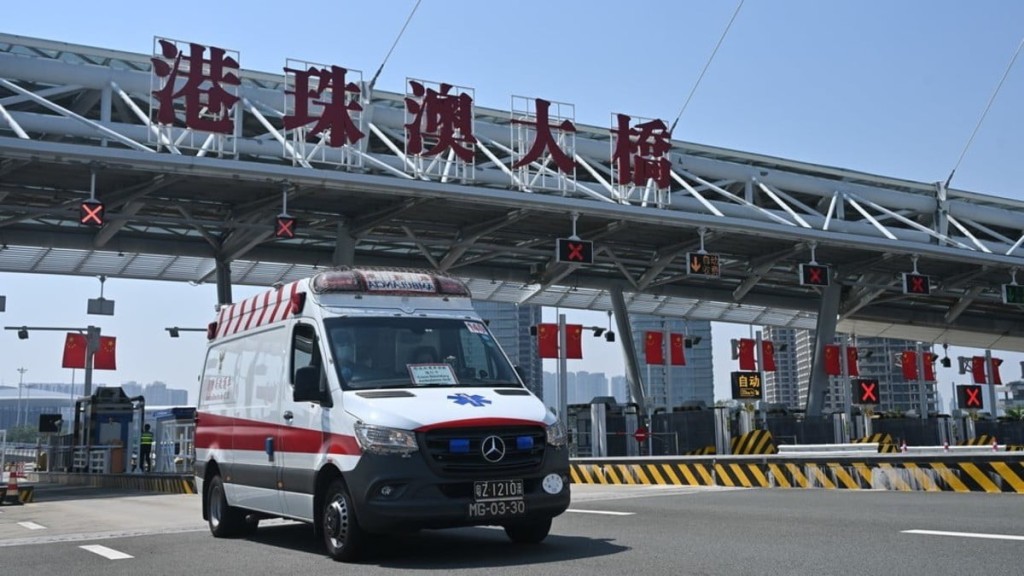
The government announced on Friday that it is rolling out a key upgrade to its Pilot Scheme for Direct Cross-boundary Ambulance Transfer in the Greater Bay Area this Sunday, linking direct patient handoffs to major facilities in Zhuhai and Nansha to slash border delays and bolster seamless medical care across the bustling Guangdong-Hong Kong-Macao region.
The expansion builds on Chief Executive John Lee Ka-chiu's September policy blueprint, which pledged phased growth in these life-saving shuttles, including bidirectional flows between cities.
To iron out kinks, Hong Kong teamed up with Zhuhai and Guangzhou's Nansha officials for mock runs in September and October, simulating patient moves that went off without major hitches.
Starting November 9, ambulances can now zip straight from Hong Kong public hospitals to Zhuhai People's Hospital and the Nansha branch of Sun Yat-sen University's First Affiliated Hospital, easing the strain on cross-border commuters who juggle work and home in the GBA's interconnected hubs.
The move was a game-changer for point-to-point patient hauls, meeting the surge in demand from residents zipping between cities for daily life.
The web of national bodies—from the State Council's Hong Kong and Macao Affairs Office to the National Health Commission and Customs—is credited for their pivotal backing, alongside Guangdong province's proactive coordination and local HKSAR agencies like police, customs, immigration, and the Hospital Authority for their tight-knit teamwork.
Launched November 30 last year, the scheme kicked off with one-way transfers from Shenzhen's University of Hong Kong-Shenzhen Hospital and Macao's Conde S. Januario Hospital to Hong Kong sites.
By early November, it had safely ferried 17 stable-but-immobile patients—11 from Shenzhen and six from Macao—bypassing checkpoint swaps that could spike risks.
Medical professionals deemed them fit for ongoing inpatient care but too frail for standard border crossings, proving the setup's edge in time-sensitive scenarios.
With operations humming smoothly, the pilot gets a one-year extension to November 29, 2026.
Guangdong, Hong Kong, and Macao authorities plan ongoing tweaks, prioritizing patient safety and needs, while eyeing a full two-way service rollout by early next year to deepen the bay's healthcare weave.