Read More














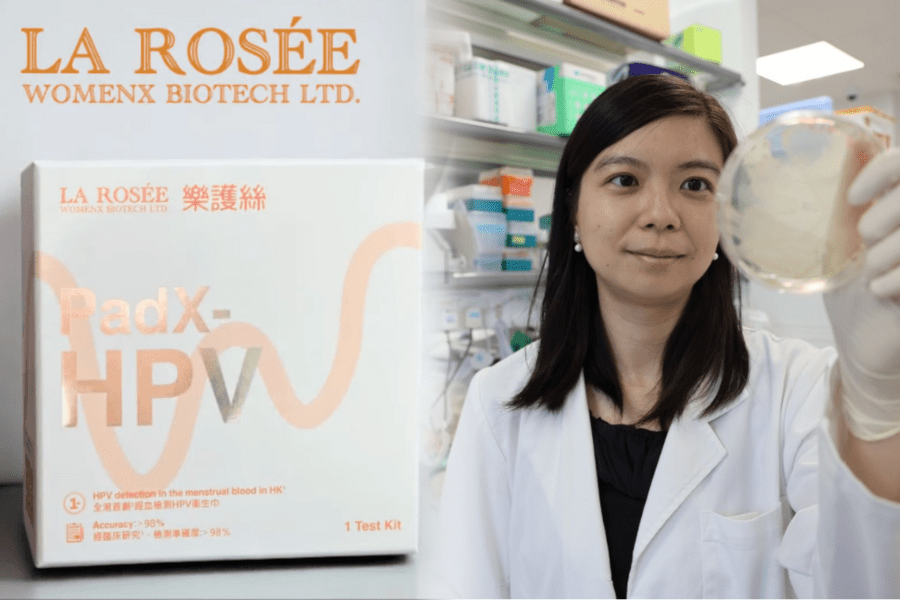
Amid controversy over a sanitary pad that tests for HPV using menstrual blood, WomenX Biotech founder and CEO Choi Pui-wah said Tuesday that detailed clinical data has been shared with health officials to prove the product’s reliability.
The statement follows a Department of Health warning that menstrual blood screening lacks sufficient evidence for accurate cervical cancer detection. The product in question is La Rosee’s PadX-HPV, launched in January and claiming 99.2 percent accuracy based on a study of 119 women.
Choi defended the sample size, noting similar global studies used between a dozen and over 500 participants. She said test validation depends on institutional standards and risk levels, not just numbers.
She cited a 2022 Stanford study using a custom pad on 106 women, achieving 93.5 percent agreement with clinic results. Though submitted to the U.S. FDA, the product was never launched—a decision Choi attributed to business factors, not science.
After excluding six unclear samples, PadX-HPV showed 96.3 percent sensitivity, 100 percent specificity, and 99.2 percent accuracy. About 20 percent of users tested positive, with follow-up confirming five of six questionable results and one false positive.
Over half the participants had never been screened before, underscoring the pad’s role in reaching underserved women. Choi stressed it is not a replacement for clinical testing—positive results prompt clinic visits.
The study passed ethical review by the Hong Kong Science and Technology Park’s Clinical Committee in February 2023. Health officials contacted Choi last week, but she was overseas; she plans to provide more data soon.
Despite the January launch, the department’s delayed response reflects its own considerations, Choi said, adding she respects Manning’s decision to pull the product while committing to work with authorities to boost women’s health access.