Read More
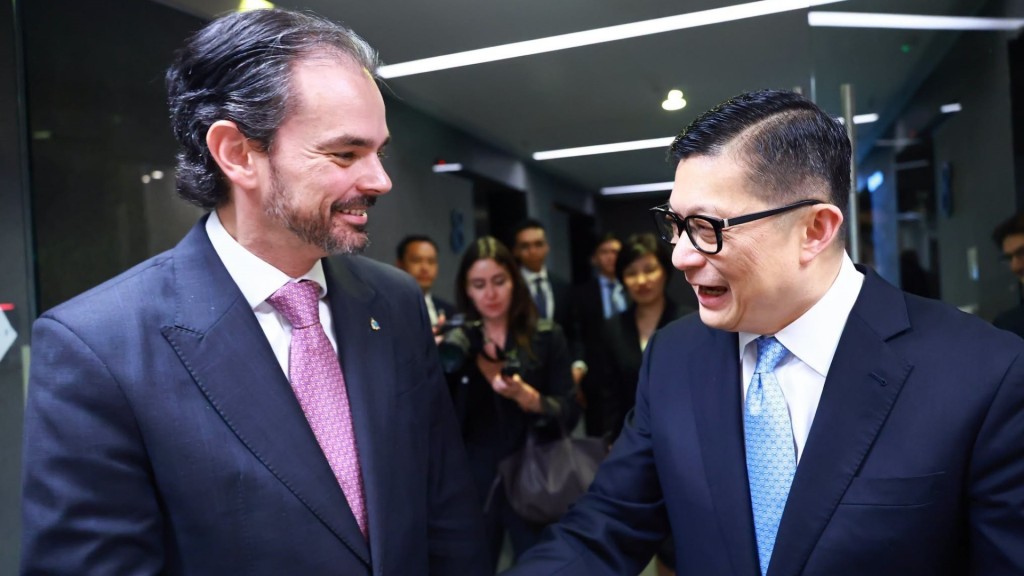








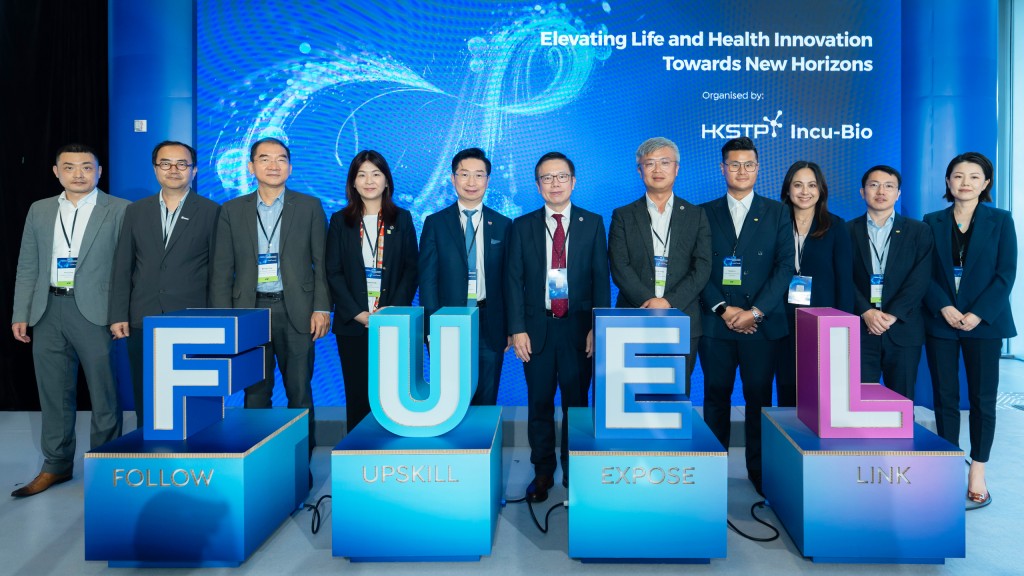
Hong Kong is stepping up its bid to become Asia’s next life and health innovation hub, betting on biotech as a new growth pillar. Backed by rising investment and Greater Bay Area collaboration, the city is moving to close the gap between research and commercialisation.
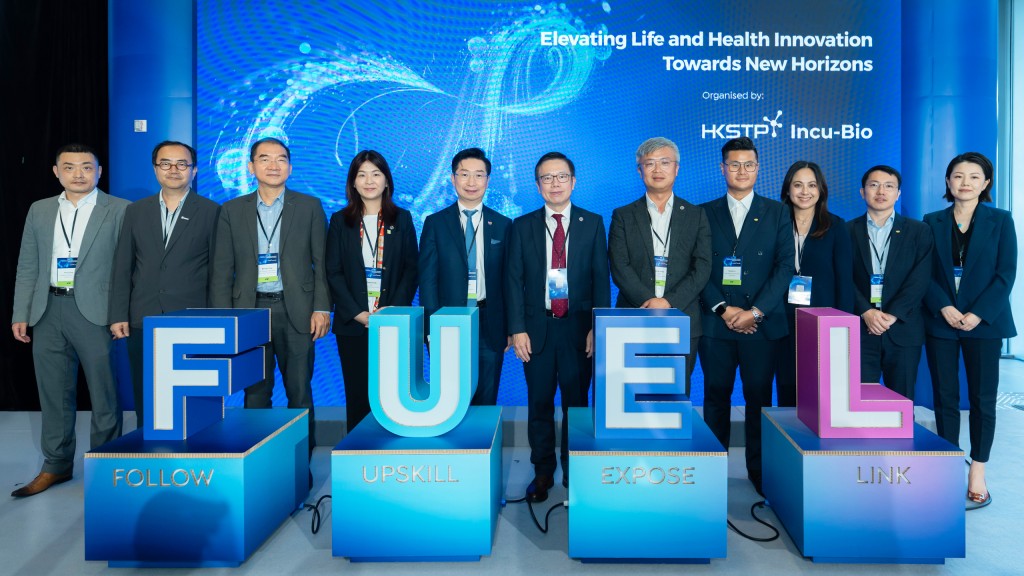
And this is exactly what the Hong Kong Science and Technology Parks Corporation (HKSTP) hopes to achieve through its newly upgraded Incu-Bio programme.
The initiative is described as Asia’s unique and comprehensive incubation platform with unmatched support for life and health technology that combines research infrastructure, funding, mentorship and multinational partnerships in a single, continuous pipeline.
“Hong Kong is entering a golden era of life and health technology innovation,” said Derek Chim, Head of Startup Ecosystem and Development at HKSTP.
“Hong Kong’s world-class research talent, vibrant capital market and close ties to the Greater Bay Area are coming together to build a seamless ‘bench-to-bedside’ industry chain that helps start-ups accelerate R&D and expand globally,” he said.
The upgraded Incu-Bio programme introduces a new operational framework, FUEL, which stands for Follow, Upskill, Expose and Link. Each of them guides founders from mentoring and skills development to investor engagement and regulatory support.
The model unifies HKSTP’s earlier schemes such as Ideation, Incubation, Co-Acceleration, Clinical Translational Catalyst and MedTech Co-Creation, offering participating start-ups as much as HK$39.7mn in cumulative support.
HKSTP has expanded its infrastructure with 25,000 square feet of Biosafety Level 2 labs and 30,000 square feet of offices, now home to nearly 100 start-ups spanning surgical robotics, gene therapy and AI medical imaging.
“In Asia, we’re probably the only one offering incubation as a continuous journey,” Chim said. “We don’t just provide funding; we grow together – from ideation to IPO.”
He added that HKSTP’s co-incubation network now includes Amgen, Boehringer Ingelheim Venture Fund, Merck, Roche and Shanghai Pharmaceuticals, bringing global expertise and investment into Hong Kong’s start-up ecosystem.
The objective, he said, is to turn co-creation into tangible commercial outcomes.
Among the five start-ups introduced at the launch, DanausGT Biotechnology drew particular attention for its Full Gene Replacement Therapy Platform – a next-gen, non-viral approach that replaces defective genes with healthy ones.
“Traditional gene therapies rely on viral vectors, which can cause cancers and lethal immune reactions,” said Dr Michael Wang, the company’s chief executive. “Our non viral gene editing platform is safer and far more precise. We overcome the most difficult hurdle which is precise gene insertion. We can achieve 80 per cent insertion efficiency where older techniques barely reach one.”
DanausGT’s technology has already received EU and US regulatory recognition, and its first patients have completed treatment with encouraging results.
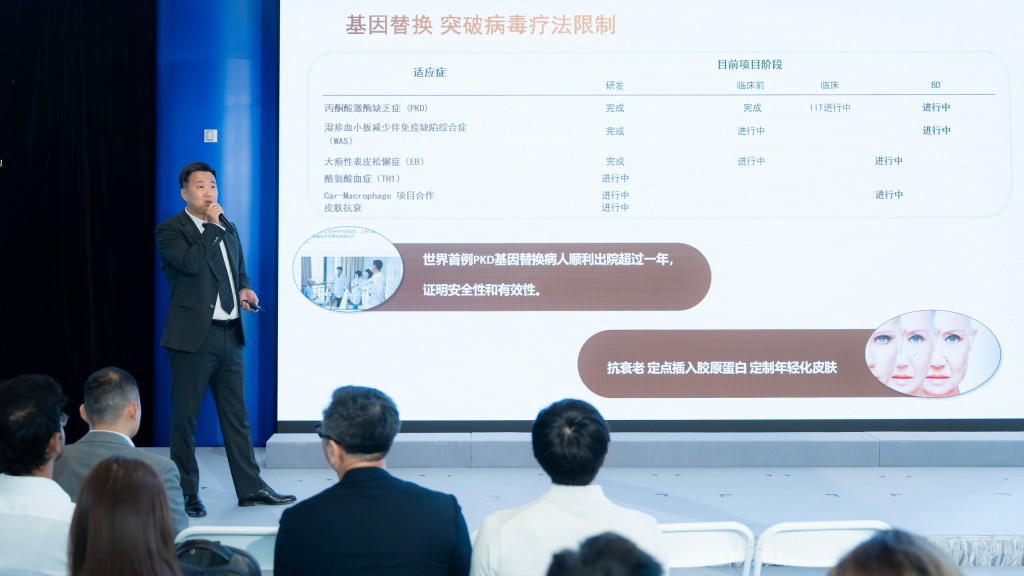
The firm is now collaborating with The University of Hong Kong and Shanghai Pharmaceuticals on a liver cancer project while expanding pre-clinical research into anti-aging and neurodegenerative diseases.
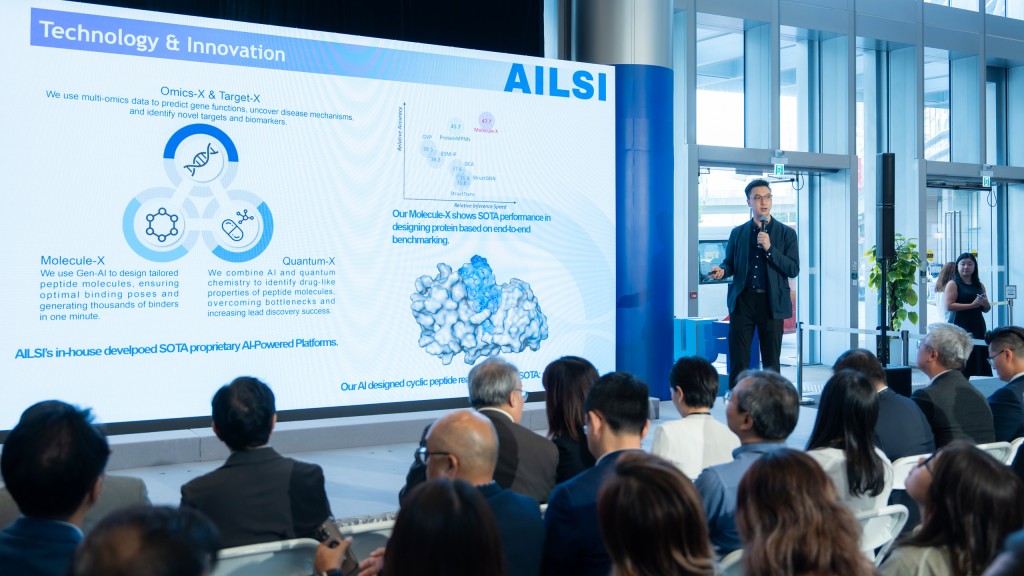
The AI and Life Sciences Institute (AILSI), represented by its chief operating officer Ken Koo, applies generative-AI models to drug discovery by linking disease biology with medicinal chemistry.
The system learns from multi-omics data to design novel molecules in a fraction of the usual development time.
“Our platform covers the full discovery chain, from hypothesis to molecule design, virtual screening and lab validation,” Koo explained.
“But to truly scale, we need better access to biomedical data. Hong Kong must collaborate with hospitals across the broader region so AI models can learn from real-world clinical records.”
He said AILSI’s integration into HKSTP’s ecosystem, alongside support from Google, had enabled it to move from theory to application.
At the same event, Agilis Robotics co-founder Justin Ho unveiled the Intilume system, a fully flexible endoscopic robot capable of performing incisionless surgery in the gastrointestinal and urinary tracts.
The firm has recently completed the world’s first robot-assisted en-bloc resection of bladder tumours in a Hong Kong clinical trial – a world first that underscored local capacity for translational research.
Endovision Limited, meanwhile, presented an AI-driven endoscopy platform that eliminates “blind spots” during procedures, already certified under the EU-MDR framework and backed by a distribution partnership with Medtronic.
Chief executive Saurabh Jejurikar described it as “Google Maps for doctors”, guiding endoscopists in real time.
Syngular Technology, led by Louis Sze, demonstrated an AI-and-XR surgical-guidance system that projects three-dimensional holographic anatomy onto the patient during operations.
The platform shortens 3D-model creation by 80 per cent and sharply reduces costs compared with 3D printing, offering surgeons an immersive planning and training tool.