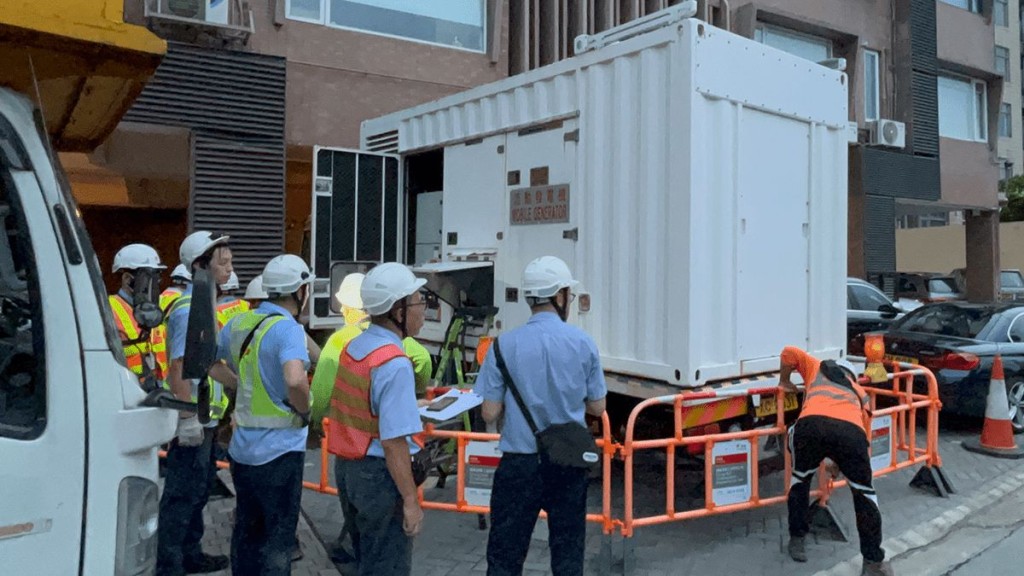
A lack of safety awareness and poor work quality among construction workers have contributed to a sharp rise in cases of electricity supply line damage during construction in recent years, an Electrical and Mechanical Services Department (EMSD) engineer said on Monday.
Speaking at a webinar hosted by the Construction Industry Council (CIC), Wong Wai-ching of the EMSD said the incidents were often linked to insufficient site inspections and improper use of equipment such as excavators and portable power tools.
He noted that some workers may not fully understand practical guidelines or lack essential information, including the location of underground cables and required safety procedures.
To mitigate risks, Wong urged workers to keep a safe distance from cables, carefully study cable plans and ensure qualified personnel carry out thorough underground cable detection before starting work.
Adding to the concern, Johnny Chan, a technical officer with CLP Power’s cable patrol team, said many workers had been injured after mistakenly drilling into underground cables.
He observed that some ignored warning signs and continued excavation in marked areas, while others, not responsible for relevant tasks, were assigned to work near cables, increasing the risk of accidents.
Chan also criticised some contractors for failing to mark underground cable locations to alert frontline staff.
Max Law, a support engineer at Hong Kong Electric, warned that damaging electricity supply lines can have serious consequences, including loss of life, power outages, project delays and financial losses.
He cited a recent incident at a Repulse Bay construction site where a drilling machine struck an underground power cable, cutting electricity to nearby households and forcing work to stop while an investigation was launched into why cable detection had not been conducted.
CIC chairman Thomas Ho On-shing highlighted broader safety concerns, noting that 10 fatal accidents and 16 sudden deaths occurred at construction sites last year, with 60 to 70 percent attributed to the attitudes and behaviours of frontline management. He criticised the lack of improvement in construction site culture.
A survey conducted by the council last year found that working in haste, management attitudes and neglect of safety plans were major factors affecting site safety.
About 7.5 percent of surveyed workers admitted ignoring safety guidelines under pressure to speed up work, around 14 percent believed they had no obligation to conduct dynamic risk assessments, and 4 percent of management staff said they had no duty to monitor workers.
Ho stressed that dynamic risk assessments and thorough site briefings must be carried out before construction begins to ensure everyone clearly understands working procedures.
Commenting on the government’s allocation of an additional HK$30 billion for the development of the Northern Metropolis, Ho said the investment was good news for the construction industry.
He noted that the council trains about 12,000 workers annually, which he believes will meet the manpower needs of the government’s upcoming large-scale projects.