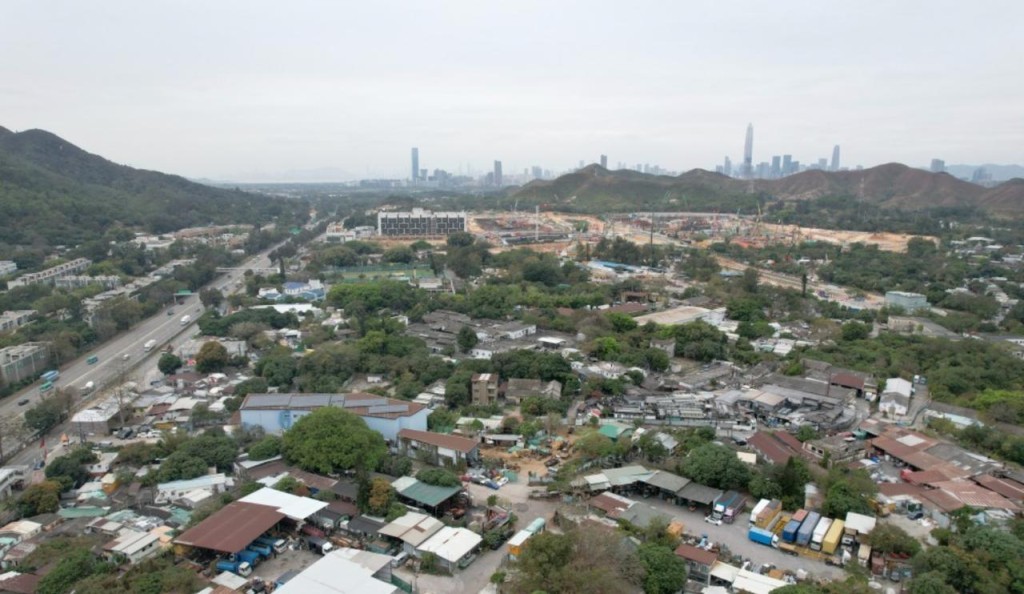
Hong Kong has reaffirmed its commitment to accelerating the Northern Metropolis initiative through new dedicated legislation.
This law will empower the government to create streamlined procedures across a range of critical areas.
These include establishing statutory industry park companies with dedicated funding channels, facilitating the cross-boundary movement of people, goods, capital, data, and biological samples in designated zones to attract high-end manufacturers and research institutes, expediting building plan approvals, relaxing zoning rules, and speeding up compensation payments for land resumption.
A new high-level committee chaired by the Chief Executive will replace the current Steering Committee.
This committee will comprise three working groups. The Financial Secretary will lead a group focused on developing public-private partnership models — such as Build-Operate-Transfer — and propose dedicated companies or bodies to manage various industry parks.
A second group, led by the Chief Secretary for Administration, will plan the Northern Metropolis University Town. The first batches of sites are expected to be available in Hung Shui Kiu by 2026, in Ngau Tam Mei by 2028, and in the New Territories North New Town by 2030. This group will define the vision and industry-led positioning for these sites.
A third Working Group on Planning and Development, led by the Deputy Financial Secretary, will oversee the entire process from planning to implementation.
The government will adopt a new mindset, incorporating safe, cost-efficient, and time-saving construction methods and materials from various regions. A trial “phased development” approach, inspired by mainland’s “1.5-level development” model, will be used in Hung Shui Kiu.
This involves building low-density retail and entertainment facilities first to attract businesses and create momentum ahead of long-term development.
To encourage market participation, flexible land policies will be introduced. Land tenancy terms may exceed seven years, and various grant methods — including open tender, restricted tender, or direct grant — will be used based on industry needs.
Landowners will be allowed to voluntarily surrender land designated for resumption to offset costs in land exchange or disposal agreements.
A “pay for what you build” approach will reduce land premium costs by basing fees on the actual built area rather than the maximum permitted, with options for phased payments.
Furthermore, a land use review for Au Tau will be launched to capitalize on the new Northern Link railway, potentially developing the area around Sha Po Station into a New Development Area with a higher proportion of private housing. The MTR Corporation will conduct this review, with results expected next year.
The development also strengthens integration with Shenzhen, particularly through the Hetao Shenzhen-Hong Kong Science and Technology Innovation Co-operation Zone.
The first three buildings in the Hong Kong Park are complete, with tenants from key industries moving in, and the remaining five buildings will be finished by 2027.
The government will release more land parcels this year and finalize plans for Phase 2, adopting a “moving in while construction is underway” approach to allow companies to establish operations earlier.
Finally, the San Tin Technopole, a 210-hectare innovation hub, will be a strategic base for the industry. Its development plan, to be published this year, will outline its top-level planning, industry positioning, and strategies for leveraging market resources for investment.