Consultants match solutions to business cases, co-ordinate suppliers and lenders and turn event meetings into projects that boards can approve.
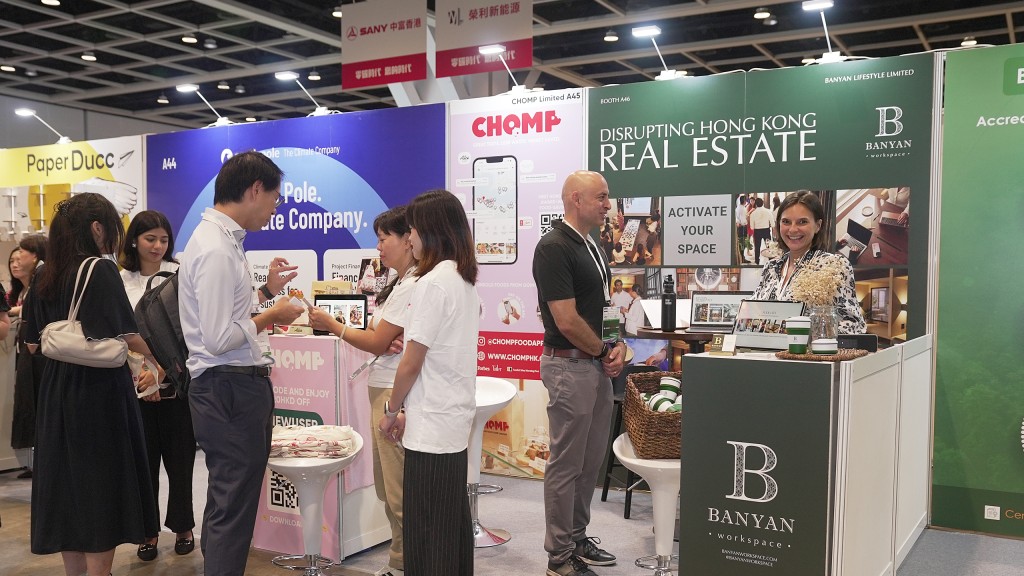
More than a forum, ReThink Hong Kong functions as a marketplace for collaboration, where sustainability advisers sift through vendors and potential partners and stitch together ESG solutions that clients can deploy.
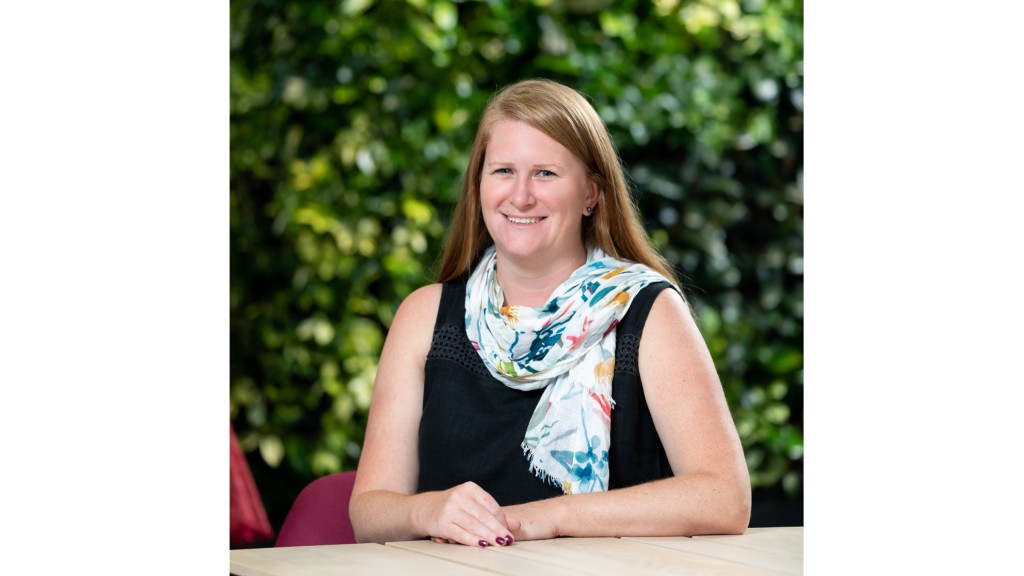
“Sustainability requires collaboration, and we need innovation and technology to support everything,” said Helen Amos, head of sustainability consulting at JLL Hong Kong. Her team uses the show to scout credible partners, bundle offers and map a route from pilot to scale, with clear KPIs and finance-ready proposals.
“Sustainability requires collaboration, and we need innovation and technology to support everything,” says Helen Amos, head of sustainability consulting at JLL Hong Kong, on one of the reasons for joining ReThink.
ERM’s motivation is similarly practical. The event concentrates clients and prospects and helps move live work forward. “It’s a great place to bring our expertise to the show, meet our clients, talk through their sustainability challenges and get our viewpoints across, which helps push the agenda forward,” said Robin Kennish, business unit managing partner, adding that the firm has supported the event for several years.
“[ReThink] a great place to bring our expertise, meet our clients, talk through their sustainability challenges and get our viewpoints across, which helps push the agenda forward,” says Robin Kennish, business unit managing partner at ERM.
This year ERM also ran a workshop with the World Business Council for Sustainable Development on accelerating sustainability transformation and removing organisational barriers. In practice, that means aligning procurement, suppliers and finance, and where necessary structuring co-financing or longer contracts so suppliers can deliver.
Momentum on the demand side is strongest among multinationals and financial institutions, according to Amos. These occupiers arrive with firm scorecards and want buildings that can prove performance, from BEAM Plus or LEED to energy-use targets, indoor air quality standards and real-time metering with transparent data sharing.
That pressure is pulling owners towards performance-based clauses, retrofit programmes and clearer reporting. Many landlords are responding through partnership pledges and green-lease annexes, with fully fledged models gaining ground regionally, particularly in Australia.
In Hong Kong, progress remains market-led, though advisers say supportive policy levers would speed uptake. Separately, the shift to investor-grade reporting is turning compliance into strategy.
JLL is working with listed REITs that are starting to treat climate risk as a number that affects valuation. The task is to mitigate exposure, protect asset value and show the market what is changing, not merely tick disclosure boxes.
Scope 3 remains a data challenge, but the route forward is collaborative: joint metering, common data protocols and active supplier engagement so everyone can trust the numbers when they flow into audits and financing.
From ERM’s vantage point, the biggest obstacles to delivery are organisational rather than technical. Departments often chase different targets, procurement may under-specify supplier requirements on carbon, and vendors need commercial support to act.
Kennish’s counsel is to organise around what is material and fund the few issues that truly move the bottom line; otherwise money disperses across non-critical initiatives and targets are missed. Data centres were cited as a live case of market discipline in which tech firms set stringent expectations and a provider’s sustainability performance directly influences its ability to win their business.
The organiser has leaned into this deal-making role. A new Engagement Hub lets attendees search, connect and set up meetings. “ReThink HK 2.0” adds five thematic zones – circularity, cities, energy, impact and innovation – each with networking hubs and dedicated stages, as well as an independently curated forum and expanded workshops and roundtables.
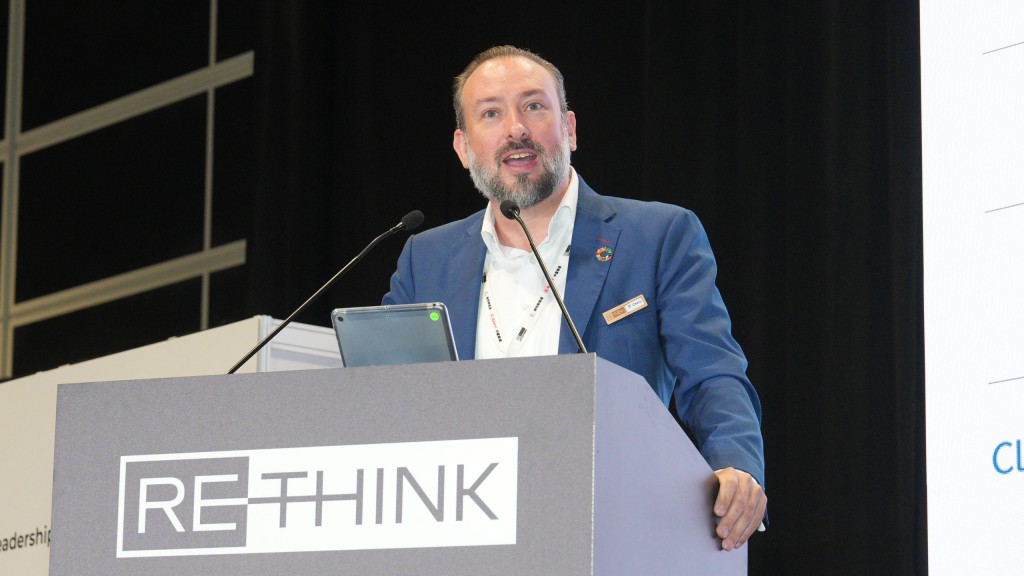
In his opening address, ReThink founder Chris Brown called on exhibitors and attendees alike to use a new Engagement Hub to “search, connect and set up meetings” – on booths or via the tool – and disclosed that a venue-rental subsidy has ended, with funding now shifting to a “shared value” model among sponsors and participants.
Chris Brown, founder of ReThink, delivers the opening address and calls for sustainability to be embedded in strategy and operations while unveiling ReThink 2.0.
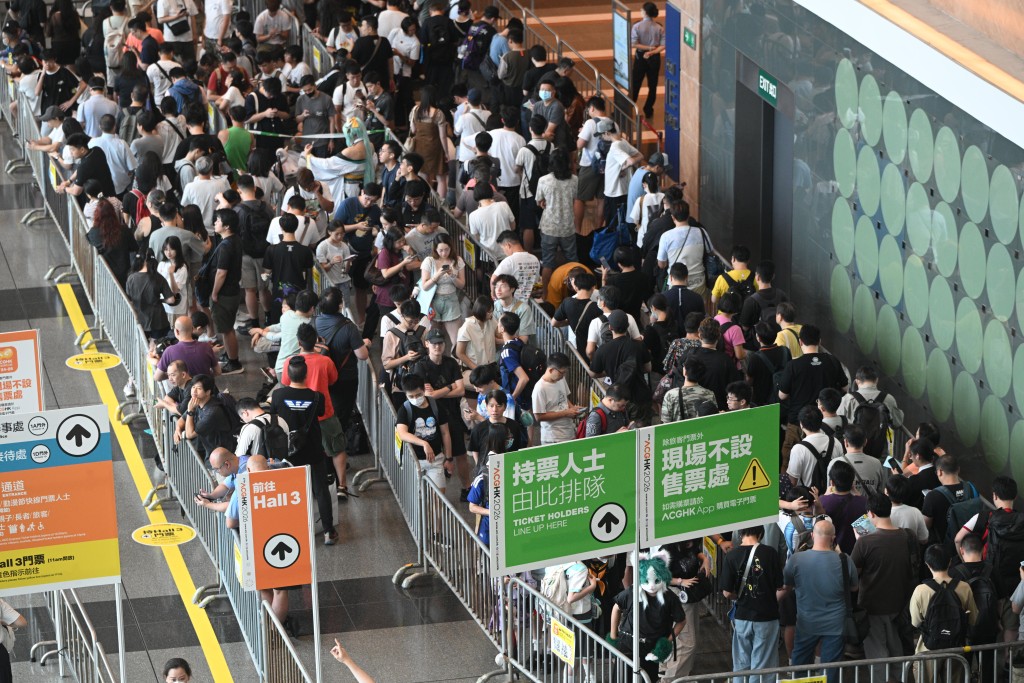
Scale underpins the marketplace effect. The trade expo reached 181 sessions, with 68 per cent first-time speakers and 28 government representatives on stage, alongside about 300 exhibitors and more than 500 speakers in total, drawing an audience of roughly 10,000 on September 11-12, 2025. Since 2020, delegate fees channelled through the ReThink Foundation have totalled HK$1.9mn for local NGOs.
ReThink Hong Kong returns on September 10-11, 2026, at Hall 1.





![“[ReThink] a great place to bring our expertise, meet our clients, talk through their sustainability challenges and get our viewpoints across, which helps push the agenda forward,” says Robin Kennish, business unit managing partner at ERM.](https://image.hkstandard.com.hk/f/1024p0/0x0/100/none/8d07464ac18546188f28a8ebf23a6351/2025-09/3_-_2025-09-15T182216_289.jpg "“[ReThink] a great place to bring our expertise, meet our clients, talk through their sustainability challenges and get our viewpoints across, which helps push the agenda forward,” says Robin Kennish, business unit managing partner at ERM.")