Read More
The government plans to add detailed rules to the domestic national security law by drawing up subsidiary legislation to better facilitate the operations of Beijing’s national security arm in Hong Kong and address risks in a “complicated geopolitical situation.”
ADVERTISEMENT
SCROLL TO CONTINUE WITH CONTENT
Speaking at the Legislative Council on Monday, Secretary for Justice Paul Lam Ting-kwok stressed that the legislation move is a way for the SAR government to fulfil its constitutional duties and that it “fully abides by” human rights principles.
Citing an ever-changing geopolitical landscape and the US intelligence agency’s recruitment of Chinese spies, Secretary for Security Chris Tang Ping-keung said there is a need to defend against any sudden national security threats, “the earlier the better.”
The subsidiary legislation will be added to the Safeguarding National Security Ordinance, which was enacted over a year ago. It will be gazetted before being tabled to LegCo for negative vetting, but officials did not mention an exact legislative timetable.
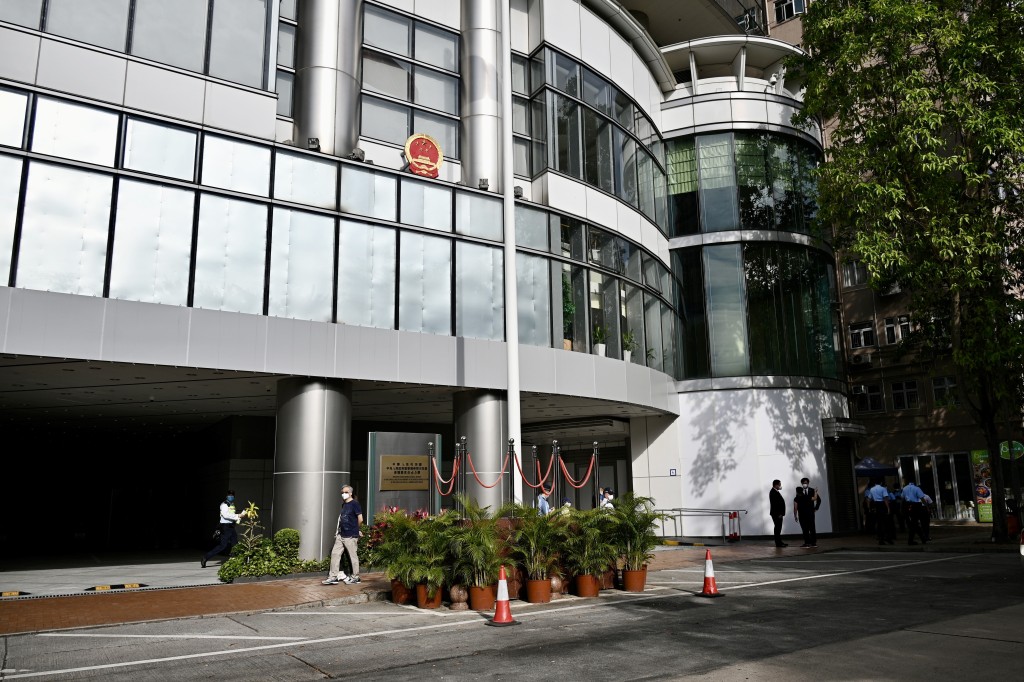
The new rules will include mandating any public servants, including the police, to provide all necessary facilitation to Beijing’s Office for Safeguarding National Security in the SAR when it exercises its jurisdiction.
The article 55 of the Beijing-imposed National Security Law stipulates that the Beijing office, upon request, shall exercise jurisdiction over a national security case under three special circumstances, such as complexity due to foreign elements, or imminent threats.
Sources said while there is a very low possibility national security cases will trigger article 55, the drafting of the subsidiary legislation aims to “better to be prepared and not need it.”
The subsidiary provisions will deem the failure to comply with a legal document issued by the Beijing office a crime, and prohibits the disclosure of any information relating to the office’s investigation without lawful authority.
The chief executive will be empowered to declare the premises where Beijing’s national security office in Hong Kong performs its mandate as “prohibited places,” though officials said such declarations do not involve private residences.
Official sources said a prohibited place will be specified by its address, coordinates and notices. They dismissed a scenario in which a premise suddenly becomes a prohibited place just because Beijing personnel need to search it for evidence.
The government insiders also sidestepped questions about whether foreign consular premises can be declared as “prohibited places” under the subsidiary legislation and declined to comment on hypothetical scenarios.
When asked whether the legislation targets specific cases, including Jimmy Lai Chi-ying’s or CK Hutchison’s Panama ports deal, sources emphasized it is part of ongoing national security law refinement and does not aim to fix loopholes.
(Jamie Liu)