Read More



Night Recap - June 2, 2026
3 hours ago



Typhoon signals depend on low-pressure system’s track and speed, say HKO
01-06-2026 20:17 HKT
HK to bake in 36-degree heat on Friday before five-day rain spell
01-06-2026 17:31 HKT
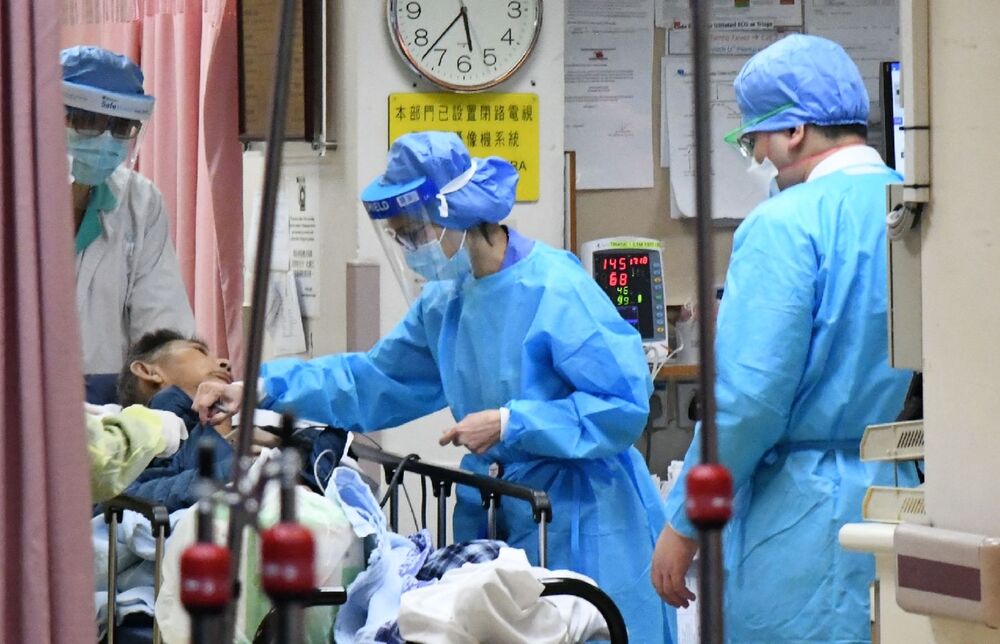
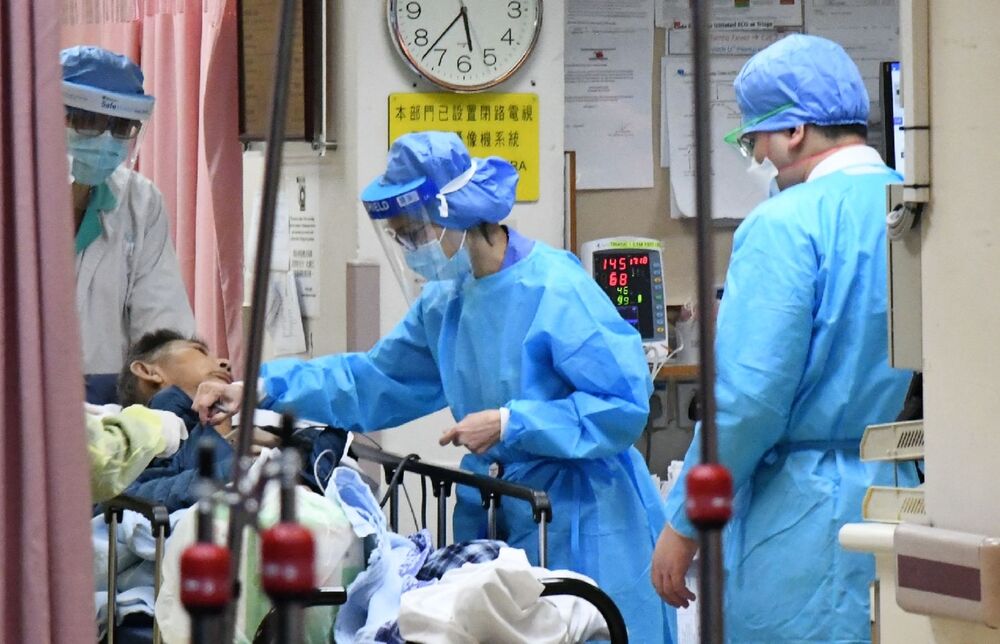
Hong Kong doctors registered overseas are to be encouraged to return to the SAR to work in public hospitals under a proposal to be tabled to Legislative Council before the summer.
Chief Executive Carrie Lam Cheng Yuet-ngor announced the plan yesterday, telling legislators her administration aims to amend the Medical Registration Bill to encourage more doctors registered overseas to practice in Hong Kong.
The doctors should be Hong Kong permanent residents who graduated from medical schools overseas, and they would have to serve in public hospitals before they could gain a full registration to practice anywhere in Hong Kong, Lam said.
Details were spelled out more fully in a document filed to the Legislative Council.
A key point is that doctors who graduated from overseas medical schools that are rated on par with the two Hong Kong ones can be registered in the SAR.
That list will include fewer than 100 schools worldwide, and it will be reviewed every three years.
Applicants must also have obtained a doctor's or specialist's licence overseas.
Then, after being approved by the Medical Council in Hong Kong, they must be hired by public medical institutions and work there for five years after gaining specialist qualifications to be granted full registration in Hong Kong.
A committee comprising the director of health, the Hospital Authority chief executive, the chairmen of the Hong Kong Medical Council and the Hong Kong Academy of Medicine, and the deans of the two local medical schools along with other members who will be appointed will design a system to determine recognized medical institutions. There was no mention of doctors needing to pass an exam before they start working in the SAR.
Lam had said earlier in a question-and-answer session at the legislature: "It's an obvious fact that we are short of manpower in the public health care system."
The Hospital Authority lacks 660 doctors, she said, while the vacancy rate for doctors at the Department of Health's child assessment service branch is as high as 40 percent.
That meant 40 percent of children with special needs cannot be assessed for at least six months and so have their pre-school rehabilitation delayed.
Despite having doubled the number of seats at the medical schools at the University of Hong Kong and the Chinese University of Hong Kong to 530 each year, Lam added, it was not enough to solve the shortage. "We believe a number of medical students in Britain, the United States and Australia wish to come back," she said.
She named three non-locally trained medical experts to drive home her point, including former World Health Organization director-general and Hong Kong director of health Margaret Chan Fung Fu-chun, former Chinese University of Hong Kong vice-chancellor and medical school dean Arthur Li Kwok-cheung, and dean of of the University of Hong Kong faculty of medicine Gabriel Leung.
Lam made her points after Liberal Party legislator Tommy Cheung Yu-yan on Wednesday submitted a private bill for overseas-trained doctors to be allowed to work in Hong Kong without sitting an examination.
The legislator, whose daughter and son-in-law are doctors practicing in the United States, also suggested allowing overseas doctors working under limited registration to be given licenses after working in the public health care sector for five years.
Cheung yesterday thanked Lam for seeking to increase the number of doctors, but he was worried that some "xenophobic" local medics would oppose the idea.
Before the Medical Registration Bill came into effect in 1995, doctors registered in Britain, Australia, New Zealand, Ireland and Singapore could be registered automatically in Hong Kong, making the ratio of overseas and local doctors 1.2:1 at the time.
All non-locally-trained doctors have since 1995 be required to pass a licensing exam before becoming registered physicians in Hong Kong.
Those who do not wish to go through the exam could still apply for limited registration to work in one of four institutions - the Hospital Authority, the Department of Health and the two medical schools - but have not been not allowed to go into private practice.
In May 2019, the Medical Council discussed whether a six-month internship at public hospitals could be waived for foreign doctors who have passed the licensing exam before they can obtain full registration in the SAR. In the end, council members agreed the internship could be waived if an applicant worked for one the four institutions for three years.
Arisina Ma Chung-yee, president of the Public Doctors' Association, said her bottom line is for overseas doctors to pass the licensing exam before being registered in Hong Kong.
"Over the past year only some 30 overseas doctors renewed their limited registration at the Medical Council," she said. "There are many reasons behind that, such as the heavy workload in the public medical system, a rapid flow of patients and a vastly different culture here."
David Lam Tzit-yuen of concern group Medical Conscience said importing doctors is not the ultimate solution to easing the load on the health care sector, adding that diverting chronic patients from public hospitals to primary medical services would be a help.
Editorial: Page 10