Read More






The United States could be friendlier to Hong Kong with the election of Joe Biden, who is expected to take a more seasoned approach toward Beijing.
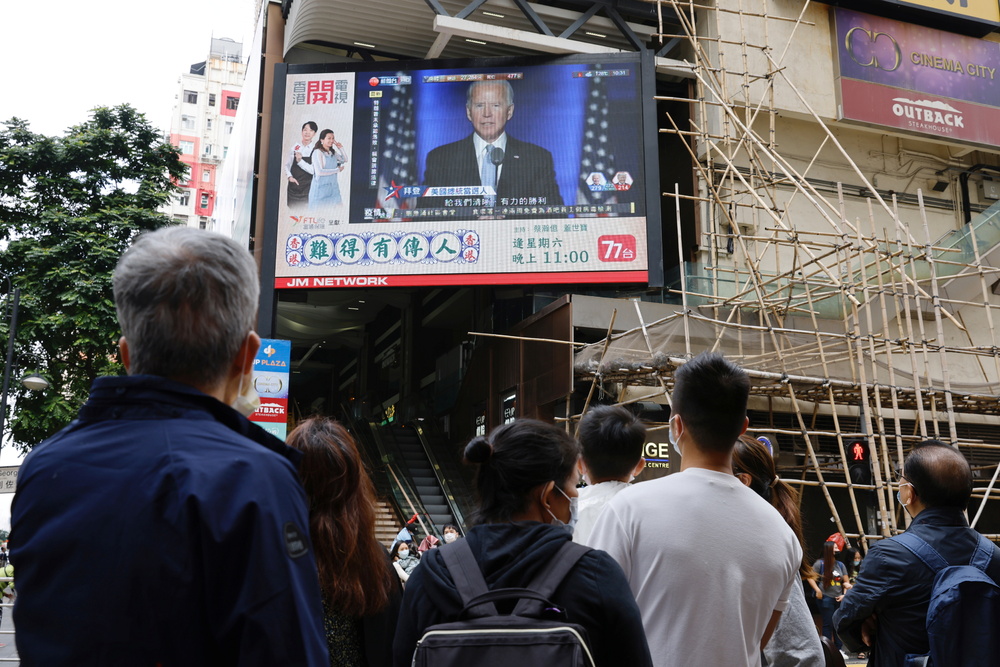
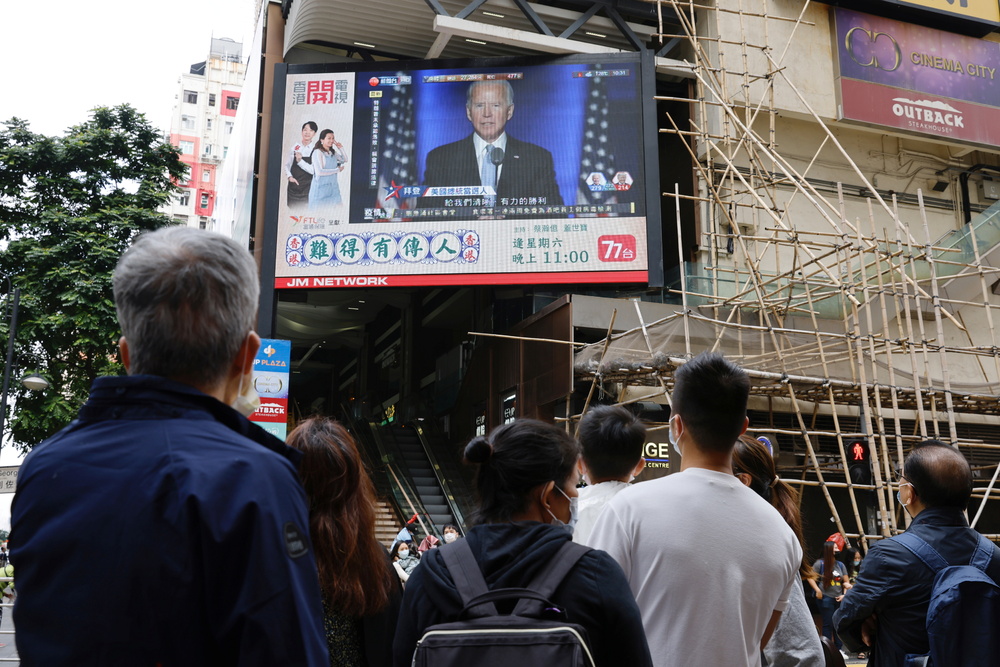
Biden is set to be the next US president after he crossed the threshold of 270 Electoral College votes by winning the battleground state of Pennsylvania on Saturday.
But Donald Trump, seeking reelection as president, refused to concede after trying to undermine mail-in balloting with unproven claims of fraud.
In Hong Kong, politicians and analysts expect the sanctions against Hong Kong officials including Chief Executive Carrie Lam Cheng Yuet-ngor to stay, despite the change in presidency.
It will, however, be less likely that a Biden administration will hit the SAR with unexpected policies, offering a window of opportunity for trade relations to improve - even leading to a new honeymoon period.
The Biden administration will pay attention to Hong Kong's situation but not deliver punch after punch with new sanctions, international relations analyst Derek Yuen Mi-chang said at the City Forum yesterday.
The United States under Biden may not face the same urgency in tackling the Hong Kong question, he said.
And if the Biden administration stops pressuring the World Trade Organization like Trump did, Yuen added, it is possible Washington could reverse its policy requiring Hong Kong products to be labeled "Made in China."
Francis Lui Ting-ming, an adjunct economics professor with the University of Science and Technology, said the United States could indeed stop hitting to Hong Kong.
"Biden did not use very strong language to talk about Hong Kong," Lui said, "so in that sense we can expect the Biden administration will be friendlier."
Since sanctions were voted in a bipartisan way in the United States, Lui said, it is unlikely Washington will change its policy to Hong Kong drastically, but he sees small changes as possible.
Regina Ip Lau Suk-yee, chairwoman of the New People's Party, hopes the new US administration adopts a more rational policy toward Hong Kong as the SAR moves from a point of conflict between Washington and Beijing.
"As society stabilizes following the implementation of the national security law and we don't see any cases breaching human rights and undermining press freedom, the relationship might improve," Ip said.
But Kenneth Chan Ka-lok, associate professor in political science at Hong Kong Baptist University, disagreed with Ip, saying controversies continued in Hong Kong, which gives ammunition to US politicians for their attacks against the SAR.
While Trump claimed repeatedly that a victory for Biden would be a win for China and that Beijing would "own America," there is little to suggest Beijing will find Biden a soft alternative to Trump, who dramatically shifted the US narrative to confront Beijing in his final year in power.
Biden has not laid out a detailed China strategy, but indications are he will continue a tough approach to Beijing.
He has referred to President Xi Jinping as a "thug" and vowed to lead an international campaign to "pressure, isolate and punish China."
His campaign also labeled China's actions against Muslims in Xinjiang "genocide" - a step further than current policy. "The United States does need to get tough with China," Biden said in an article published in March as the coronavirus pandemic, which began in the Chinese city of Wuhan, took hold.
"The most effective way to meet that challenge is to build a united front of US allies and partners to confront China's abusive behaviors and human rights violations."
Still, diplomats, analysts and former officials who advised the Biden campaign expect a more measured tone after Trump's hip-fired threats and an emphasis on "strategic competition" rather than confrontation.
Whereas the outgoing administration's tendency has often seemed to be to launch unilateral attacks on Beijing then browbeat allies and partners into supporting them, Biden will aim to engage allies at the outset and reassert US leadership via international institutions Trump disdained.
Top Biden advisers said he would consult immediately with allies before deciding on the future of tariffs on China, seeking "collective leverage."
And former secretary for financial services and the treasury Ceajer Chan Ka-keung expects the battlefield to shift from tariffs to technology.
"China is regarded by Democrats as competitors," he said.
"They will not use a Cold War mentality to treat China. They will try to find a way to make China play by the rules in international matters, for example technological development and national subsidies."
michael.shum@singtaonewscorp.com
Editorial: Healing more elusive for HK than US