Read More
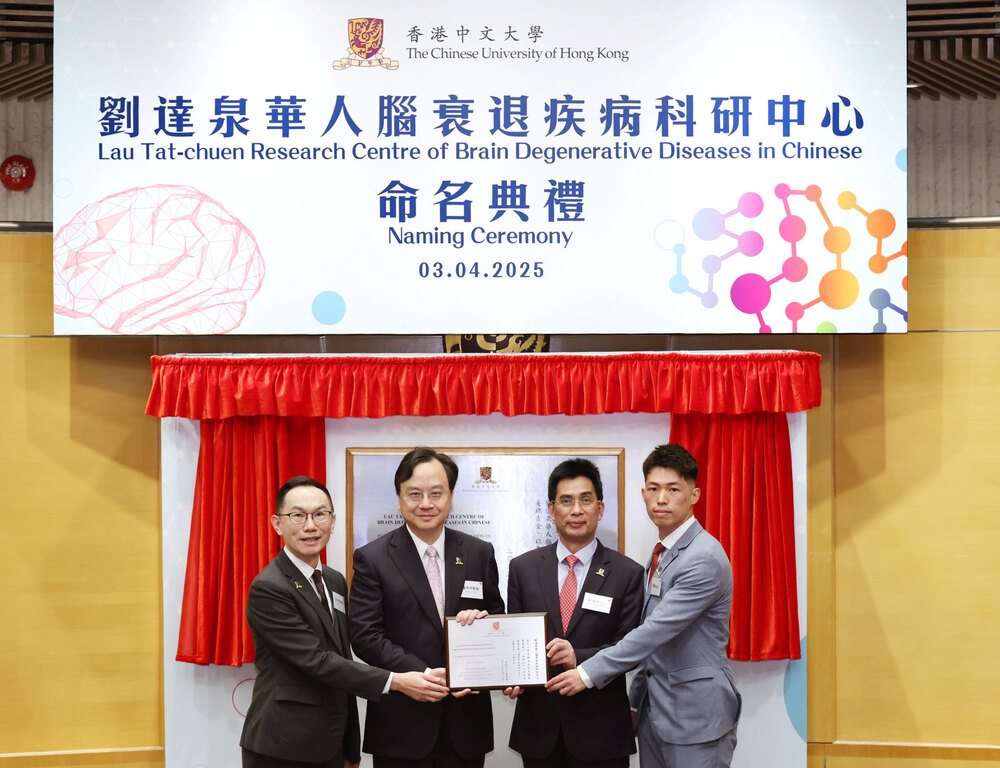
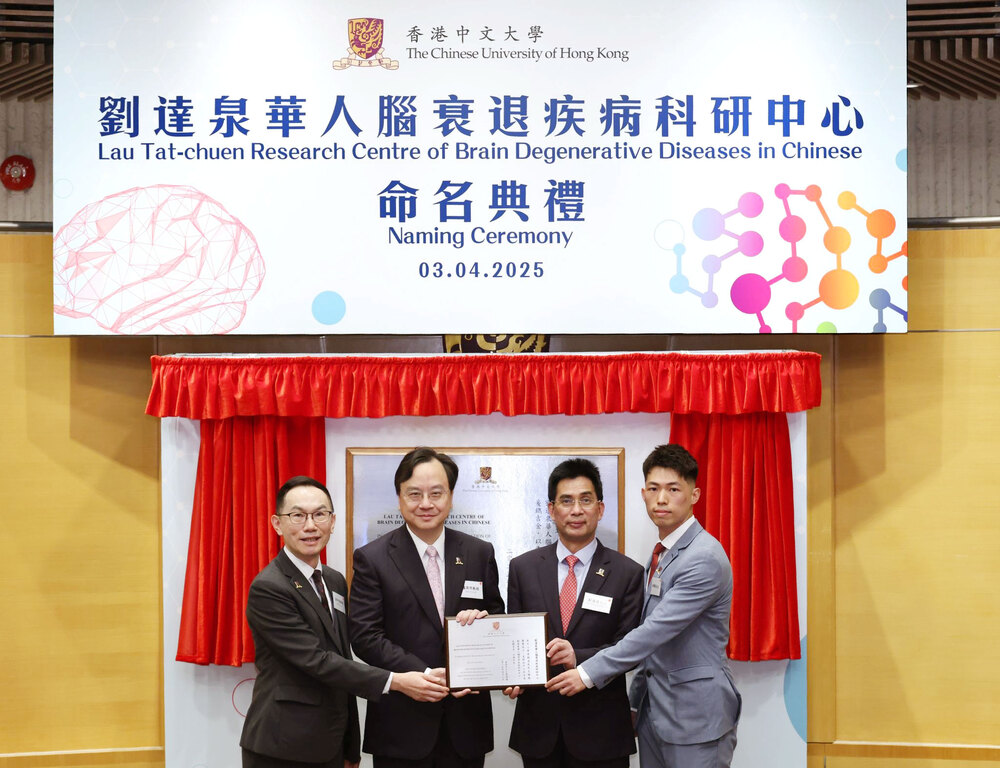
The Chinese University of Hong Kong has set up a research center focused on brain degenerative diseases, aiming to develop simple and accessible strategies to address age-related brain diseases in local Chinese such as Alzheimer’s disease.
ADVERTISEMENT
SCROLL TO CONTINUE WITH CONTENT
The Lau Tat-chuen Research Centre of Brain Degenerative Diseases in Chinese, established with a donation from Chairman of Sino International Industrial Limited Lau Tat-chuen, will initiate large-scale projects aimed at creating innovative screening strategies for early Alzheimer’s disease (AD) and cerebral small vessel disease (SVD) in Chinese populations.
The research will also explore the effectiveness and safety of an anti-diabetic drug in slowing early SVD progression.
These future findings are expected to help alleviate the growing burden of common age-related brain diseases in Hong Kong’s rapidly aging society, where the prevalence of such conditions is expected to double or triple over the next three decades.
Dennis Lo Yuk-ming, Vice-Chancellor and President of CUHK, said at the naming ceremony of the Center earlier: “We aspire for the Centre to pioneer new research exploration and popularise new diagnostic methods, enabling patients to receive timely treatment.”
“Additionally, we aim to enhance public awareness of dementia and encourage attention to brain health,” he said.
Previous studies have demonstrated that the pathological changes associated with AD and SVD develop over years to decades in aging brains, resulting in secondary degeneration and disabling symptoms like dementia.
Recent clinical research suggests that early identification and intervention in individuals with subclinical or mildly symptomatic changes can slow disease progression. However, current detection methods are costly, invasive, and not widely accessible for clinical use.
CUHK professor Vincent Mok Chung-tong noted the Center will establish a Chinese cohort aged 50 to 85 with mild cognitive symptoms.
“Among the various clinical, multi-modal imaging (retinal, MRI, PET), and plasma data collected, we will first focus on utilizing advanced AI technology in developing novel AI models based on retinal imaging data for the detection of early AD and SVD,” he said.
As for SVD treatment, CUHK’s recent animal studies have shown that glucagon-like peptide 1 receptor agonists, a class of anti-diabetic drugs, can reverse age-related SVD.
The Center will investigate their efficacy and safety to alleviate the rising burden of age-related brain diseases in an aging society.
(Cheng Wong)