Read More
Inviting artists to present HK’s neighbourhood and showcase the city’s diverse tourism appeal
ADVERTISEMENT
SCROLL TO CONTINUE WITH CONTENT
This March, Hong Kong comes alive with world-class events as the Hong Kong Tourism Board (HKTB) launches the “Hong Kong Super March” campaign. This initiative brings together a series of major art, cultural, and sports events, offering visitors an immersive way to experience the city. Among the highlights are collaborations with four key art and cultural events: ComplexCon Hong Kong, HKwalls Street Art Festival, Art Central, and Art Basel Hong Kong. Visitors are invited to explore the diverse charm of different Hong Kong neighbourhoods, gaining a deeper understanding of the city’s rich history and unique East-meets-West culture.
Art Central, one of the featured events, takes place this week from March 26 to 30, at the Central Harbourfront. Over five days, the HKTB introduces “Studio Central,” a semi-open studio within the fair, where three groups of artists create live works inspired by daily life and their connections to local neighbourhoods. Curator Shirky Chan explains that each artist has a strong bond with the community they represent, often drawing creative inspiration or materials from those areas. The semi-open studio format aims to break down barriers between artists and audiences, allowing visitors to witness the creative process firsthand and engage with the artists directly.
“Studio Central” brings together diverse art forms to showcase HK’s neighbourhood
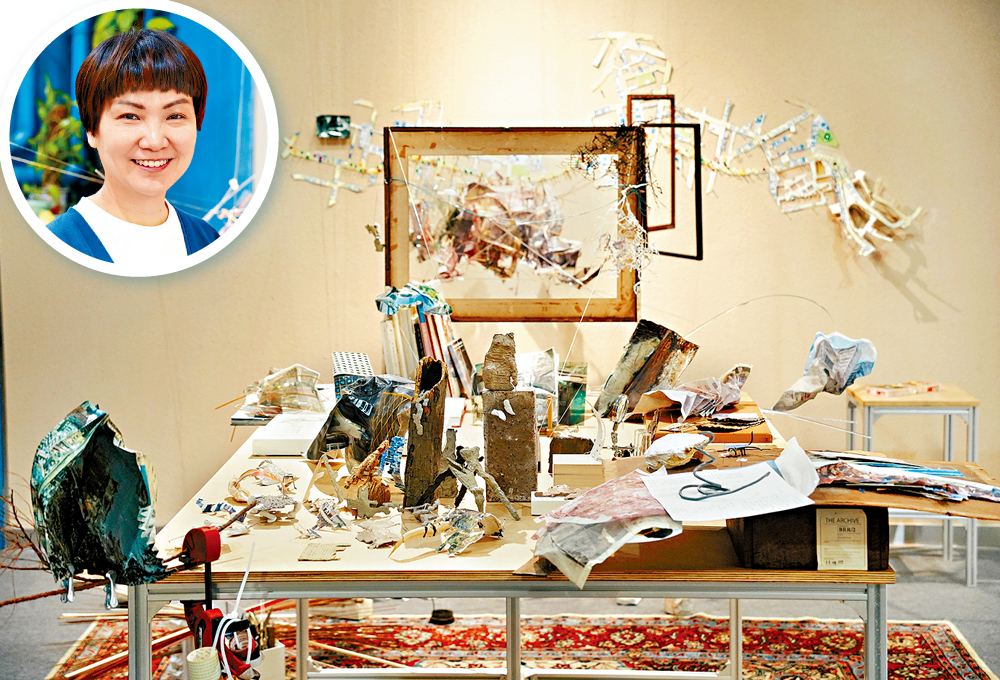
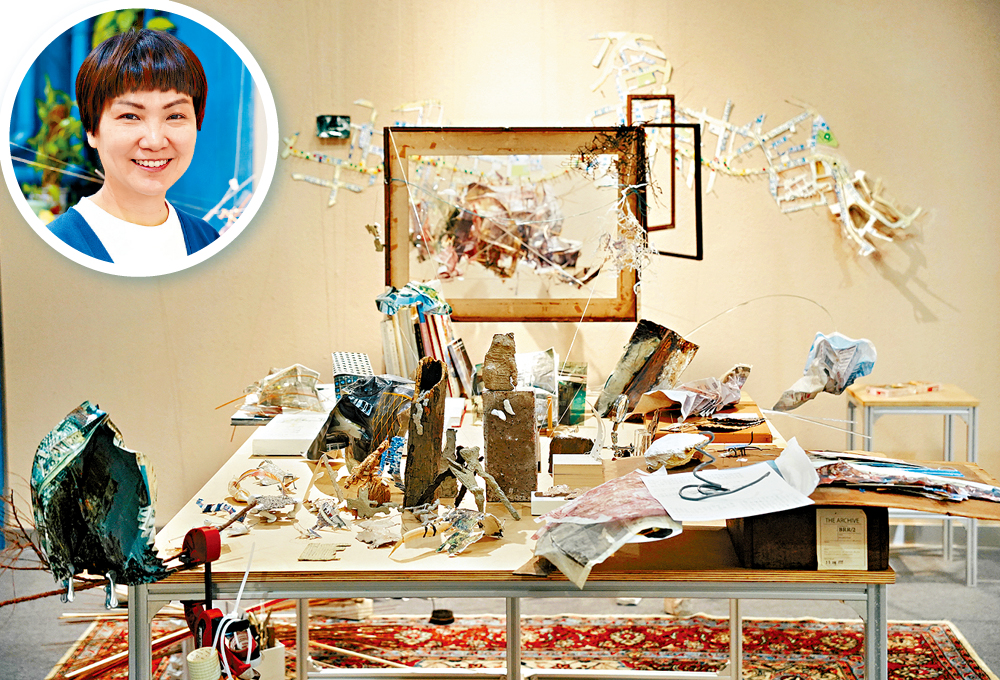
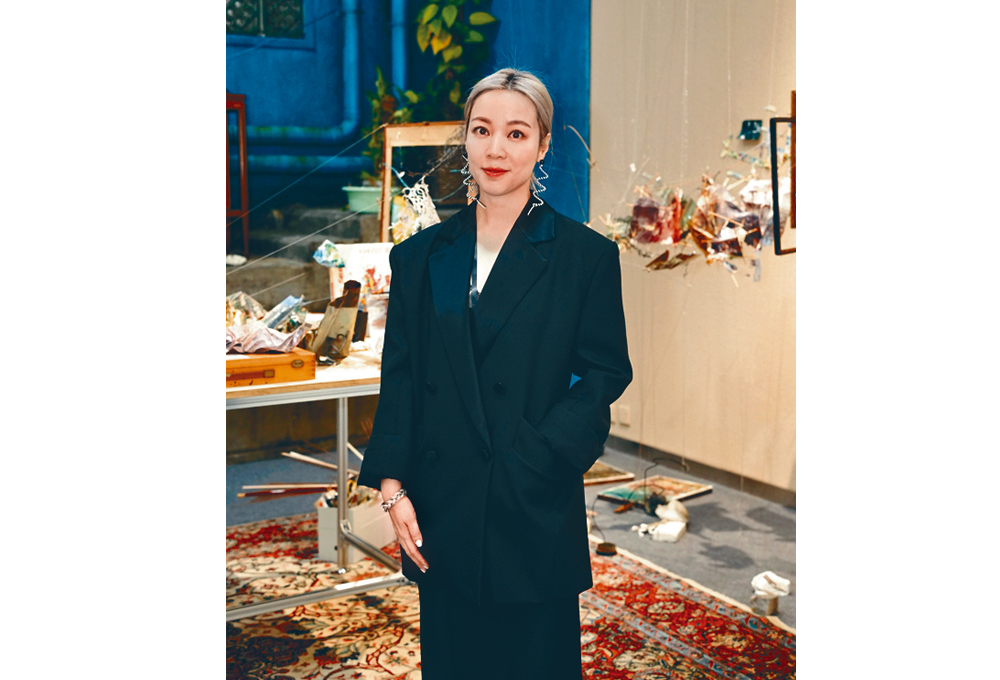
Hong Kong-based artist-architect Maggie Chu draws from her upbringing in the Central and Sheung Wan areas. For “Studio Central,” she reimagines Hollywood Road, the historic street of her childhood, by assembling a 3D collage of archival images printed on cards. Chu’s work explores the relationship between people and places, using photographs to capture everyday life, fashion, and activities that reflect different eras. She hopes her creations inspire viewers to see Central and Sheung Wan from fresh perspectives, encouraging deeper curiosity about the neighbourhoods beyond just popular photo spots.
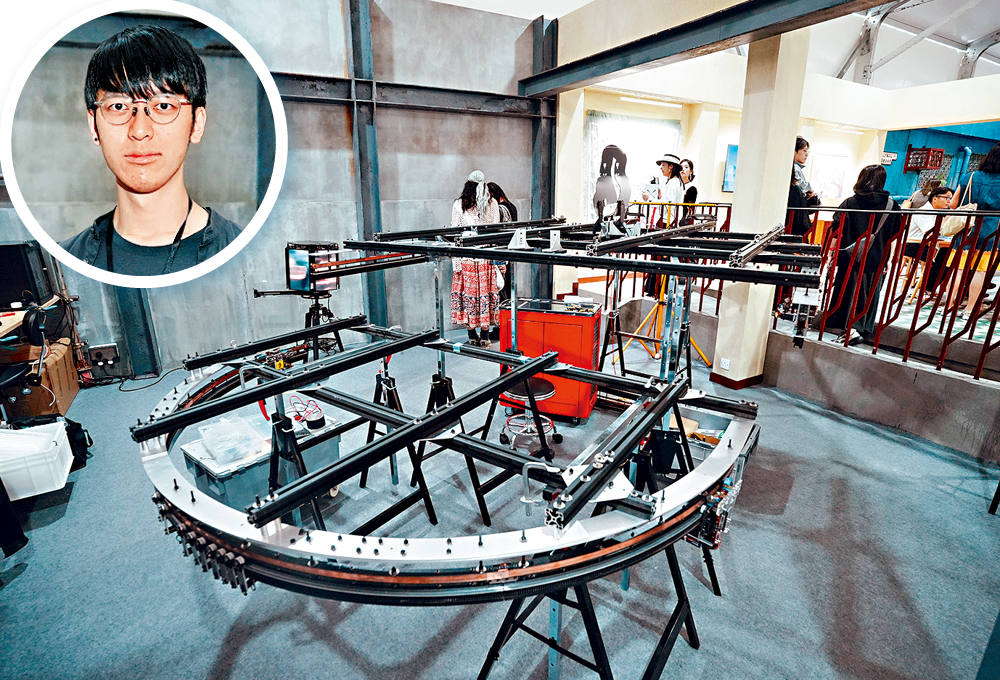
Another Hong Kong artist, Tung Wing-hong, enjoys dynamic objects and his art often incorporates mechanical and electronic installations to express emotions and intangible feelings from daily life. He frequently sources materials from the hardware stores in Yau Ma Tei, a district he has seen evolve over the years. Though less familiar to tourists, he sees Yau Ma Tei as a true representation of Hong Kong’s local life.
Tung’s “Studio Central” workspace showcases a signboard inspired by one from a hardware store he used to frequent. He explains that when he first started creating mechanical and electronic installations, he would visit hardware shops to observe how craftsmen used various metal components, learning their techniques before eventually completing his creations independently. He believes the signboard symbolizes the passing down of artistic skills, using hardware as a medium to tell Hong Kong’s stories.
The “Studio Central” project incorporates materials purchased in Yau Ma Tei to create moving sculptures, which are placed on tracks to enhance their dynamic appeal. Tung notes that many young people, especially children, find kinetic installations fascinating, and he hopes his live creations will capture their attention. He also believes that when visitors witness the richness and diversity of Hong Kong’s art, it will leave a lasting impression, helping to export the city’s culture to the world.
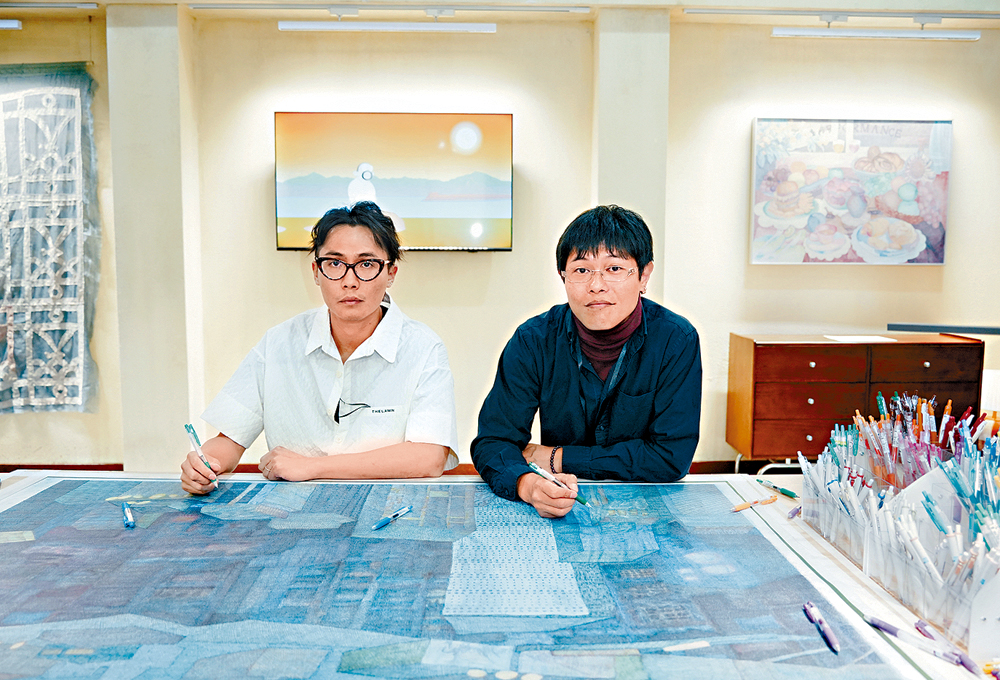
Meanwhile, the Guangzhou-based artist collective “BOLOHO” often uses cooking, sewing, and collaborative painting in their works, which typically center around personal or urban stories. The group notes that while Guangzhou and Hong Kong are distinct cities, they share a common language and have similar tong lau (tenement building) architecture. Inspired by this connection, their “Studio Central” design also focuses on tong lau as a theme.
BOLOHO further shares that they grew up watching Hong Kong TV shows, which gave them insight into the city’s rich and diverse culture. Using gel pens, the group will create a live artwork depicting Hong Kong’s nighttime skyline. Through this piece, they hope to expand visitors’ perceptions of Hong Kong beyond just Victoria Harbour, allowing them to glimpse its historical traces and deeper cultural layers.
HKTB has also partnered with Art Central to launch the “Discover Art in your Neighbourhood” initiative. This project features new artworks by the three groups of artists displayed in Sham Shui Po, Yau Ma Tei, and Central & Sheung Wan. These works not only reflect each artist’s unique style and creative approach but also showcase the distinctive characteristics of the respective neighbourhoods.
HKTB sets up “Sun Moon Star” pop-up bar at Art Basel Depicting the coexistence of old and new communities in the city
Last year, the Hong Kong Tourism Board signed a three-year global strategic cooperation agreement with Art Basel. This year’s theme centers on showcasing local neighbourhoods and spans four exhibitions in Hong Kong, Basel, Paris, and Miami Beach, each highlighting the unique character of the city’s vibrant communities.
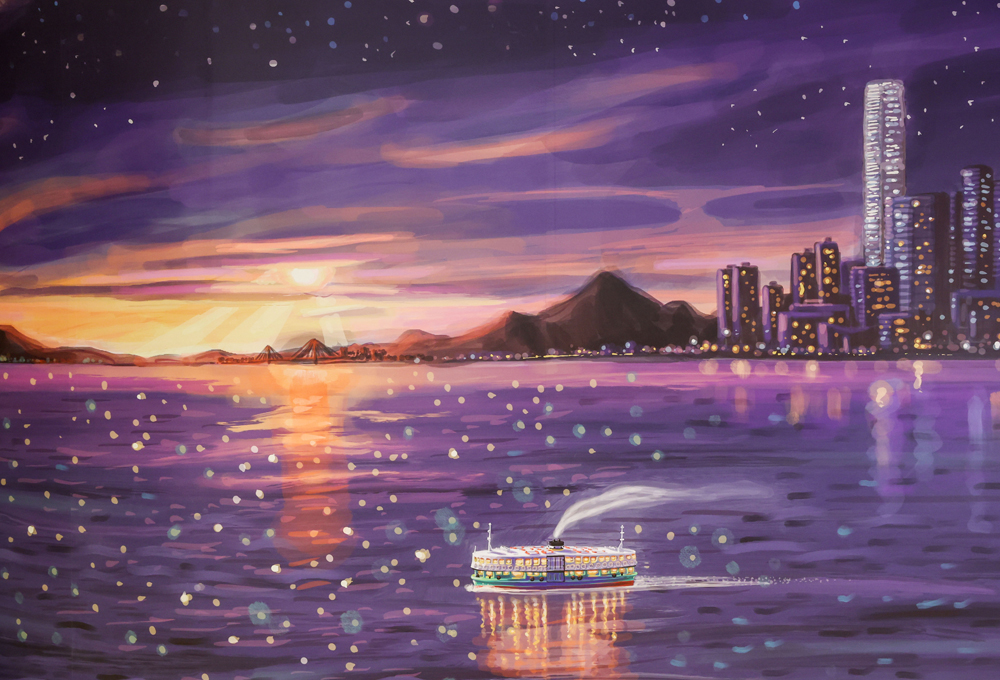
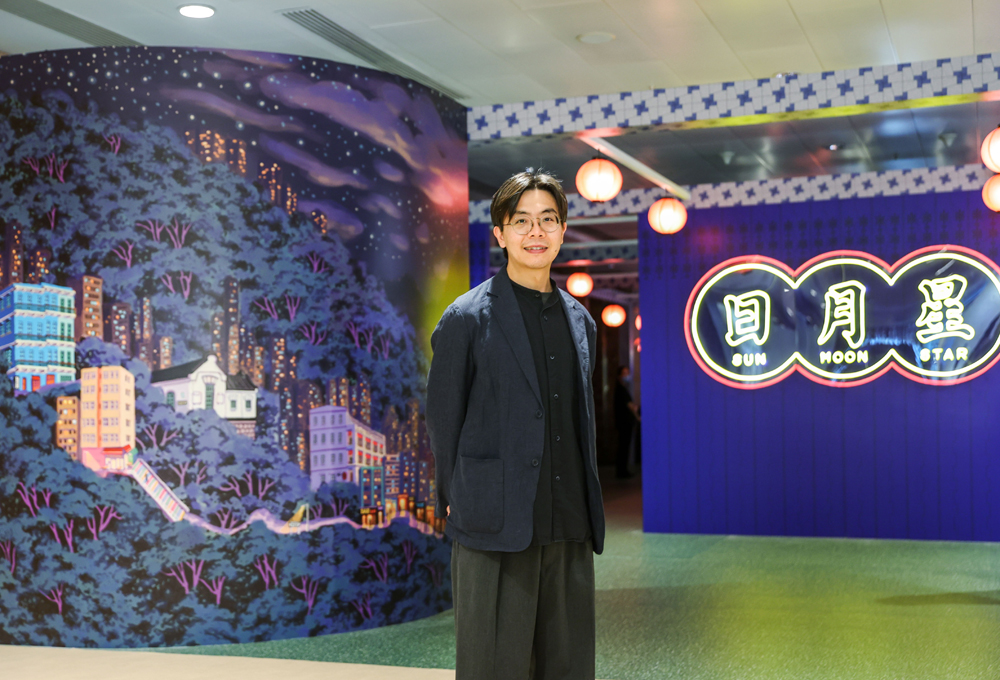
At the Art Basel Hong Kong exhibition opening this Friday, the Tourism Board invited local artist Wong Chun-hei to create an artwork for the “Sun Moon Star” Bar. Wong’s artwork depicts the Star Ferry navigating through the night scene of Victoria Harbour, leading viewers to appreciate the coexistence of old and new in Hong Kong’s urban landscape.
As viewers approach the “Sun Moon Star” Bar, they can admire Wong’s piece on the left and right exterior walls at the entrance. The right wall features a painting of a Star Ferry sailing under the starry sky, heading towards the bustling Hong Kong Island. The left wall depicts the modern commercial area and old buildings of Wan Chai, including the Hong Kong Convention and Exhibition Centre, the Blue House, and the old Wan Chai Post Office.
These iconic buildings are not represented in their actual geographical positions. Wong meticulously arranged them together on Mount Cameron, transitioning into the Wan Chai bar district, and painted a hiking trail that connects them. This leads viewers along the hillside into a tranquil cluster of historical architecture, allowing them to explore the diverse historical narratives of Wan Chai and immerse themselves in its unique charm of coexistence between the old and the new.
Wong expresses hope that through his work, people can gain a different understanding of Wan Chai, exploring its historical and cultural richness beyond the impression of skyscrapers. He encourages travelers to savor the painting and gradually discover the stories within, promoting a deeper understanding of Hong Kong.
+1