Read More




Night Recap - October 23, 2026
1 hour ago








Late police constable Chu Chun-kwok to receive full honors funeral on Fri
22-10-2026 15:33 HKT


Domestic helper suspected after $420,000 worth of gold jewelry goes missing
22-10-2026 18:55 HKT


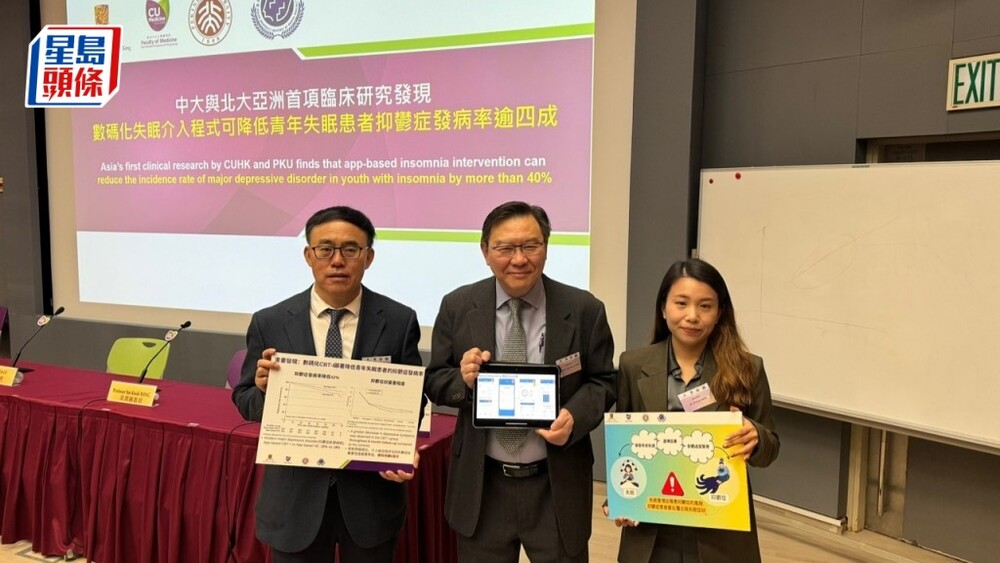
An app-based insomnia intervention can significantly reduce the incidence of depression in youth with insomnia by over 40 percent, according to groundbreaking clinical research from the Chinese University of Hong Kong (CUHK) and Peking University (PKU).
The two top-tier universities jointly announced on Thursday that the Digital CBT-I Intervention App (CBT-I), developed by the Li Chiu Kong Family Sleep Assessment Unit at CUHK, has shown remarkable effectiveness in improving insomnia and depressive symptoms in young people.
This makes it a highly promotable self-help tool for youth worldwide.
Depression is a prevalent mental disorder affecting about 1.2 billion youth globally.
The World Health Organization estimates that it impacts around 3.5 percent of youth aged 15-19, with rates in Hong Kong ranging from 3.9 percent to 5.2 percent.
Lu Lin, an academician of the Chinese Academy of Sciences and President of PKU Sixth Hospital, said: “CBT-I is an effective first-line treatment for chronic insomnia. However, no research has been conducted in Asia on the effectiveness of this therapy in preventing youth depression when delivered in a digital format as an alternative to face-to-face treatments.”
To address this gap, the study recruited 708 participants aged 15 to 25 with insomnia and subclinical depressive symptoms from Hong Kong and mainland China, conducting research from September 2019 to November 2022.
The findings revealed that the intervention group experienced a remission rate for insomnia disorder of nearly 60 percent at the one-year follow-up, demonstrating a 42 percent lower incidence of depression compared to the control group.
Notably, no adverse events related to the interventions were reported.
Chen Si-jing, the first author of the research and a postdoctoral fellow from the Department of Psychiatry at CUHK, said: “The study demonstrates that digital CBT-I is effective in preventing the future onset of major depression with satisfactory efficacy.”
Wing Yun-kwok, chairman of the Department of Psychiatry at CU Medicine and director of the Li Chiu Kong Family Sleep Assessment Unit, indicated that future studies will focus on integrating digital insomnia interventions into clinical practice, particularly in primary care, and adapting treatments for personalized prevention and early intervention in the community.
(Cheng Wong)