Read More




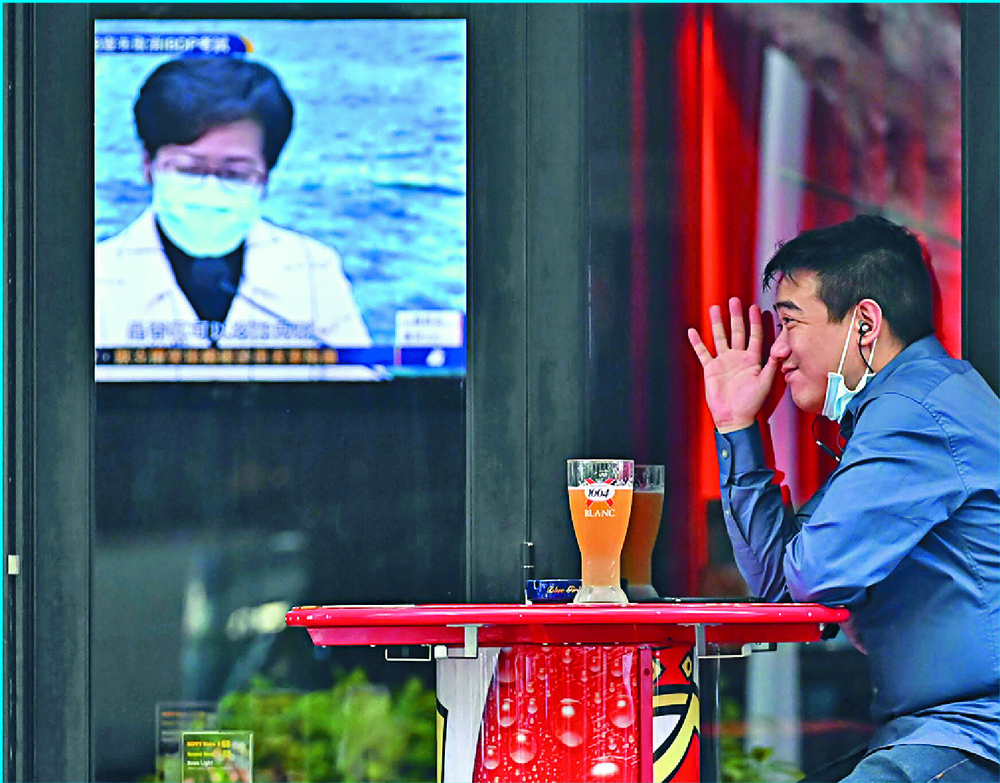
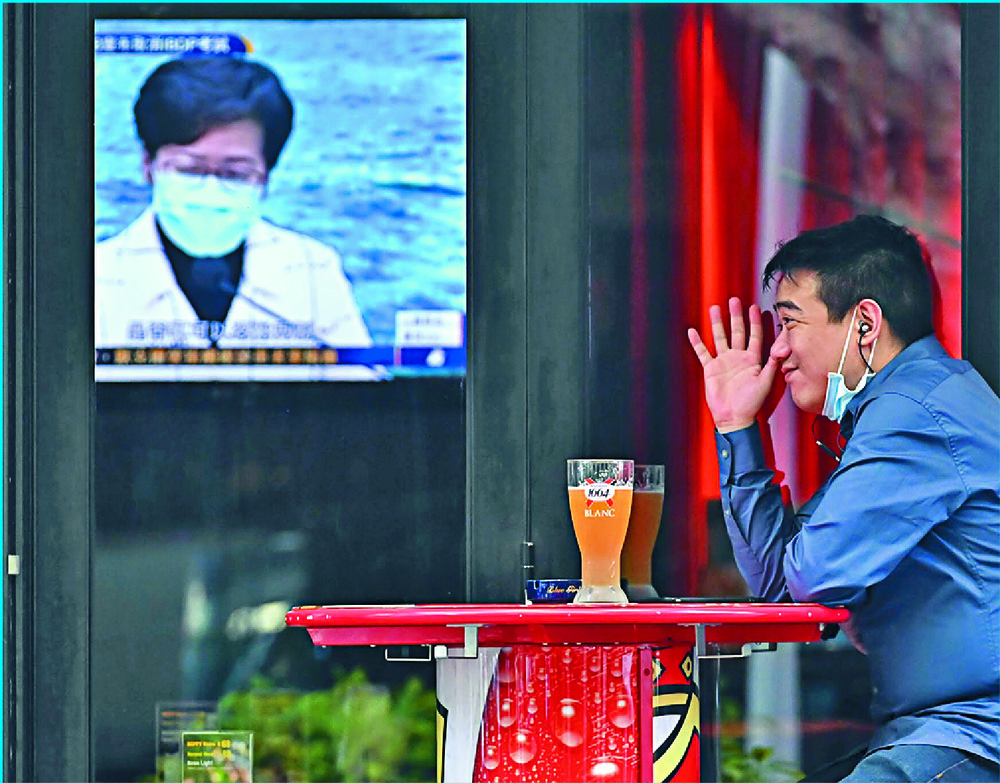
About 8,600 bars and restaurants will be banned from selling alcohol as customers' risky behavior has fueled a recent surge in Covid-19 cases, says Chief Executive Carrie Lam Cheng Yuet-ngor.
"Sometimes when we dine out in restaurants, we can sit further off, we can separate the food in portions, but in bars, people usually take off their masks, drinking alcohol and chatting, or even have some more intimate behavior when getting drunk which increases the risk of cross-infection," Lam said.
She cited health experts' warnings about clubbers' risky behavior.
Laws will be amended "to request the 8,600 restaurants, bars or clubs which have liquor licenses to stop selling alcoholic drinks," she said.
But some netizens said they would buy alcohol from convenience stores and drink at the restaurants or bars, while others are planning a final fling in Lan Kwai Fong before the regulation comes into effect.
Since the prohibition is a stringent measure, Secretary for Justice Teresa Cheng Yeuk-wah is studying how to make a law under the Prevention and Control of Disease Ordinance (Cap 599), Lam said.
She did not give the legislative timetable of when the amended law will take effect.
The government will also discuss with the catering industry how to lower the risk of dining and reduce wedding banquets and other gatherings.
"If we find that such voluntary measures are ineffective, we will amend the law," Lam warned.
The proposed law on the ban of selling and providing alcoholic drinks will also empower the authorities to further regulate the operations of restaurants, including shortening their business hours or limiting the number of seats.
All 66 clubs which hold private recreational leases such as Hong Kong Country Club, Hong Kong Cricket Club and Hong Kong Golf Club will also be required to close their recreation and sports facilities, changing rooms and play facilities for children such as ball ponds.
Lam also urged other private clubs, including clubhouses of private housing estates and gyms, to take the same anti-pandemic measures.
The controller of the Centre for Health Protection, Wong Ka-hing, said gatherings at bars usually mean chatting up close for a long time.
"This will pose a risk of infection. Chatting with a mask is okay but some people like to talk without a mask, which can be dangerous," he said.
Wong said the Department of Health's guidelines to restaurants to be co-drafted by the centre and the Centre for Food Safety will advise them on cleaning and seating arrangements to lower infection risks.
But bar and restaurant owners hit out at the move, saying the government should have better control of people returning to Hong Kong from abroad as they are the main cause of the outbreak of Covid-19.
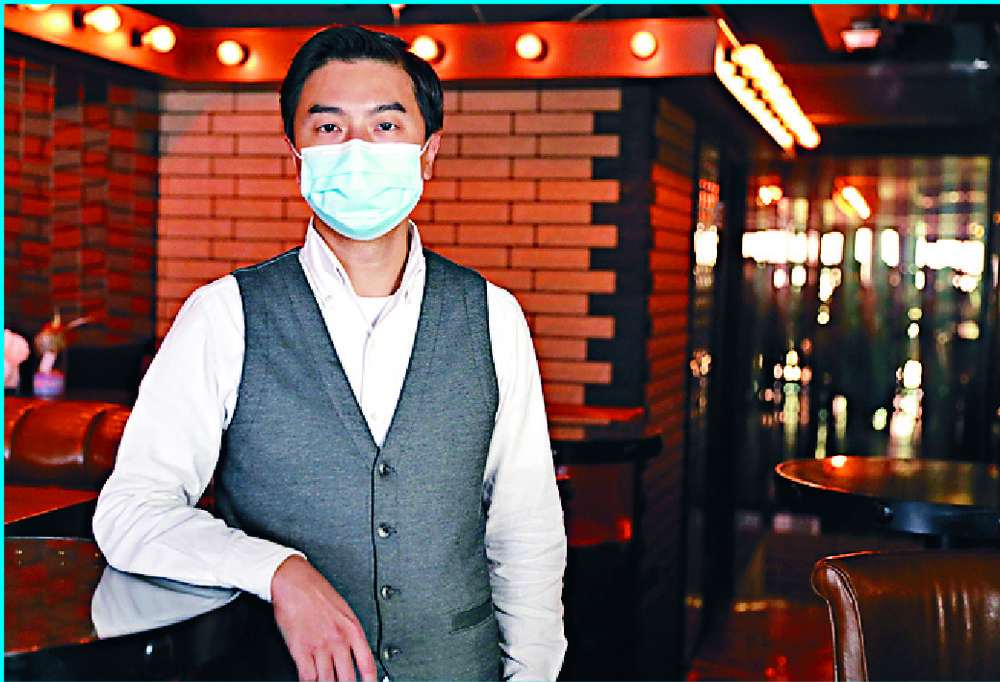
Chin Chun-wing, vice chairman of the Hong Kong Bar and Pub Association, said the alcohol ban is "unreasonable and ridiculous," and he worried it could trigger a wave of closures, as 80 percent of their revenue comes from selling alcohol.
"There is no outbreak in drinking places. Even in the case of Lan Kwai Fong, the government also shouldn't do this because no bar in Lan Kwai Fong has come out to claim a confirmed patient infected others in the bar," he said.
"How come the government put the responsibility on bars? In the case of hot pot groups, which had real proof of human infections, they didn't shut down the restaurants," Chin said.
He believed half of the 8,600 premises with liquor license will close in two to three months after the legislation is passed.
Chin said the government should think about how to support the industry before launching any measure, while the association will also send a letter to pubs and restaurants with liquor licenses to discuss taking industrial action.
Yeung Wai-sing, chairman of the Association for Hong Kong Catering Services Management, said restaurants have tried their best to prevent Covid-19 spreading, adding more eateries will close with more stringent measures.
Eighty to 90 percent of banquets and gatherings have been canceled. Restaurants have also used smaller tables with four seats at the most, and lengthened the distance between tables, as well as checking temperatures of customers and staff, he said.
"Don't always pass the responsibility to the people. Only the government can control the epidemic. We don't have the ability to control it," he said.
Civic Party lawmaker Kwok Ka-ki, who is also a doctor, said it is strange and not scientific to blame the infection on alcohol as the risk is the same when people take off their masks and drink non-alcoholic beverages.
He said it is more important to reduce social gatherings, wear masks and wash hands.