Read More
Hong Kong shut down four more mainland-Hong Kong ports at midnight last night to prevent the Wuhan virus from further spreading to the SAR, Chief Executive Carrie Lam Cheng Yuet-ngor said.
ADVERTISEMENT
SCROLL TO CONTINUE WITH CONTENT
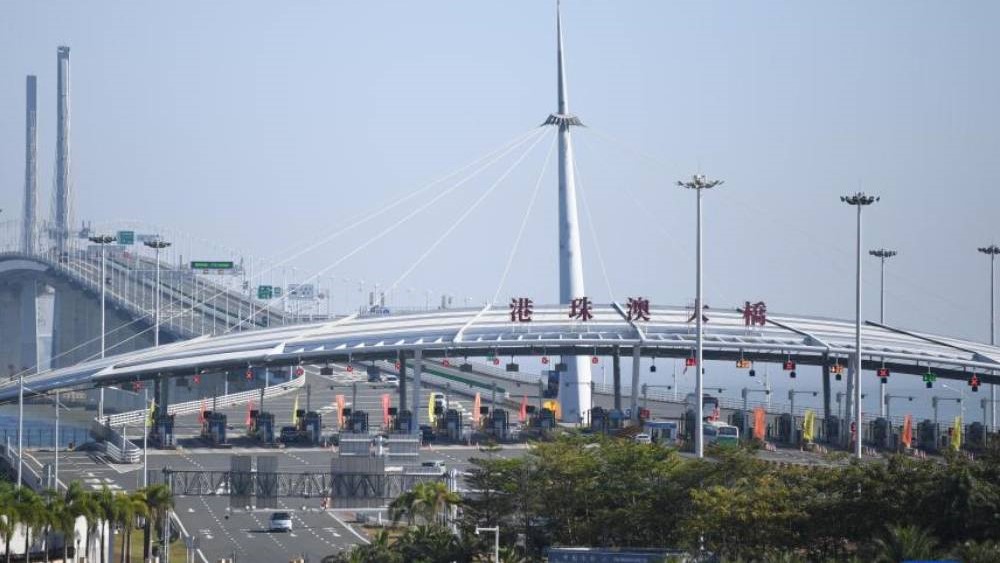
But mainlanders and foreigners who travel from China can still enter Hong Kong through the remaining three border points - the Hong Kong International Airport, Shenzhen Bay control point and the Hong Kong-Zhuhai-Macao Bridge.
They remain open to maintain "certain cross-border channels because there is a close connection between Hong Kong and mainland."
The short notice prompted many people working in Hong Kong who live in Shenzhen to rush home to pack their belongings so they could return to the SAR before the border points closed. Others had little option but to work from home.
Scores of people dashed across to Shenzhen in both train and cross-border buses with many grumbling at the short notice.
Another worker, surnamed Hong, who lives near the Shenzhen side of the Futian checkpoint, said closing down the borders left her no option but to work from home.
Hong Kong recorded 15 confirmed virus cases while mainland numbers yesterday rose to 17,335, with 361 deaths.
The four newly closed ports are Lo Wu, Lok Ma Chau, Huanggang and Hong Kong Macau Ferry Terminal. Lo Wu and Lok Ma Chau are major border points connecting to the East Rail line of the MTR, while Huanggang handles road traffic round the clock.
TurboJET, which runs ferry services between Hong Kong and Macau, said all services will be suspended from today until further notice and passengers who had bought tickets would be entitled to refunds.
Eddie Choi Shun-kei, assistant general manager of Eternity East Tours Company, a major cross-border bus operator, said the industry is most affected by the closure of Huanggang port.
Around 200 return bus trips are available a day at the 24-hour border point, Choi said. This week the number dropped to 100, before all services were terminated.
About 1,000 staff members including drivers will be affected across the industry, he said.
The enhanced measure would take the number of closed mainland-Hong Kong borders to 10 out of 13 after Lam last Tuesday announced suspension of express rail services, cut half flights from the mainland and closed Shau Tau Kok and Man Kam To control points. "Despite the previous measures having effectively clamped down on cross-border flow, we saw around 70,000 people arriving in Hong Kong every day and 30,000 leaving for the mainland, who we believe will eventually return to Hong Kong," she said.
"That number of people entering our city from the mainland and heading to the mainland is not desirable and poses a risk, so we wish to further compress the cross-border traveler flow by closing more ports."
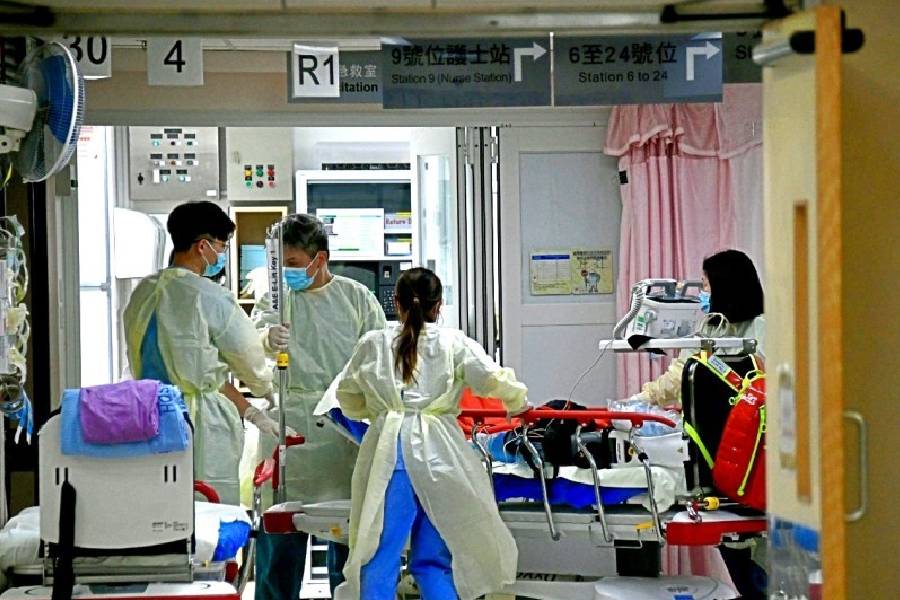
Lam's announcement came at a press conference at 5pm yesterday - an hour before the 6pm deadline set by Hospital Authority unions whose 2,500 members started a five-day strike yesterday to pressure the government to close all borders.
But she said the tightened measures were not responding to the strike, adding that no one would be successful in threatening the government with extreme tactics. "We understand medical workers are at the very front line facing tremendous pressure," she said.
"But calling for a strike in this key period would inevitably affect the rights of patients and add extra burden to the already overloaded Hospital Authority. I cannot agree with it."
The Immigration Department said 11,715 mainland visitors came to Hong Kong on Sunday, with 4,649 arriving at the airport, followed by 2,253 through Shenzhen Bay.
Lok Ma Chau, Lo Wu and Huanggang saw 1,739, 1,159 and 1,272 mainland visitors.
Asked why she did not ban all mainlanders from coming to the SAR, Lam said there is a demand in traveler flow across the Shenzhen-Hong Kong border, including people who work in Hong Kong but live in Shenzhen, and vice versa.
"There are also two-way permit mothers taking care of their children who are Hong Kong permanent residents," she said, adding the Immigration Department would make discretionary policies so they can stay longer in Hong Kong without having to travel back and forth.
Democratic Party lawmaker Helena Wong Pik-wan criticized Lam for leaving some borders open,which would become loopholes for mainlanders.
Lawmaker Wilson Or Chong-shing of the Democratic Alliance for the Betterment and Progress said the party welcomes the part-closure. "We demand the government should have all cross-borderers wear electronic tracking bracelets and conduct self-quarantine at home for 14 days," he said.
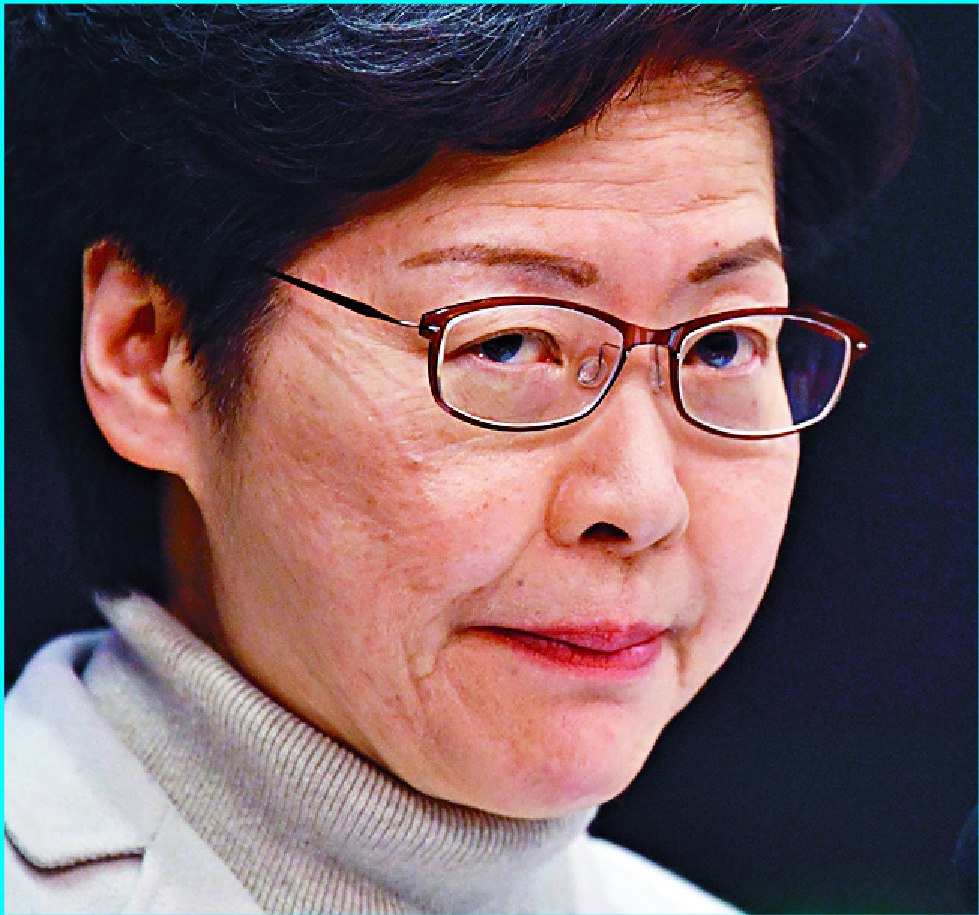
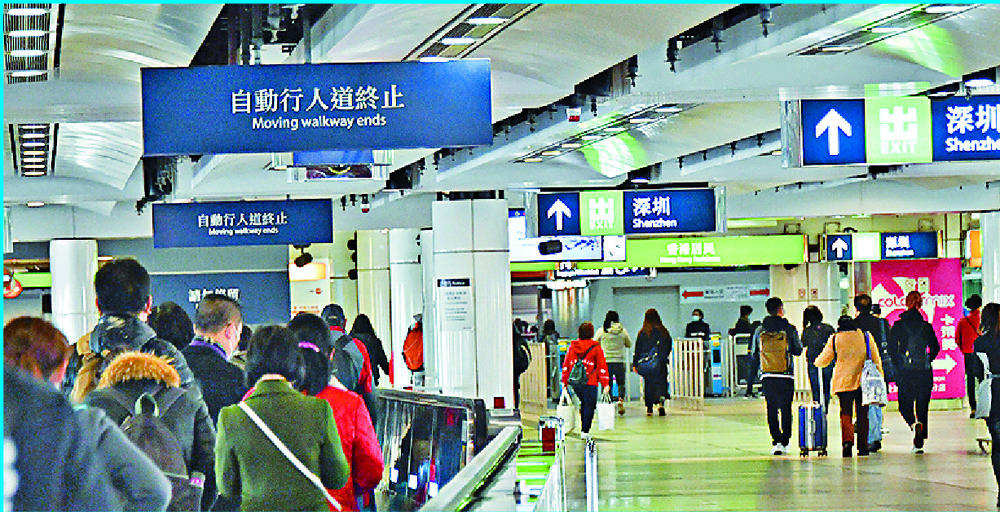
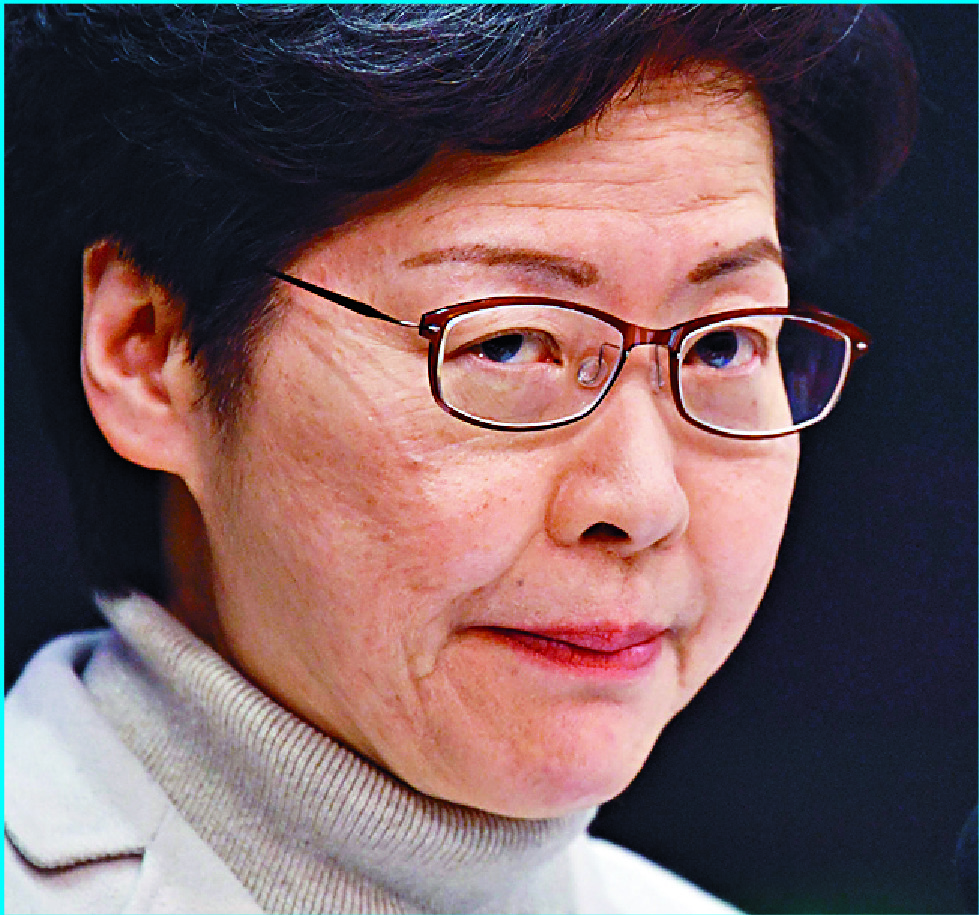
Crowds rush to cross the border at Lo Wu before the midnight deadline. Top left, Carrie Lam.