Read More
The judiciary has dismissed six out of eight complaints against an Eastern Court magistrate Stanley Ho Chun-yiu, saying his sentences did not indicate any political bias.
ADVERTISEMENT
SCROLL TO CONTINUE WITH CONTENT
As the Department of Justice has applied to the Court of Appeal for a review of the sentence in the remaining two cases, the complaints will be followed up only after the conclusion of legal proceedings.
Ho has previously been accused of being biased for ruling in favor of people charged in unrest cases, and police supporters have written letters to the judiciary urging him to be barred from such cases.
Chief Magistrate So Wai-tak emphasized that the decisions and sentences given in the six cases were judicial decisions made independently by Ho. In accordance with the principle of judicial independence, he in his administrative capacity would not, and it would be inappropriate, to interfere with any judicial decisions.
The spokesman of the Judiciary also said So noted that the Department of Justice had not made any appeal and review applications regarding the decisions and sentences made in the six cases, which is consistent with the conclusion made by So.
In a court hearing where three Demosisto members were fined for disorderly conduct at the Legislative Council, with one of them acquitted of common assault against a security guard. So said Ho had not expressed any view on the criminal conduct of the three defendants for which they were convicted that indicates a political inclination or gives rise to a perception of apparent bias.
Ho was said to have imposed a lenient sentence on them, made the comment that the defendants should preserve their “capable bodies” since they would certainly become “pillars of society”.
So said Ho’s remarks were in the context of warning the three defendants that they might face an immediate custodial sentence if committing a more serious offense in the course of expressing their views. Ho went on to say the three should possess “capable bodies” and qualities to become “pillars of society”, and could make contributions to society
In another court hearing where a student was put on probation for criminal damage, where he graffitied the wall of the police headquarters. So said Ho has considered the two sentencing principles of “deterrent” and “punitive”, while also gave regards to the defendant’s age, background and the need for rehabilitation.
So said Ho had not expressed any view on the criminal conduct of the defendant for which he was convicted that indicates a political inclination or gives rise to a perception of apparent bias.
In the hearing of Eastern district councilor Jocelyn Chau Hui-yan and her assistant where they were acquitted of police assault. The complaint said Ho reprimanded the police witnesses for their flippant and contemptuous attitude, giving evidence as if they were in a “parallel universe” and “covering one lie with another lie” in their evidence.
So said Ho was entitled to comment and make findings on the credibility of the witnesses on the basis of the evidence before him. He also said that Ho’s findings of fact and analysis of evidence were based on the evidence in the case, not expressing any view that indicates a personal or political inclination, or gives rise to a perception of apparent bias against police officers.
Ho has also been complained of in a hearing that he queried the defendant did not understand the police officer’s explanation at the scene of the offence and therefore granted a binding over order over her charges of “Assaulting a police officer”.
Which in fact is that the prosecution and the defence had agreed that the prosecution would withdraw the charge and the defendant would be bound over to be of good behavior, way before the trial. Where Ho accepted the course proposed by both parties.
In another hearing where an engineer was acquitted of possession of weapons for allegedly possessing an electric grinder, unlicensed intercom and hammer, Ho was said to acquitted the defendant since he did not feel safe to rely on the evidence of the police witness.
So said Ho had not made any finding on the credibility of the prosecution witness in his verdict, nor had he doubted or commented on the credibility of the witness’ evidence as alleged in the complaint. Therefore the complaint is not substantiated.
In the hearing of a 17-year-old boy acquitted after trial of one count of “Possession of offensive weapon or other instrument fit for unlawful purposes”. Ho was complained of he indicated that since he was unable to accept the evidence of the police witness, the prosecution had failed to prove that the defendant was in possession of the items in question.
So said in Ho’s oral Reasons for Verdict, after analyzing the discrepancies between the police officer’s testimony in court, the contents of his witness statement and police notebook, Ho had doubts about the credibility of the witness’ evidence and found the prosecution failed to prove beyond reasonable doubt that the defendant was in possession of the items in question at the material time.
Ho also pointed out that, as a matter of law, even if the defendant was proved to be in possession of the items in question at the material time, the purpose of the possession alleged by the prosecution did not satisfy any of the definitions of the element of “unlawful purposes” including physically restraining a person, inflicting bodily harm upon a person and trespassing upon or entering domestic premises unlawfully.
So therefore concluded that Ho’s findings of fact and analysis of evidence were made on the basis of and according to the evidence in the case. He had not made any remark that indicates a personal or political inclination, or gives rise to an apparent bias against police officers.
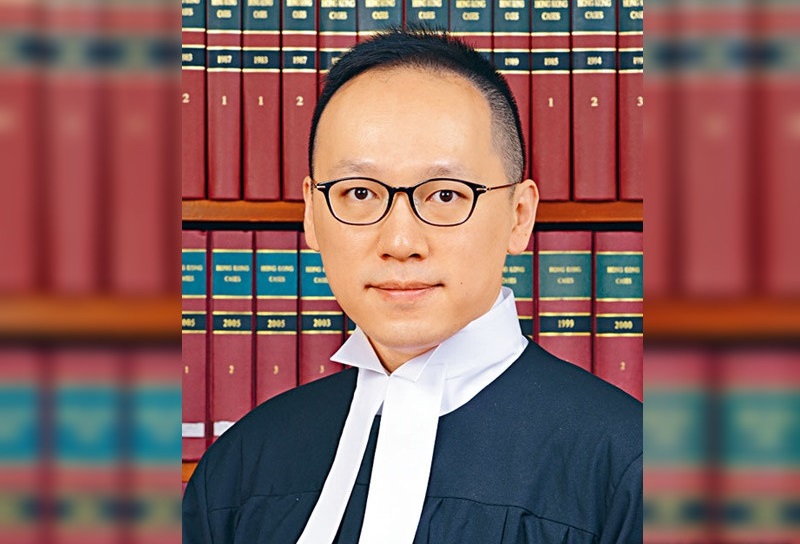
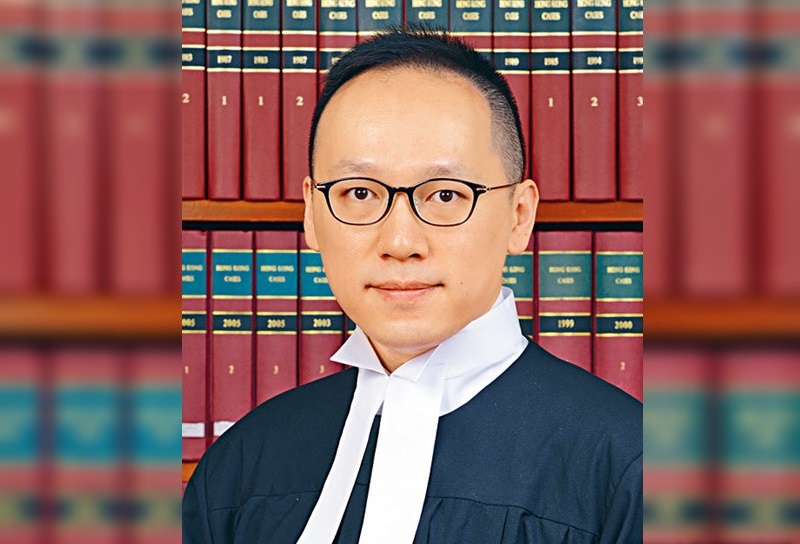
Eastern Court magistrate Stanley Ho Chun-yiu