Read More




Will AI make me dumber? | Human Reinvented | Frank Ng & Ryan Ng
13-10-2026 05:00 HKT



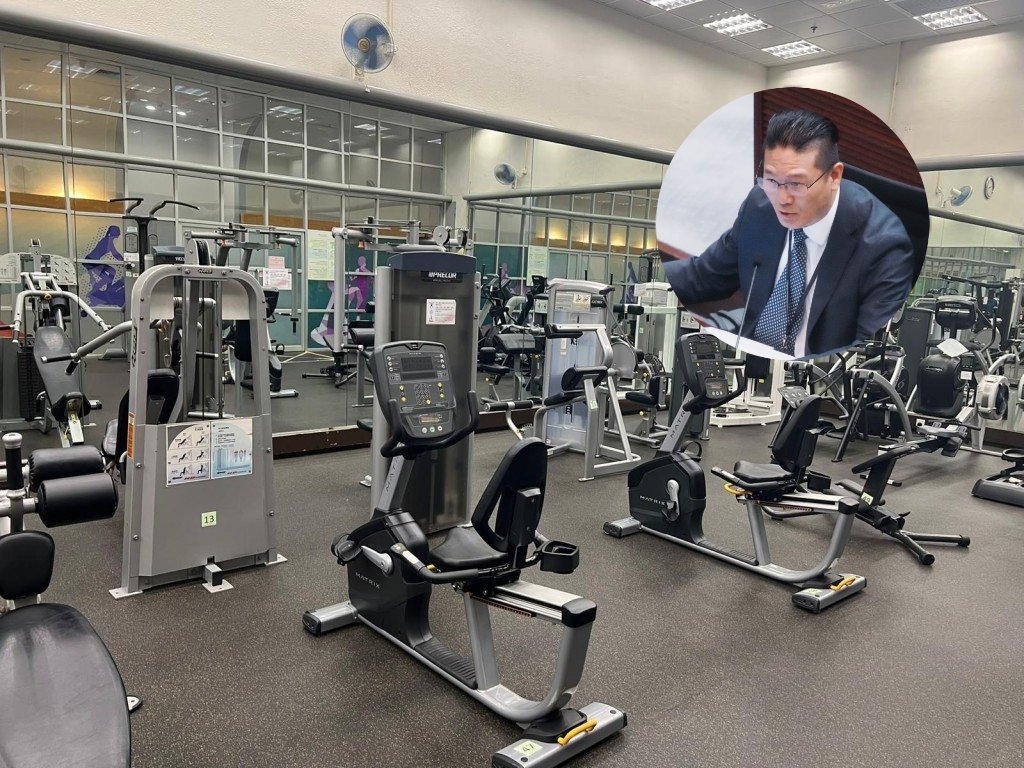
Reforms demanded to fix Hong Kong's severely oversubscribed public gyms
14-10-2026 11:45 HKT
When Pope Francis left the Vatican this month for his traditional Christmastime outing downtown, he acknowledged what many Romans have been complaining about for months: that his big plans for a Holy Year had turned the city into a giant construction pit, with traffic-clogging roadworks tearing up thoroughfares, scaffolding covering prized monuments and short-term rentals gobbling up apartment blocks.
When he opens Holy Year next week, Francis will launch a dizzying 12-month calendar of events that include special masses for all walks of life: artists, adolescents, migrants, teachers and prisoners.
Like many European art capitals, Rome has been suffering from overtourism as the Italian travel sector rebounds from Covid: Last year, a record 133.6 million people visited, with foreigners pushing Italy over the EU average in growth of the travel sector.
Rome, with its innumerable artistic treasures, the Vatican and Italy's busiest airport, was the top city in terms of nights booked in registered lodging.And yet for all its grande bellezze, it is hardly a modern European metropolis. It has notoriously inadequate public transportation and garbage collection. For the past two post-pandemic summers, taxis have been so hard to come by that Rome authorized 1,000 new cab licenses for 2025.
Its housing crisis has gotten so bad that vigilantes have taken to going out with wire cutters to snip off the keyboxes on short-term apartment rentals that are blamed for driving up rents and driving out residents."The market is out of control and has gotten worse with touristification and the Jubilee," said Roberto Viviani, a university researcher whose landlord recently refused to renew his lease in order to run it as a holiday rental. "The surprise was that he gave the Jubilee as the justification."
All of which has set the stage for a Jubilee opening today that is something of a mixed bag. For the Vatican, the year is a centuries-old tradition of people making pilgrimages every 25 years to visit the tombs of saints Peter and Paul and receiving indulgences for forgiveness of sins.For Rome, it's a chance to take advantage of four billion euros (HK$32.3 billion) in public funds to carry out long-delayed projects to lift the city out of years of decay and neglect into modern standards.
But for Romans, it's just another pressure point in a long-running battle to keep the flavor of their neighborhoods with affordable rents for locals."The Jubilee has significantly worsened this phenomenon," said Alberto Campailla, director of Nonna Roma, which has been slapping stickers "Your BnB, our eviction" on keyboxes.
The Jubilees date to 1300, when Pope Boniface VIII inaugurated the first Holy Year to mark the designation of Rome as the center of Christianity. Even then, the number of pilgrims was so significant that Dante referred to them in his Inferno.Mega works projects have long accompanied Jubilees, including the creation of the Sistine Chapel (commissioned by Pope Sixtus IV for 1475) and the big Vatican garage (for 2000 under St John Paul II).
Some have been controversial, such as the construction of Via della Concilliazione, that leads to St Peter's Square. An entire neighborhood was razed to make it for the 1950 Jubilee.The main works project for next year is actually an extension of that boulevard: a pedestrian piazza along the Tiber linking it to the nearby Castel St Angelo, with the major road that had separated them diverted to an underground tunnel.
The project, at 79.5 million euros the most ambitious, ran into a predictable glitch when archeological ruins were discovered during the dredging of the tunnel. The artifacts were transferred to a museum and the digging resumed.Mayor Roberto Gualtieri has pointed to another feature of the projects that past Jubilees have largely ignored, an emphasis on parks and "green" initiatives, in keeping with the pope's focus.
Francis has acknowledged the paradox of the Jubilee on the lives of locals. He wrote to priests and religious orders to ask them to "make a courageous gesture of love" by offering up any unused housing in their increasingly empty convents and monasteries to locals facing eviction.Gualtieri has gone farther, demanding alongside other mayors that Italy pass the necessary norms to let them regulate the proliferation of short-term rentals, blamed for driving up prices on average 10 percent over the past year.
"This is an emergency because we need to prevent entire blocks of the center from emptying out and turning into B&Bs, because the presence of residents in the center is fundamental," Gualtieri said.But the point-man for the Jubilee, Rino Fisichella, defended the Jubilee as part of Rome's fabric and denied the influx of pilgrims was anything but a net gain.
"As long as it has existed, Rome has always been called a 'common home,' a city that has always been open to everyone," he said."To think that Rome might reduce the presence of pilgrims or tourists would in my opinion inflict a wound that doesn't belong to it."
THE CONVERSATION/ASSOCIATED PRESS