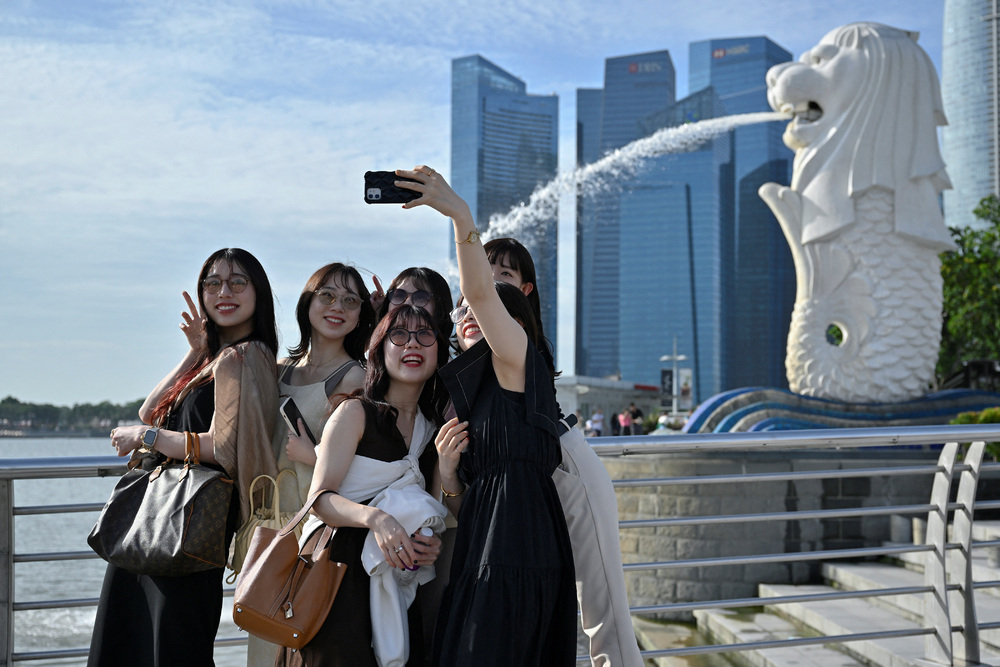
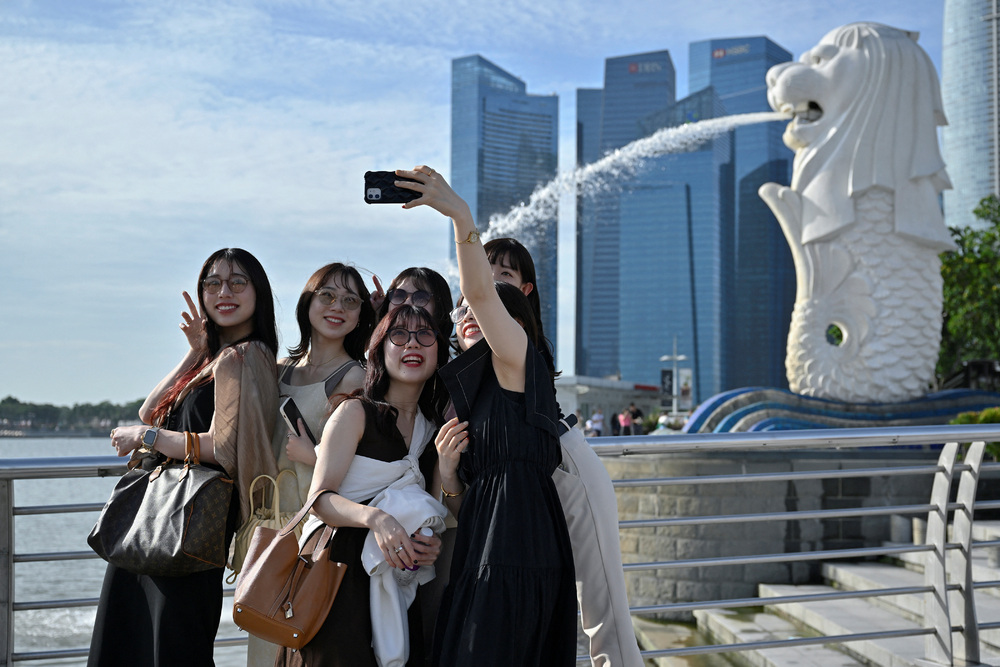
Like many rich Chinese graduate students Zayn Zhang thinks Singapore could be ideal to park his family's wealth.
He's hoping that studying at a university in the island republic will lead to permanent residency, so while 26-year-old Zayn hits the books his wife is out looking for a penthouse costing up to S$7 million (HK$41.7 million).
Zhang remarked at a business and philanthropy forum recently: "Singapore is great. It's stable and offers a lot of investment opportunities," and his family might establish a Singapore family office to manage its wealth.
Hosting discussions on topics like family wealth and sustainable investing, the forum at Singapore's Shangri-La hotel was attended by hundreds of wealthy people, many bedecked in designer gear from Hermes belt buckles to monogrammed Gucci shawls and the latest Dior bags. Several Chinese attendees said they had recently relocated to Singapore or were thinking of doing so.
With its tax-friendly regime and seen as politically stable, Singapore has long been a haven for ultra-rich foreigners.
But it has seen a fresh influx of wealth since 2021 after it became one of the first Asian cities to significantly ease pandemic restrictions and as many Chinese became disillusioned with their country's draconian Covid policies.
That disenchantment propelled Zhang, who gained Hong Kong residency in 2021, to look at Singapore.
"We just lost patience over time," he says, describing the lengthy quarantines he had to endure when traveling between Hong Kong and the mainland. Political turmoil in Hong Kong has also been disheartening, he adds.
Singapore's number of family offices - they handle investments, taxation, wealth transfer and other financial matters for the super rich - surged to about 700 in 2021 from 400.
Well-known Singapore family offices include those set up by James Dyson of vacuum cleaner fame, hedge fund manager Ray Dalio and Zhang Yong, founder of China's Haidilao hotpot restaurant chain.
Although fresher statistics are not available, those involved in the trend say interest in family offices picked up in 2022 and is expected to continue unabated this year.
Beijing's abandonment of zero-Covid policies is not expected to change the trend given concern among the country's rich about President Xi Jinping's common prosperity drive that aims to reduce inequality.
Chung Ting Fai, a lawyer who helps set up family offices, said that in late 2022 he had one inquiry a week from people wanting to move at least US$20 million (HK$156 million) into Singapore. That compares with one inquiry a month in 2021, and this January it's been two inquiries a week.
Many are parents looking to obtain permanent residency for their children, he says, noting inquiries also came from Japanese and Malaysians as well as Chinese.
Part of Singapore's attraction for the rich is its government-administered global investor program under which people who invest at least S$2.5 million in a business, a fund or a family office can apply for permanent residency.
Grace Tang, executive director at Phillip Private Equity that operates one of two global investor program funds in Singapore, says her new year has been filled with meetings with potential investors - most of them Chinese.
While some are launching family offices, others are setting up business headquarters in Singapore or investing in funds domiciled in Singapore.
Singapore's assets under management grew 16 percent to S$5.4 trillion in 2021, the latest year for which data is available. More than three-quarters of that originated outside Singapore, with just under a third coming from other Asia Pacific countries.
The influx of wealth is part of a wider trend of people returning to Singapore after an exodus of foreigners during the pandemic. Last year the republic had 30,000 more permanent residents and 97,000 more foreigners on a work or other long-term visa, boosting its population to 5.64 million.
Singapore's new additions sent rents surging 21 percent in the first nine months of last year. Home prices also jumped in the past two years, with mainland buyers continuing to be the top foreign purchasers of expensive private properties.
Another telling sign of how private wealth is flowing in is skyrocketing golf club memberships. The cost of membership to Singapore's prestigious Sentosa Golf Club has hit S$880,000 for foreigners - more than double 2019 levels, according to club membership brokerage Singolf Services.
Desmond Teo, the Asia Pacific family enterprise leader at consulting firm EY, says the inflows of money support Singapore's financial services sector and startups, creating a "rich ecosystem" that makes the republic more attractive.
"When you hit a certain critical mass the critical mass itself is an attraction," he remarks.
REUTERS