Last week I summarized the business case for ESG and sustainable investment. They have gained traction both because of the business case, and because many investors felt it is the right thing to do.
Now I want to examine a core problem with ESG investment: there is no singular authoritative source of ESG data.
One reason for that is because people cannot agree on how to define ESG - environmental, social and governance - and other key components not covered by the three letters.
From the European Union to the World Economic Forum, many organizations have tried hard to provide definitions, such as: "EU taxonomy for sustainable activities and European Climate Law." This taxonomy accompanied the so-called European Green Deal proposal that committed all 27 EU states to carbon neutrality by 2050.
Unlike usual financial datasets, ESG measures do not concern merely numbers but rely more on nuances.
So ratings firms face two key challenges: they must spend considerable human resources trying to normalize and understand the data; and human-based approaches tend to rely on analysts, which introduces human bias into data, skewing ESG scores.
Financial services have yet to come to a consensus on what makes an ESG product, leaving scope for misunderstandings and different interpretations.
Contrary to what many investors think, most ratings don't have anything to do with corporate responsibility as they relate to ESG factors. Rather, what the ratings measure is the degree to which a firm's economic value is at risk due to ESG factors.
For example, a firm could be a significant source of emissions but still get a decent ESG score if a ratings firm sees the polluting behavior as being managed well or as non-threatening to a company's financial value.
This could explain why the energy, oil and gas industry - among the biggest emitters of greenhouse gases - get an average aggregate score ("BBB") from Morgan Stanley Capital International.
It could also be why the largest tobacco company made it onto the Dow Jones Sustainability Indices., for it recently committed itself to a "smoke-free" future.
The lack of standardized ESG data exacerbates disagreements on definitions for ESG.
The number of companies that report on sustainability efforts has increased over the past decade amid a rise in socially conscious investing. In 2019, 90 percent of firms in the S&P 500 index issued such reports, against about 20 percent in 2011.
But all companies disclose differently.
In the absence of enforceable standards or regulation, companies can cherry pick what metrics to make public and what to keep confidential. That puts them at odds with investors who want a clear summary of non-financial risks a company faces and the ability to benchmark a company's ESG performance across a sector.
Despite the proliferation of the data and tools, ESG performance is still difficult when trying to compare between companies. This means investors are still getting a fragmented and inconsistent view of ESG.
In the non-alcoholic beverage industry, both leading carbonated soft drink companies get high ESG scores from the biggest ratings firms. They are also typically among the largest holdings for ESG funds. However, their core businesses involve the manufacturing and marketing of addictive products that are a major cause of diabetes and obesity.
Meanwhile, Big Tech firms tend to be among the largest holdings for ESG funds. They often get high ESG ratings as they are low producers of greenhouse gases. But few would consider them good corporate citizens due to scandals over surveillance and monopoly.
All of these problems point to the need for finance and environmental professionals, investors and governments to devise a common standard to measure ESG compliance.
Dr Jolly Wong is a policy fellow at the Centre for Science and Policy, University of Cambridge
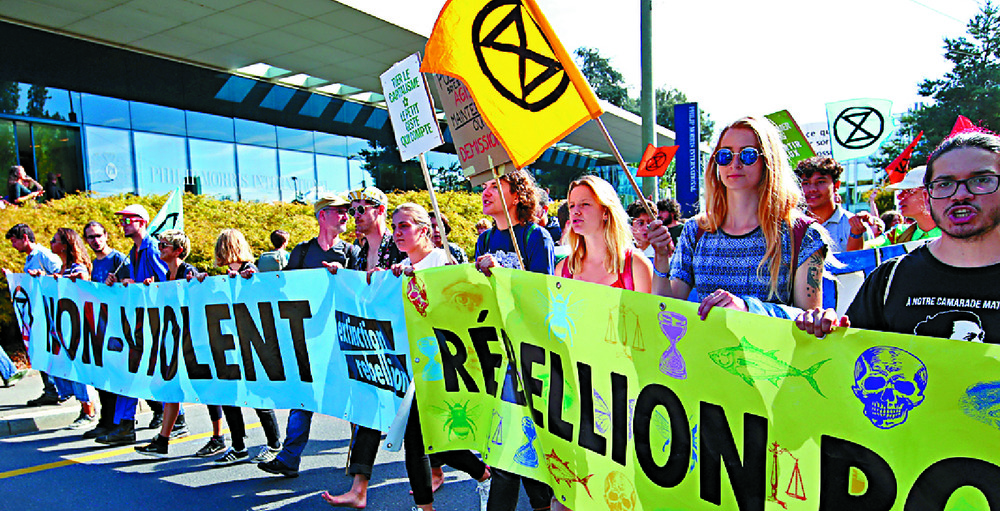
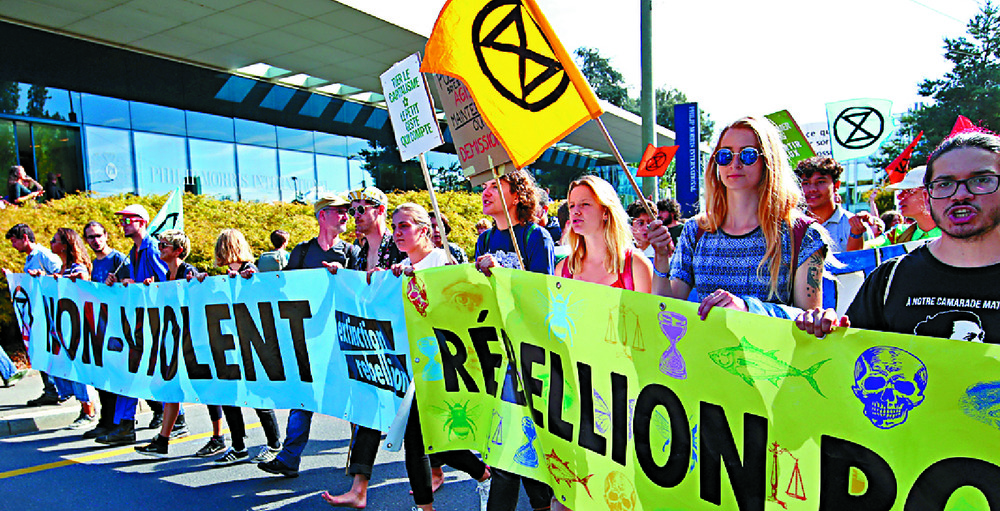
Pro-climate Extinction Rebellion activists rally outside Philip Morris International's headquarters in Lausanne, Switzerland.