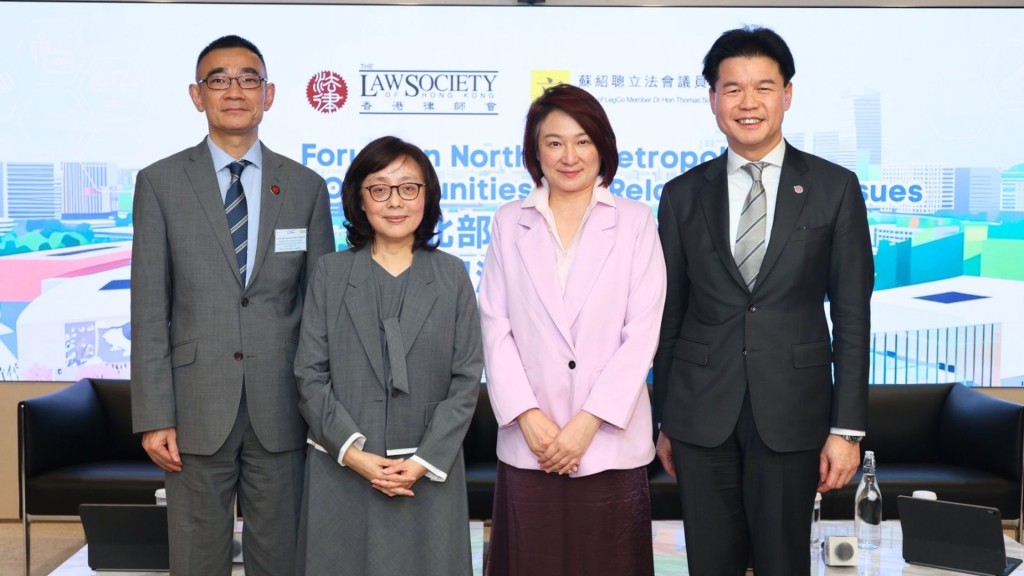
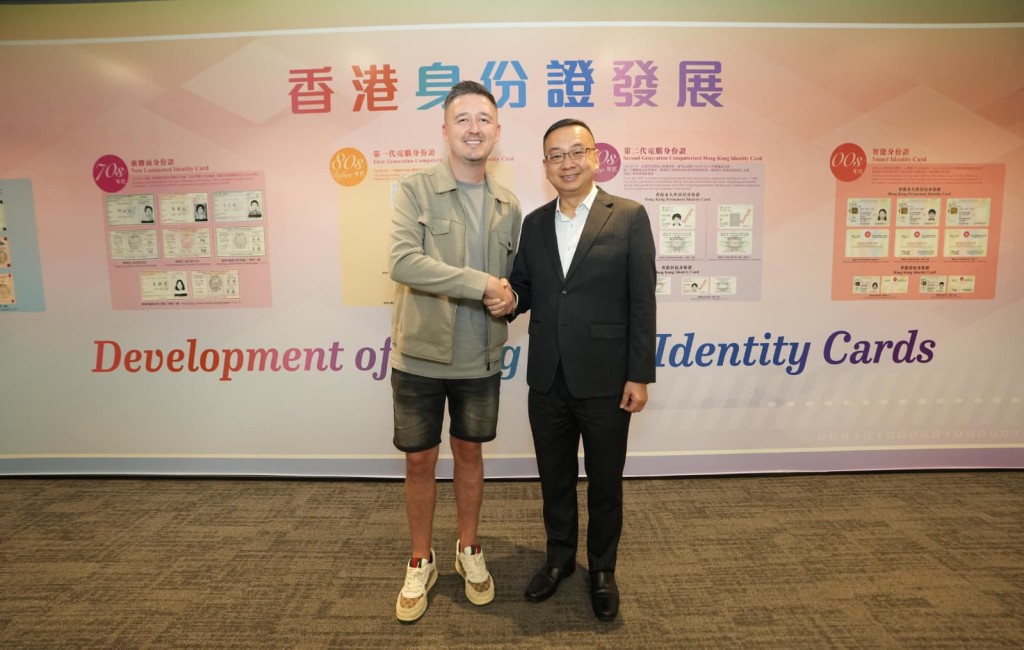
In my last column, I wrote about why the Northern Metropolis is important to Hong Kong's future. Today, I would like to share a few reflections from the recent "Forum on the Northern Metropolis: Investment Opportunities and Related Legal Issues", jointly organized by The Law Society of Hong Kong and the office of Legislative Council member Dr Hon Thomas So Shiu-tsung.
What struck me most at the forum was that the Northern Metropolis is not a topic for any single sector alone. It concerns planning, development, innovation, finance, professional services, and cross-boundary collaboration. More importantly, it concerns confidence. For any major development initiative to succeed, the community and the market must understand not only what is being built, but also the framework within which development will take place.
We were greatly honored to have LegCo President Hon Starry Lee Wai-king, GBS, JP, and Secretary for Development Bernadette Linn Hon-ho, JP, deliver opening remarks. Their presence reflected the importance attached to this initiative at both legislative and policy levels. Their remarks also reminded us that the Northern Metropolis is not an abstract concept. It involves real decisions on land use, infrastructure, industries, investment, and future livelihoods.
In my own opening remarks, I emphasized that the Northern Metropolis is not only a land development project. It is also a platform for legal, regulatory, and institutional innovation. When we speak about innovation and technology, cross-boundary flows, investment, and new economic activities, we must also speak about the legal architecture that gives these activities certainty and credibility. The rule of law is not a decorative concept to be mentioned after development has taken place. It is part of the foundation that enables development to take place with confidence.
President Lee referred to the LegCo's work in monitoring the progress of Northern Metropolis projects, including through the relevant subcommittee. She also highlighted the strategic importance of the Hetao area and boundary control point areas in facilitating the flow of people, goods, capital, and data. These are not technical matters only. They go to the practical question of how Hong Kong can better connect with the Greater Bay Area while maintaining the strengths that make Hong Kong trusted by international investors and the wider business community.
Secretary Linn outlined the Government's five-year vision, including new land supply, housing development, and the attraction of innovation and technology enterprises and other strategic industries. She also noted the continuing advantages of Hong Kong's common law system, rule of law, and strong intellectual property protection. These advantages are familiar to lawyers, but they should also matter to the wider public. They are part of why Hong Kong can serve as a bridge between different markets, systems, and expectations.
My reflection from the forum is therefore a simple one. The Northern Metropolis should not be understood only by looking at maps, construction timetables, or economic forecasts. It should also be understood as a test of how Hong Kong brings together its institutions, professional standards, and international connectivity to support long-term development. The legal profession has a responsibility to contribute in a practical and constructive manner, so that growth is supported by trust, transparency, and the rule of law.
Roden Tong, BBS , is President of The Law Society of Hong Kong