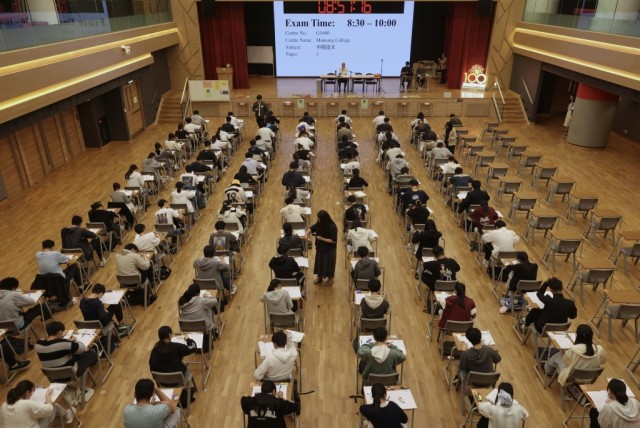
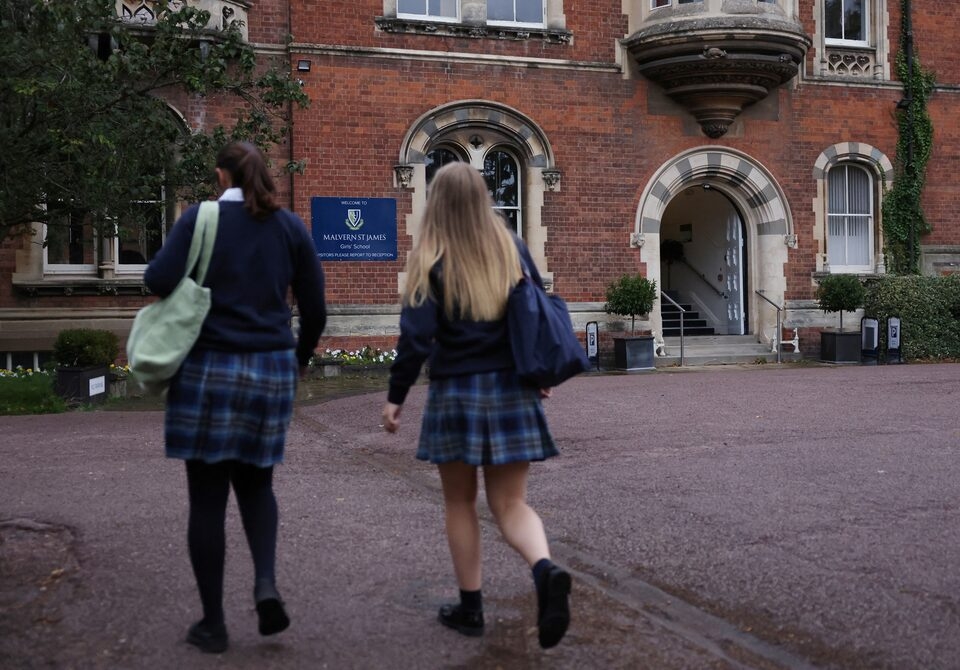
The globally recognized Hong Kong Diploma of Secondary Education Examination (HKDSE), the city’s primary university entrance examination taken by secondary school leavers competing for approximately 15,000 government-subsidized places available at the eight publicly funded universities in the city, was largely completed by the end of April. Candidates, however, will not receive their exam results until mid-July.
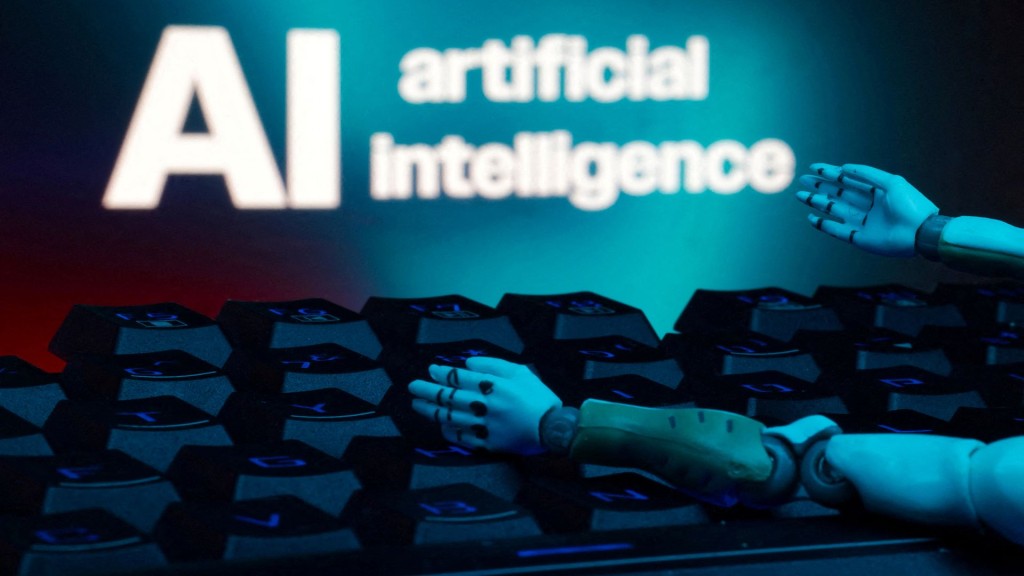
However, one thing is certain: by that time the results are released, nearly two-thirds of HKDSE candidates will feel disappointed, if not completely heartbroken, after failing to attain the grades required for admission to Hong Kong’s “Big Eight” universities. Yet, our youngsters should not despair. In reality, there actually are more pathways and opportunities than ever for them to establish a strong foothold in the increasingly competitive job market. With the meteoric rise of artificial intelligence (AI) and robotics, even a college graduate armed with a bachelor’s degree can no longer feel fully confident about landing a corporate entry-level job.
Beyond pursuing traditional university degrees, students may consider enrolling in sub-degree programs such as an associate degrees and higher diplomas. They can also explore the wide range of vocational and professional education and training (VPET) vocational courses offered by various institutions and corporations to enhance their employability. It is crucial to recognize that present-day vocational schools and courses are far more practical, career-oriented, and technologically updated than those familiar to our older generations, Modern-day VPET graduates are generally more tech-savvy and professionally trained, whereas in the past, many vocational roles were largely confined to semi-skilled mechanical and technical work. Besides, the experience and qualifications obtained by the VPET graduates are officially recognized in accordance with the Hong Kong Qualifications Framework. Nevertheless, to prepare our youth for an increasingly unpredictable future, our VPET system must continue to evolve and to adapt to the unprecedented global acceleration in AI and robotics, which is reshaping industries at an extraordinary pace every day.
As a pragmatic bridge that enables the younger generation to enter the job market and build long-term careers, VPET is an alternative pathway not only for those are denied the opportunity of a four-year university education, but also for any youth whose interests and strengths do not lie in traditional academics. Why do I say so? Over the past six months, while teaching part-time at a local cram school and coaching students on the exam techniques of taking HKDSE English in the past six months, I have come to realize that some of local students simply cannot thrive in traditional academic subjects because their interests, strengths, and potential lie elsewhere. One such student confided in me that he had no real interest in pursuing college education, and his heart lay in pop music. He shared his dream of forming a band with like-minded buddies to perform busking sessions and live gigs. He told me that he and his friends even paid out their own pockets to rent studio spaces so that they could practice and refine their musical skills in hopes of composing their own music – all just a month before the HKDSE exam.
Although a growing number of young people in America currently quit college education because they believe that it is not worth the astronomical tuition fees, my student had another reason for not going to university, his reply should have us taking a fresh look at the relationship of university education and youth aspiration. “I want to do music professionally, not academically,” he answered.
His response sheds light on the kind of opportunities that the government should provide to those students who are not keen on performing academically but hands-on learners. It is vital for our younger generation to understand that failing to gain university admission through the HKDSE isn’t a life-and-death matter. Indeed, today there are multiple alternative avenues for Hong Kong youths to unlock their potential and to explore diverse career opportunities. The Vocational Training Council (VTC), a few government departments, and a handful of public utilities including MTR, CLP Power and Towngas have launched a wide array of career-oriented and high-level vocational s training programs in collaboration with VTC, to name but a few.
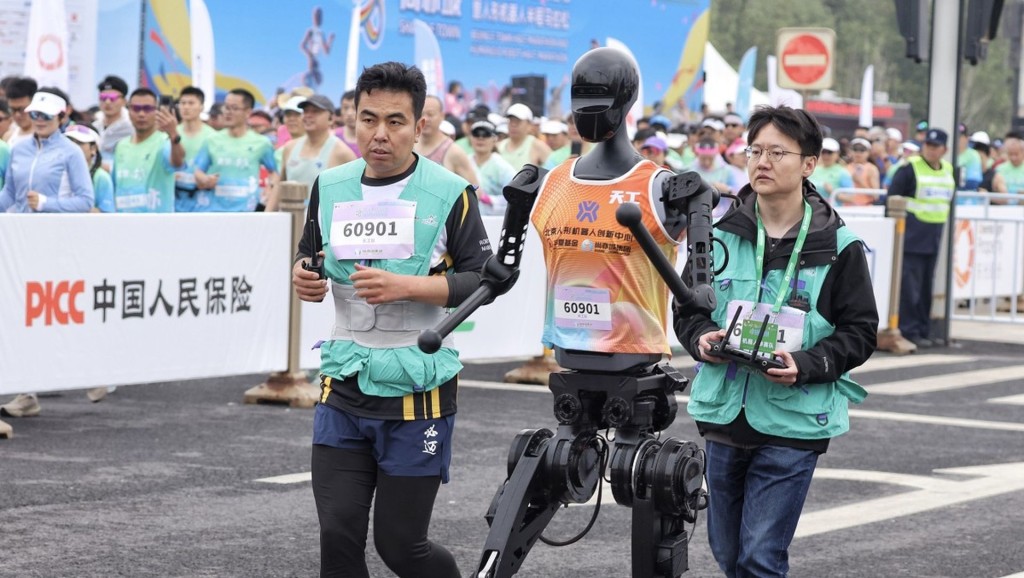
What’s more, the skills and trades one acquires through vocational education may prove relatively resilient in the age of AI, because what AI and robots in general are good at processing data, automating repetitive cognitive work, and handling routine, structured tasks – often within controlled environments. However, they are far less adept at tasks that require agile human movements, contextual judgments, and unconventional problem-solving processes. In this regard, AI may be ill-equipped, and hands-on professions enjoy a distinct advantage over AI and robots. It is therefore not surprising that Nvidia President and CEO Jensen Huang quipped that electricians and plumbers "will be the big winners in the AI race."
The government and the VTC have endeavored to incorporate AI and emerging technologies into VPET courses. For example, in his 2025 Policy Address, Chief Executive John Lee pledged to promote the development of Universities of Applied Sciences to expand Hong Kong’s vocational talent pool, while many courses under the VTC have already integrated modern technologies including VR and AR into training, enabling students to stay abreast of technological advancements. However, two major challenges remain. The first is attracting the imaginative and hands-on talents who might otherwise spend four unspectacular years in a traditional university that do not totally align with their aspirations and strengths. The second is challenging students who are not academically inclined into vocational education and training track at an early stage, thereby ensuring a sustainable supply of skilled hands-on professionals for Hong Kong.
Contemporary vocational education has come a long way over the past few years, emerging as a pragmatic bridge that enables the younger generation to enter the job market and build long-term stable careers. More importantly, it plays a pivotal role in fostering balanced and diversified economic development in Hong Kong. Nevertheless, as VPET constitutes an integral component of our broader education framework, any reform or overhaul must be undertaken with careful consideration of its potential impact on the city’s wider educational landscape.
Scott Cheng
Public Affairs & Communications Consultant / HKU SPACE Lecturer
𝗗𝗼𝘄𝗻𝗹𝗼𝗮𝗱 𝗧𝗵𝗲 𝗦𝘁𝗮𝗻𝗱𝗮𝗿𝗱 𝗔𝗽𝗽 ↓