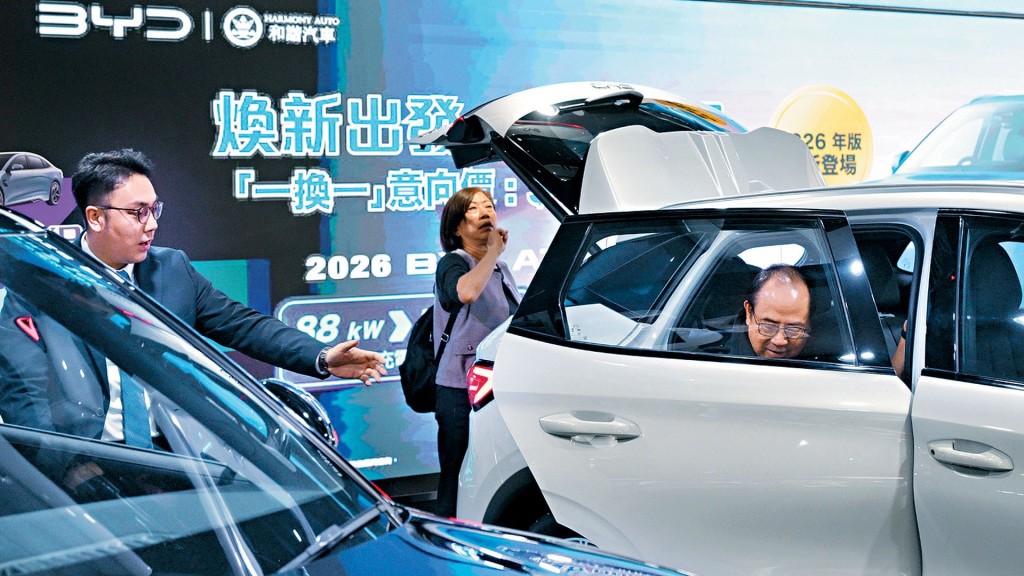
In the quest to achieve the 2050 carbon neutrality target, the Hong Kong SAR Government has successfully promoted the use of battery electric vehicles in Hong Kong. With over 70 percent of new private cars last year being electric, EVs now account for around 17 percent of all private cars in the city. This should definitely help to reduce carbon emissions by road vehicles.
But as the increased weight and the shorter range of EVs inhibit their widespread use for goods vehicles, the alternative of using hydrogen power appears to be an attractive way forward. One of the objections to its application is the source of hydrogen. Western countries see it as not a totally clean power source because hydrogen can be produced from different processes, including those that fall outside the scope of renewable energy sources. The total production process, coupled with the need for transportation by fossil fuel vehicles, could cause such hydrogen gas products to be classified as grey instead of green.
To foster interoperability and ensure consistent sustainability claims across economies, a certification scheme is being developed by the Electrical and Mechanical Services Department. It aims to provide a valuable, comprehensive, and credible framework with internationally aligned assessment standards, accreditation mechanisms, and certification processes. This work is suitable and relevant for the city to leverage its role as super-connector and super value-adder in a bid to attract global investors as well as support hydrogen trade and the green energy transition in the Chinese mainland and Hong Kong.
The scheme defines the system boundary, emission calculation methodology, and threshold setting to achieve a certification framework comparable and acceptable internationally, mainly with the European Union, which at this time seems to have made significant progress in developing regional hydrogen development frameworks and practices associated with certification.
The system boundary spans from the extraction of feedstock to production, conditioning, and conversion, as well as transport to and storage at the supply point.
For threshold setting, the EU currently sets a low greenhouse gas emission value of 3.384 kgCO2eq/kgH2 for green hydrogen, which is achieved using renewable energy production via water electrolysis with green transport and storage. EMSD proposes the same threshold value and does not mandate production by renewable energy – giving consideration to the limited availability of renewable energy resources in Hong Kong and advocating different emerging technologies for the implementation of green hydrogen.
EMSD also proposes a category of low-carbon hydrogen for some flexibility for hydrogen producers with effective decarbonization efforts and low-carbon hydrogen production as a transitional activity, with an emission value of 4.86 kgCO2eq/kgH2.
This transition value will provide an incentive to producers of low-carbon hydrogen approaching green status as a transition activity – such as those applying decarbonization measures such as carbon capture utilization – and storage method, provided that the process does not use coal or coal derivatives as feedstock and dedicated energy sources from oil, coal, or coal derivatives.
The Hong Kong Monetary Authority, which promotes green financing for hydrogen development, publishes a Hong Kong Taxonomy for Sustainable Finance (Phase 2A) in which the manufacture of hydrogen is included. The threshold and system boundary settings are aligned with the proposed Certification Scheme. They impose specific requirements for green and transition activities, including criteria for feedstock and energy sources. Applicants of the proposed certification scheme are encouraged to achieve taxonomy-aligned status under the two categories. This is a positive and effective move to encourage the industry to manufacture hydrogen approaching green status that can be recognized internationally.
The EMSD certification scheme is presently inviting trade and industry responses and comments.
It is gratifying to see government departments and related authorities, especially those from the finance sector, getting together to help the industry to develop new technologies to approach carbon reduction. Without doubt, the availability of finance is a key ingredient for such ventures, and appropriate encouragement measures will accelerate the appropriate technological development to meet this goal.
Veteran engineer Edmund Leung Kwong-ho casts an expert eye over features of modern life