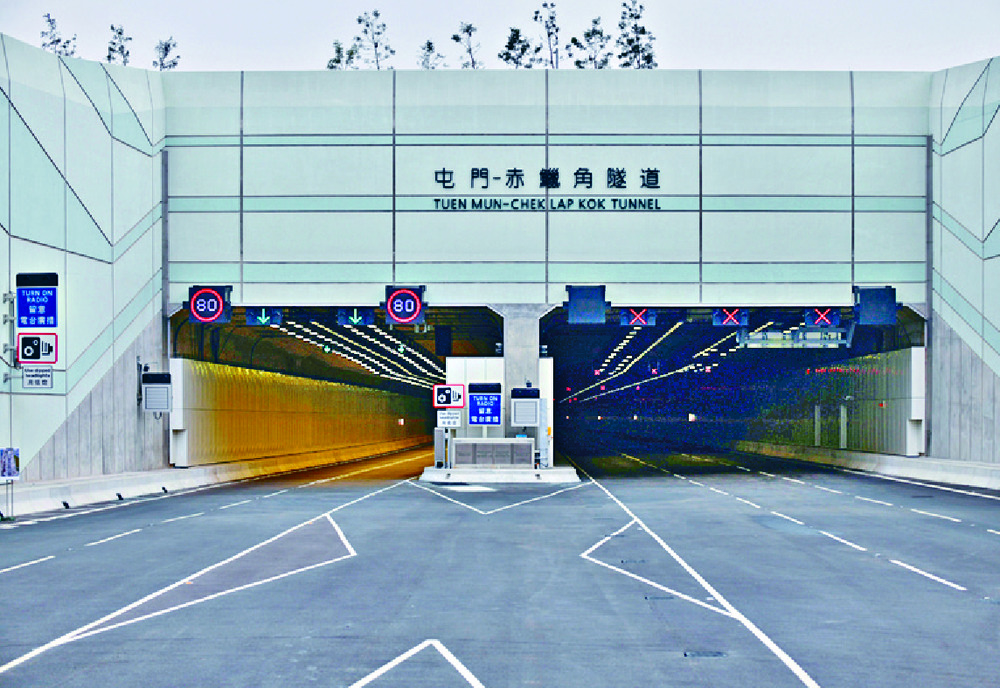
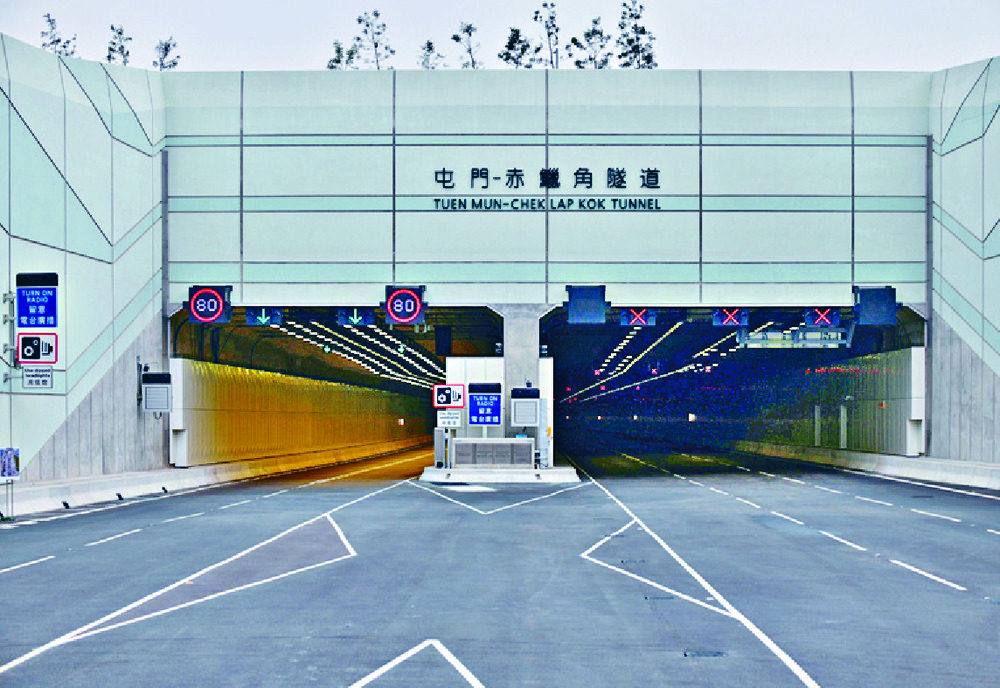
The opening of the Tuen Mun to Chek Lap Kok link next week offers not only an alternative link to our airport apart from the Tsing Ma Bridge but also reduced travel time for residents living in northern and eastern New Territories.
In previous columns, I gave the impression that bored-tube tunnels are used only for crossing through mountains and immersed tubes for harbor links. This new tunnel adds another dimension.
Instead of the usual immersed tube construction, this tunnel employs bored-tube technology.
One of the boring machines used for this tunnel is the largest ever used in the world, with a diameter of 17.6 meters. The tunnel has also been dug very deep, at 60 meters below sea level, to avoid disturbance to the seabed, busy marine traffic, as well as to account for other environmental and land-use concerns.
Constructing a tunnel located at such depths is not without its challenges. At that level, minimizing seawater seepage into the tunnel to prevent catastrophic danger to construction personnel and machinery is vital. The TBM operates at a high air pressure of about six atmospheres to ensure water can be kept out.
Divers will know that working under these type of high air pressure conditions will make workmen susceptible to "diver's bends," caused by high pressure air droplets trapped in the arms and knee joints, risking permanent damage to joints, among other chronic illnesses.
The remedy for this sickness is normally putting workers in depressurization chambers to release the trapped air, but this would result in the slowing down of the construction process and hazards for construction personnel.
The engineers for this tunnel constructed a living cabin within the TBM, allowing engineers and workmen to stay in the cabin for up to 28 days before needing to change shifts.
This significantly reduces the need for frequent use of depressurization chambers and provides safe and convenient living conditions.
One can imagine that this is almost like living on a satellite in outer space, but it is happening right here in Hong Kong under water!
The 5km long tunnel also incorporates many other innovative design features.
The tunnel shields, which are necessary to "seal" the tunnel after boring to provide strength to the tunnel wall and prevent water seepage, come in precast concrete segments. The decks for the road passage - forming the utility gallery underneath - and the overhead ventilation ducts are also precast, along with most other parts of the tunnel.
The use of these precast pieces not only reduces construction time and costs, but also minimizes the number of construction workers required to work inside the tunnel.
For operational safety, cross passages are necessary to allow vehicle occupants to escape to safety in the unlikely event of a fire or other hazards.
There are 57 such passages along the 5km length of the tunnel. Again, these cross-passages were constructed using pipe-jacking boring machines for speed and cost reasons.
All these innovative construction methods have earned this project multiple international accolades.
Veteran engineer Edmund Leung Kwong-ho casts an expert eye over Hong Kong's iconic infrastructure