Read More
Marcus Lum
ADVERTISEMENT
SCROLL TO CONTINUE WITH CONTENT
Marine conservationists are calling for the establishment of a protected marine area in Port Shelter to safeguard fishery resources, preserve habitats and protect biodiversity.
Kelvin So Jun-yin, oceans conservation manager at WWF-Hong Kong, said the area has unique ecological value, as evidenced by people engaging in recreational activities like scuba diving and kayaking.
"However, Port Shelter faces threats such as accidental damage to coral reefs and from marine debris," he said.
So said waters near Sharp and Shelter islands are home to 46 of 84 hard coral species and at least 169 marine fish species.
He said stony corals, primarily found in shallow waters, are especially vulnerable.
"Given their slow growth rate, with only a few millimeters added each year, a 50-centimeter coral could take decades or even a century to form," So said.
He emphasized the importance of designating the area as a marine protected area to restrict ship speeds and tourist activities, thereby safeguarding biodiversity.
David O'Dwyer, chairman of Living Seas Hong Kong, urged visitors to respect the area's environment by removing litter.
He also called for "responsible practices among recreational and commercial fishermen to avoid overfishing and contribute to better protection of the area."
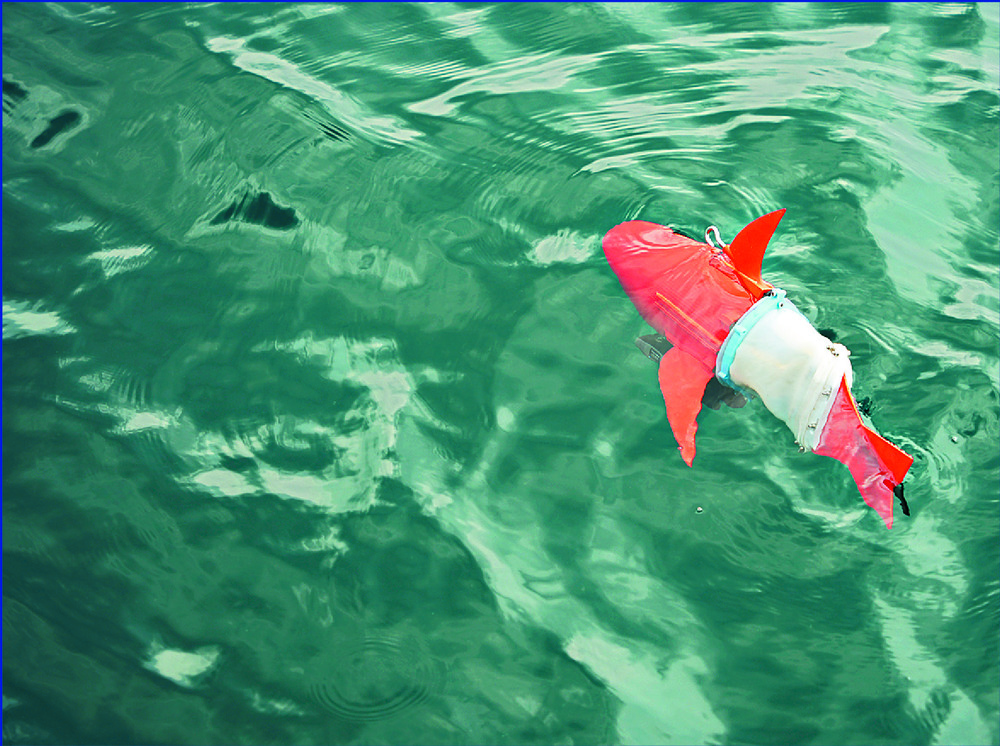
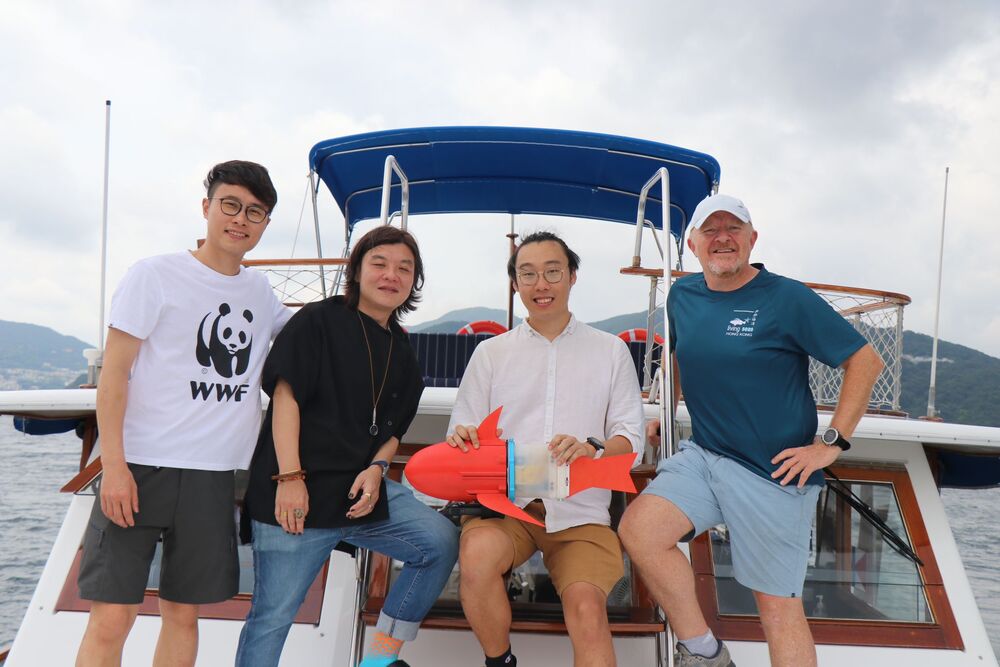
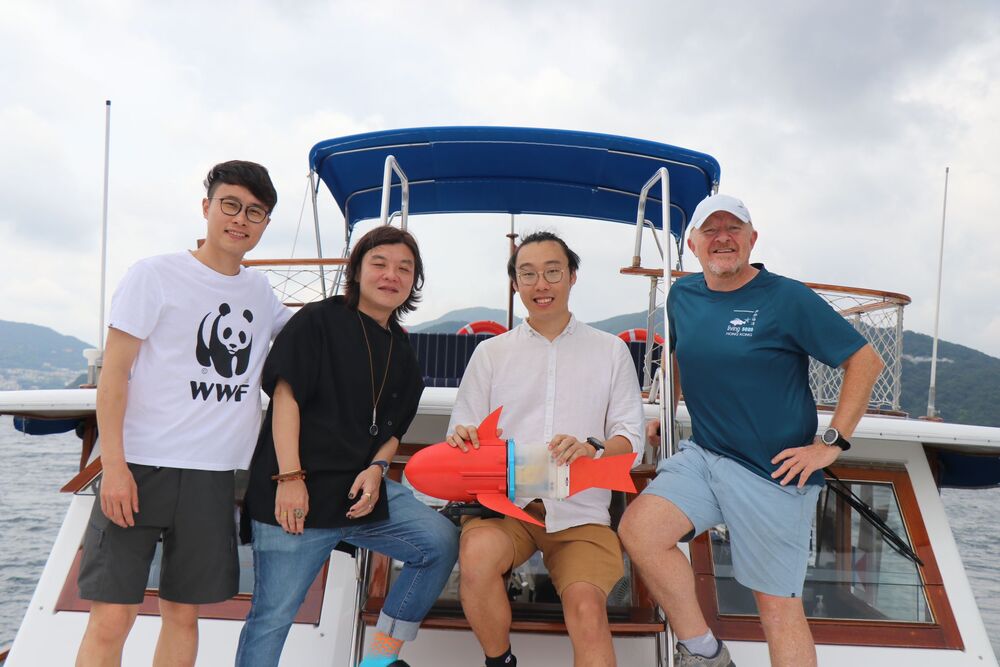
To monitor the environment and collect data on fish and coral in Port Shelter, the Hong Kong Marine Protection Alliance is deploying a robotic fish developed by Timothy Ng Ju Kin, CEO and cofounder of Snapp Snapp Ocean Data Solutions.
Equipped with an underside camera, the eponymous robot can film the marine environment and organisms on the seabed within a range of three to five meters.
This non-invasive approach allows for the collection and recording of ocean data without harming the environment or entangling seabed organisms.
Ng said the design enables faster and efficient movement at seabed levels.
Cofounder and design strategist Kevin Lin Xi said the research is aimed at enhancing the robot prototype by incorporating additional technologies such as sensors to gather data on seawater temperatures, pH levels, water quality and more.
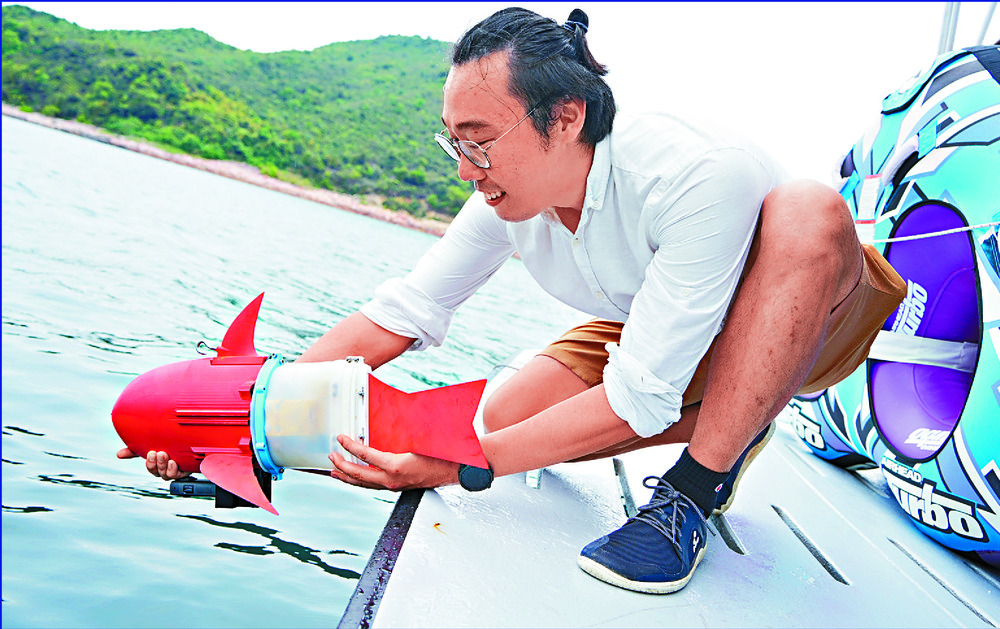
Timothy Ng releases the fish-like robot near Port Shelter.