Read More




Night Recap - June 2, 2026
3 hours ago








Typhoon signals depend on low-pressure system’s track and speed, say HKO
01-06-2026 20:17 HKT


HK to bake in 36-degree heat on Friday before five-day rain spell
01-06-2026 17:31 HKT
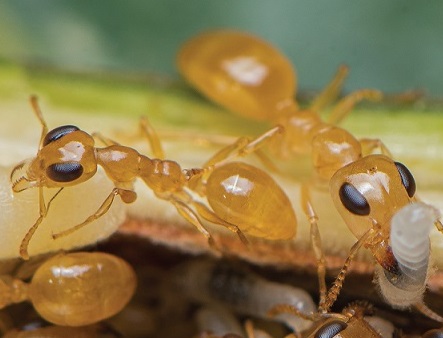
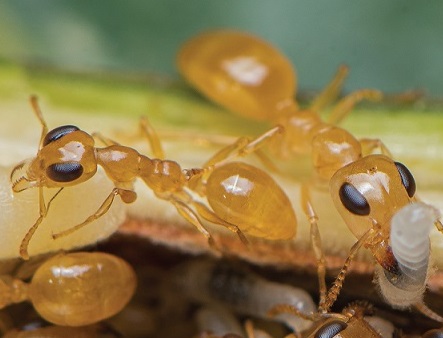
There are at least 20 quadrillion ants on Earth, according to a new study which says that staggering figure could likely be an underestimate of the total population of an insect that is an essential part of ecosystems around the world.
Determining the global population of ants is important for measuring the consequences of changes to their habitats – including those caused by climate change.
Ants play a significant role, dispersing seeds, hosting organisms and serving as either predators or prey.
Some studies have already attempted to estimate the global ant population, but they resulted in a far smaller number than 20 quadrillion, which is 20 million billion.
For this new attempt published Monday in the Proceedings of the National Academy of Sciences, researchers at the Insect Biodiversity and Biogeography Laboratory of the University of Hong Kong’s School of Biological Sciences analyzed 465 studies that measured ant numbers in the field.
The hundreds of studies used two standardized techniques: setting traps that captured ants passing by during a certain period of time, or analyzing their numbers on a given patch of leaves on the ground.
“We were able to compile such data from nearly 500 different studies from all over the world and written in many different languages. In this way, we have been able to quantify the density of ants in various parts of the globe, and also to estimate the total number of ants on Earth,” said postdoctoral fellow and lead author Patrick Schultheiss.
Based on the estimated number of ants, their total global biomass is thought to be 12 megatons of dry carbon – more than that of wild birds and mammals combined, and 20 percent of that of humans.
There are more than 15,700 named species and subspecies all over the planet, and probably an equal number that have yet to be described.
But the study also found that nearly two thirds are found in only two types of ecosystems, tropical forests and savannahs, and that tropical regions generally harbor more ants than regions with cooler climates.
“Ants are particularly abundant in forests, and surprisingly, in arid regions but become less common in human-made habitats, with potential consequences for the ecological services (eg, decomposition, pest control) they may provide,” said colead author and former SBS postdoctoral fellow Sabine Nooten.
The report also noted that while surveys have been carried out on all continents, little or no data exists in some major regions of central Africa and Asia, which is why “the true abundance of ants globally is likely to be considerably higher” than estimated.
“It is of utmost importance that we fill these remaining gaps to achieve a comprehensive picture of insect diversity.”
In the future, researchers also plan to study the environmental factors influencing population density of the tiny creatures.