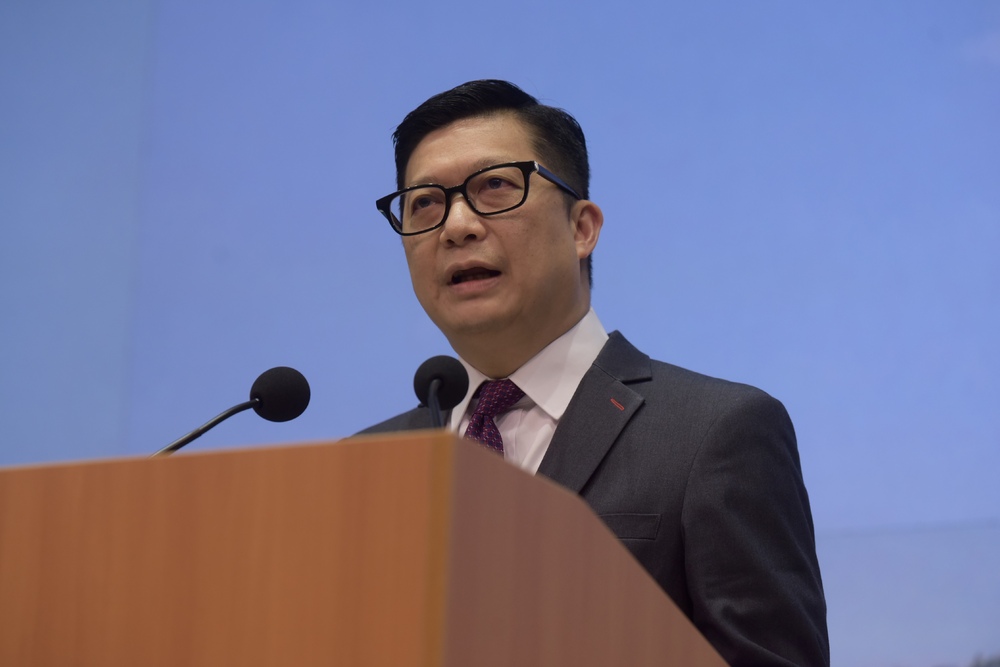
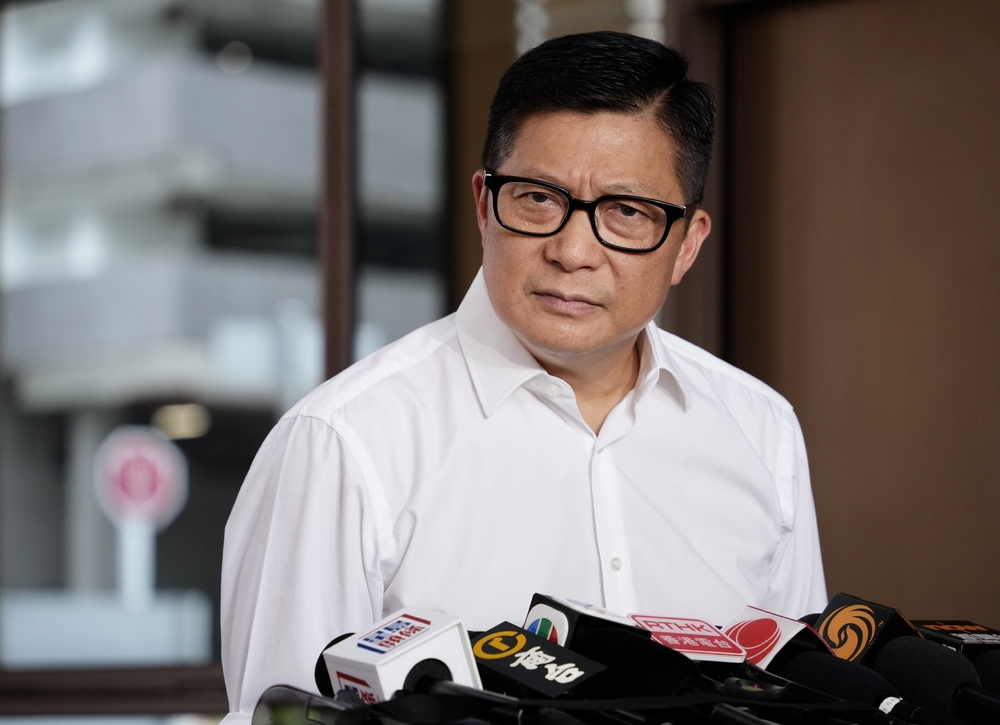
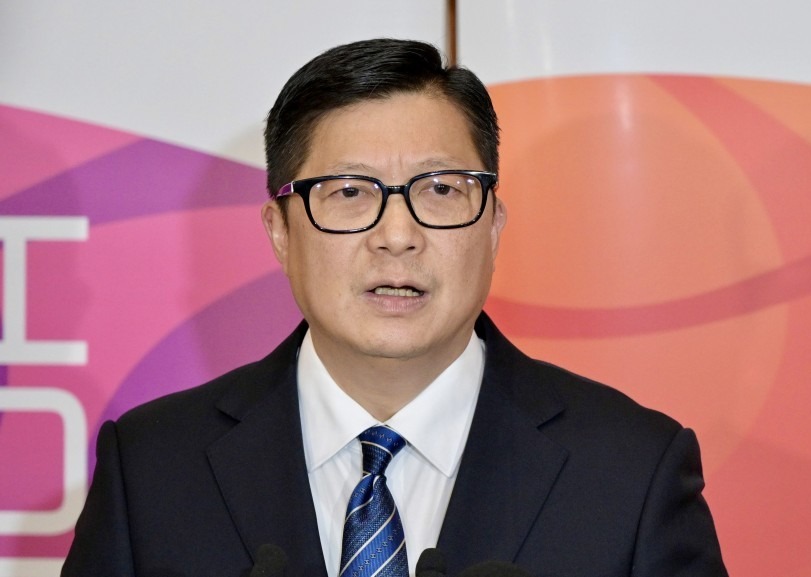
Secretary for Security Chris Tang Ping-keung on Wednesday sent two separate letters to the Washington Post and the Wall Street Journal, firmly refuting the editorials they published on Monday (December 15) regarding the related case.
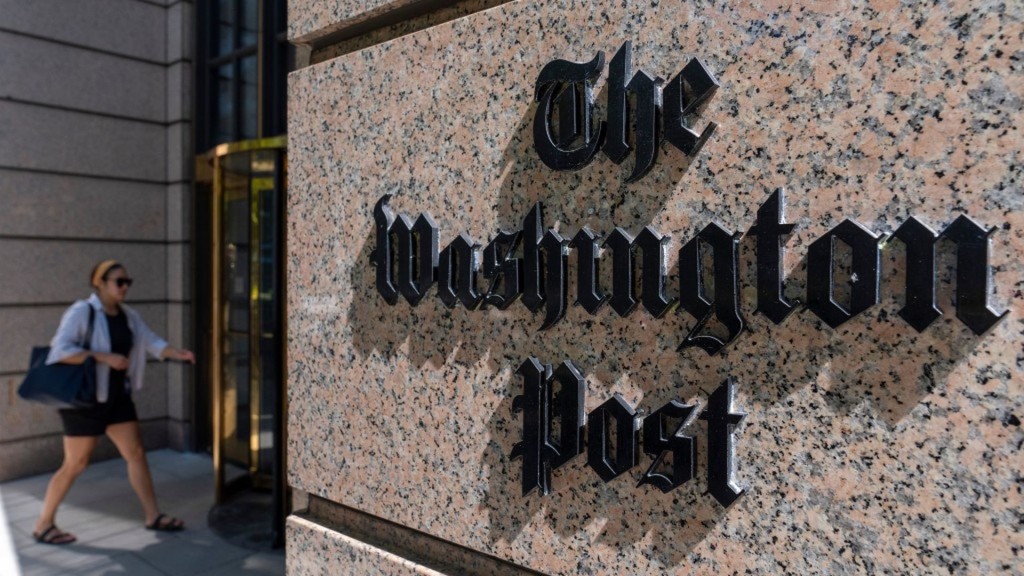
In his letter to the Washington Post, Tang said the editorial “Jimmy Lai and the end of Hong Kong” sought to disparage the city’s status as the world’s freest economy and one of the safest cities, while ignoring evidence in Jimmy Lai’s criminal case.
He emphasized that everyone is equal before the law in Hong Kong, that Lai’s trial was open and transparent, and that multiple foreign consular staff attended throughout, witnessing the fairness of the judicial process.
Tang clarified in the letter that Lai was convicted of three offenses endangering national security.
The judgment made clear that, both before and after the implementation of the Hong Kong National Security Law, Lai's intention was to subvert the rule of the Chinese Communist Party, even at the expense of the nation’s and Hong Kong citizens’ interests.
He said no country could tolerate attempts to subvert the government using biased or misleading information.
In addition, Lai has received appropriate treatment and medical care while in custody, with arrangements made at his own request.
Tang reiterated that the rule of law underpins Hong Kong, and that the principle of handling all violations according to law applies to all cases, including those under the National Security Law.
In his letter to the Wall Street Journal, Tang said he was shocked that the editorial “After the Jimmy Lai Verdict” ignored the facts of the case and urged US and UK leaders to interfere in China’s internal affairs and undermine Hong Kong’s rule of law.
He emphasized that no one is above the law in Hong Kong, that Lai’s trial was fully open, and that foreign consular staff were present to observe.
Tang noted that the written reasons for the judgment run to 855 pages and are fully accessible to the public, which suffices to rebut claims of a “sham verdict.”
He criticized the paper for portraying Lai as merely a journalist expressing personal views, saying it is a serious distortion of the facts, and stressed that the case is unrelated to press freedom.
The letter further stated that Jimmy Lai used Apple Daily as a platform, using journalism as a cover to engage in acts harming the country and Hong Kong, and personally colluded with foreign forces to seek sanctions against the central authorities and the HKSAR Government.
Tang said no country could tolerate such conduct, and Lai’s case reflects Hong Kong’s determination to curb acts endangering national security in accordance with the law to safeguard the city’s safety.