Read More
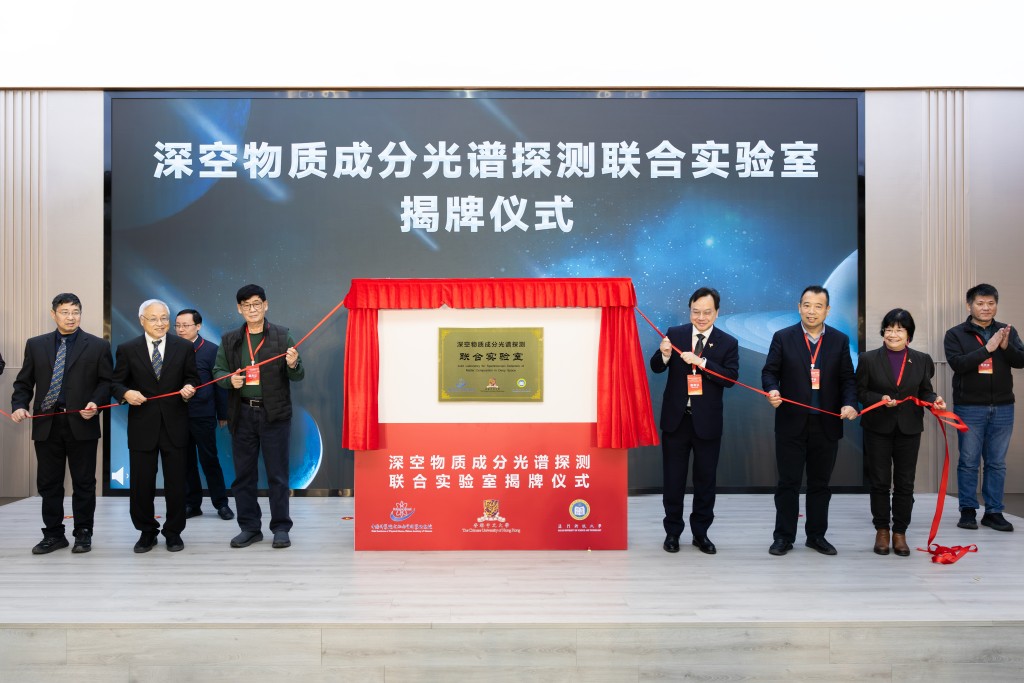
The Chinese University of Hong Kong (CUHK) on Sunday joined hands with the Hefei Institutes of Physical Science under the Chinese Academy of Sciences and Macau University of Science and Technology to establish a “Joint Laboratory for Deep-Space Spectroscopic Detection of Material Composition,” marking a new phase of cross-regional collaboration in China’s deep-space exploration program.
ADVERTISEMENT
SCROLL TO CONTINUE WITH CONTENT
The cooperation agreement was signed at Science Island in Hefei on December 14, alongside the official launch of the joint development of the Tianwen-3 mission payload, the Laser Heterodyne Spectrometer.
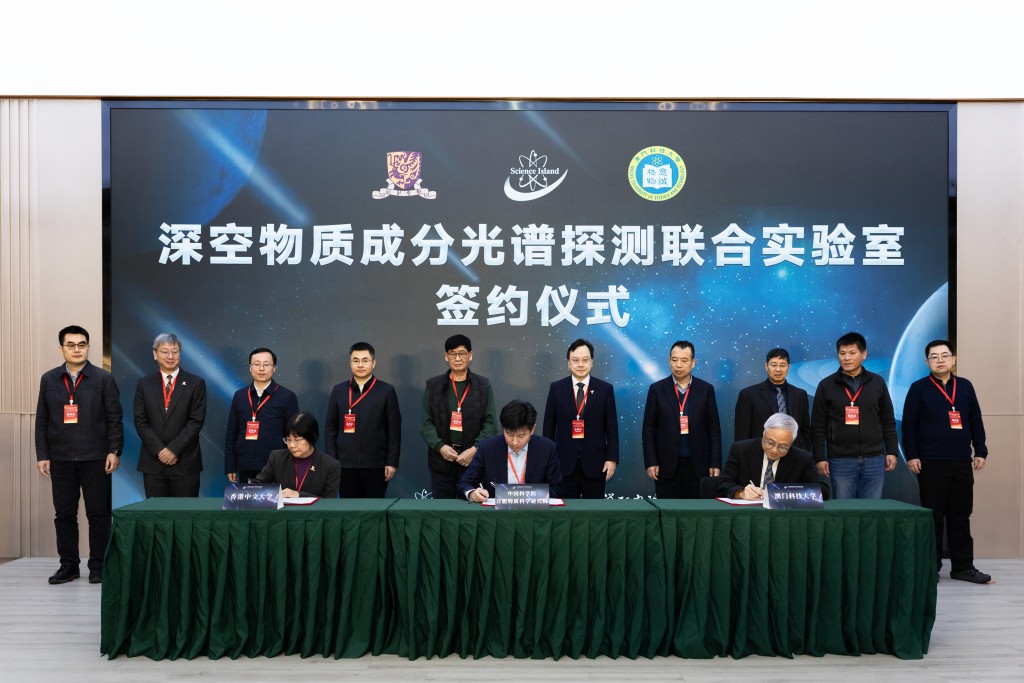
The laboratory aims to serve national strategic needs in deep-space exploration by pooling strengths from the mainland, Hong Kong, and Macau.
CUHK President Dennis Lo Yuk-ming, also an academician of the Chinese Academy of Sciences, attended the ceremony together with senior officials and representatives from Anhui province, the Hefei municipal government, the Chinese Academy of Sciences, and Macau University of Science and Technology.
The event also marked the inauguration of the joint laboratory and the formal kickoff of the Tianwen-3 payload project.
The joint laboratory is designed as a high-end research platform integrating the mainland’s advantages in large-scale scientific facilities and engineering development, Hong Kong’s expertise in precision spectroscopy and artificial intelligence, and Macau’s specialized research capabilities in aerospace technology and planetary science.
The three institutions aim to advance coordinated innovation in support of the country’s deep-space exploration strategy.
Speaking at the ceremony, Lo said the collaboration comes at a significant moment for the nation’s scientific development.
“The 15th Five-Year Plan is an action blueprint for the country’s new stage of development over the next five years, with a strong emphasis on the leading role of scientific and technological innovation, accelerating high-level self-reliance in science and technology, and advancing the integrated development of education, technology and talent,” he said.
“At this important juncture, CUHK is honored to receive approval from the China National Space Administration’s Lunar Exploration and Space Engineering Center to collaborate with the Hefei Institutes of Physical Science and Macau University of Science and Technology through the integration of resources and research capabilities to participate in the Tianwen-3 payload project. This carries major and far-reaching significance for Hong Kong and Macau’s integration into the national development framework.”
The Laser Heterodyne Spectrometer, led by CUHK, will serve as a key component of the joint laboratory’s substantive scientific collaboration.
The instrument is designed to enable high-precision, wide-coverage detection of water vapor and its isotopes in the Martian atmosphere, as well as global atmospheric wind field measurements on Mars.
According to project objectives, the mission is expected to shed light on the mechanisms and evolutionary history of water escape on Mars, improve understanding of Martian atmospheric dynamics and climate evolution, and provide critical scientific and technological support for China’s future deep-space exploration efforts.
Looking ahead, the joint laboratory will focus on key scientific challenges in deep-space exploration, with an emphasis on developing high-sensitivity and high-resolution spectroscopic detection technologies.
Research will include in-situ and remote sensing studies of the material composition of celestial bodies such as Mars and the Moon, while also jointly cultivating interdisciplinary talent in planetary science and space technology with a global perspective. The partners aim to build the laboratory into an internationally influential joint innovation platform for deep-space exploration.
CUHK’s contribution draws on long-term research led by Ren Wei of the Department of Mechanical and Automation Engineering under the Faculty of Engineering.
His team has conducted sustained research into novel laser spectroscopy technologies and applications for aerospace needs, achieving a series of innovations in high-precision spectroscopy, with detection performance indicators such as ultra-high sensitivity and ultra-wide dynamic range reaching internationally leading levels.
CUHK has been actively involved in the country’s deep-space exploration efforts in recent years.
The university has participated in the development of Earth observation satellites, successfully launched the “Hong Kong Youth Scientific Innovation,” and contributed to a soybean research project that was carried into space aboard the Tianzhou-6 cargo spacecraft, further underscoring Hong Kong’s growing role in national space science initiatives.