Do you know this is the perfect season for oysters? According to the “oyster’s rule of thumb,” wild oysters are best during the months with the letter “r,” i.e. around September to April. That’s the period when oysters are supposed to be the plumpest and most flavorful.
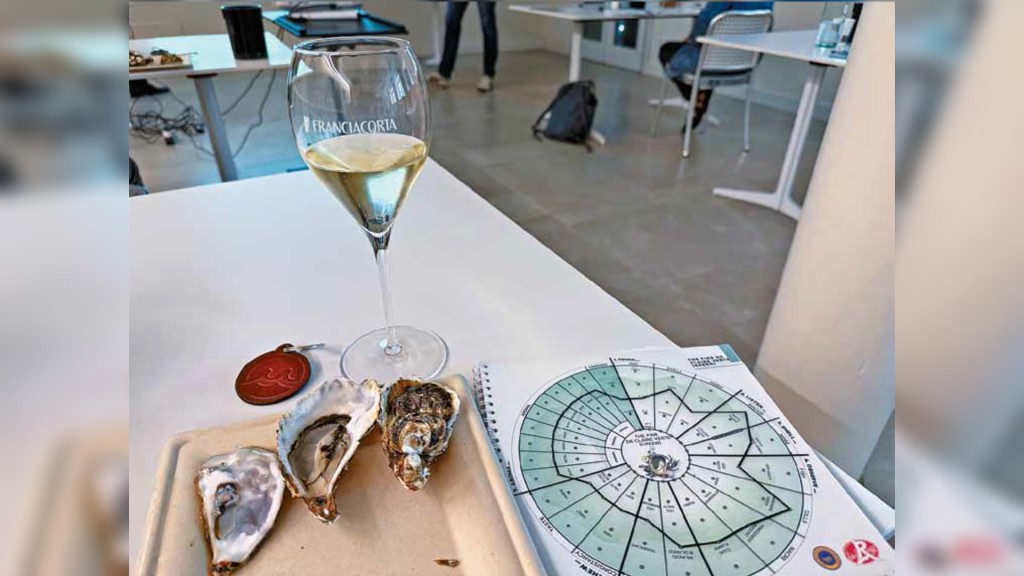
Among the various kinds of oysters, Fine de Claire from France’s Marennes Oléron is one of the most commonly seen in Hong Kong. It is known for its delicate and balanced profile, and therefore easily enjoyed by the general audience.
However, beyond Fine de Claire, the French region has a lot more to offer. Fine de Claire Verte has a similar texture as Fine de Claire, but with an additional vegetal note. Spéciale de Claire is richer, fleshier, and more intense. For the ultimate indulgence, Pousse en Claire is the most refined, with a strong character and distinctive sweetness.
Given the large range in flavor and texture across the numerous kinds of Marennes Oléron oysters, is there a wine that has such paralleled diversity?
Welcome to the world of Franciacorta.
An Italian wine made with traditional sparkling wine production method, Franciacorta was the first bollicine to earn a DOCG status in 1995. Similar to
Champagne, Franciacorta uses Chardonnay and Pinot Noir as the major grape varieties. What makes Franciacorta the ideal pairing for Marennes Oléron oysters is the wine’s salinity derived from the region’s unique terroir.
Filled with glacial deposit from millions of years ago, Franciacorta vineyards have been permeated with precious minerality. The wine’s bubbles create a cleansing effect, its creaminess complement the richness of the oyster, while the brininess echoes with huîtres’umami character.
Although its production is 15 times less than that of Champagne, Franciacorta has a well-defined set of products. A classic Franciacorta Brut offers the freshness and elegance for the lighter Fine de Claire.
Satèn, a Blanc de Blanc made with slightly lower pressure, expresses notes of white flowers and aromatic herbs that go well with the “greenness” of Fine de
Claire Verte.
For the richer Spéciale de Claire, try a Riserva that has been aged on lees for at least 60 months for its depth and complexity.
Last but not least, a Pas Dosé that has no residual sugar allows the characters of Pousse en Claire to shine.
French ingredients paired with Italian wines? Of course it works.
Alice Wong is a certified wine educator based in Hong Kong