Read More








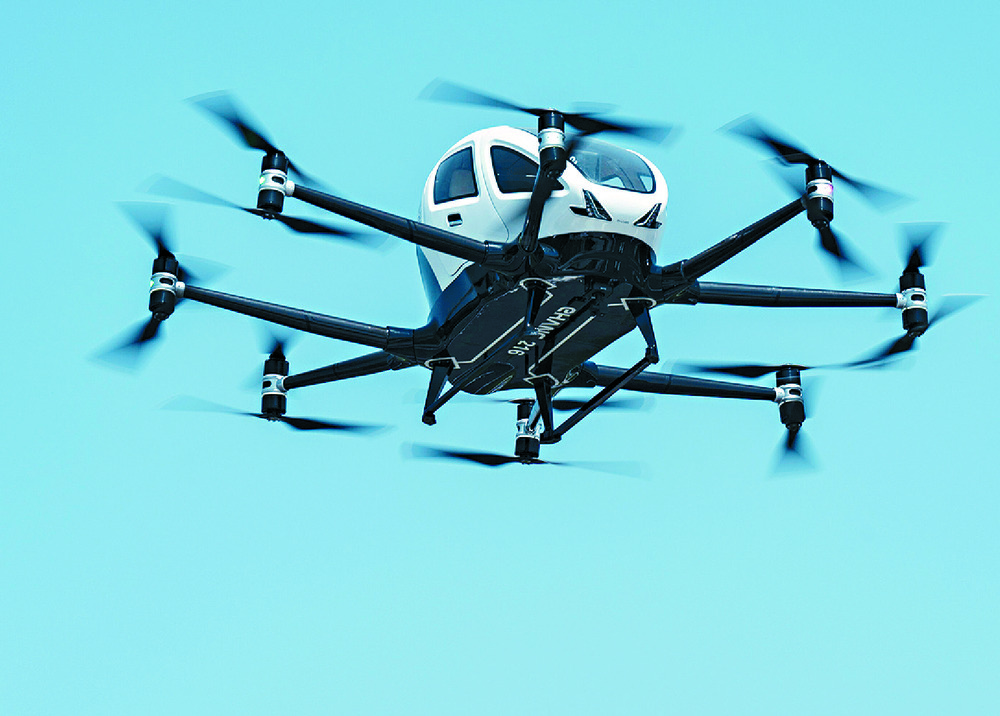
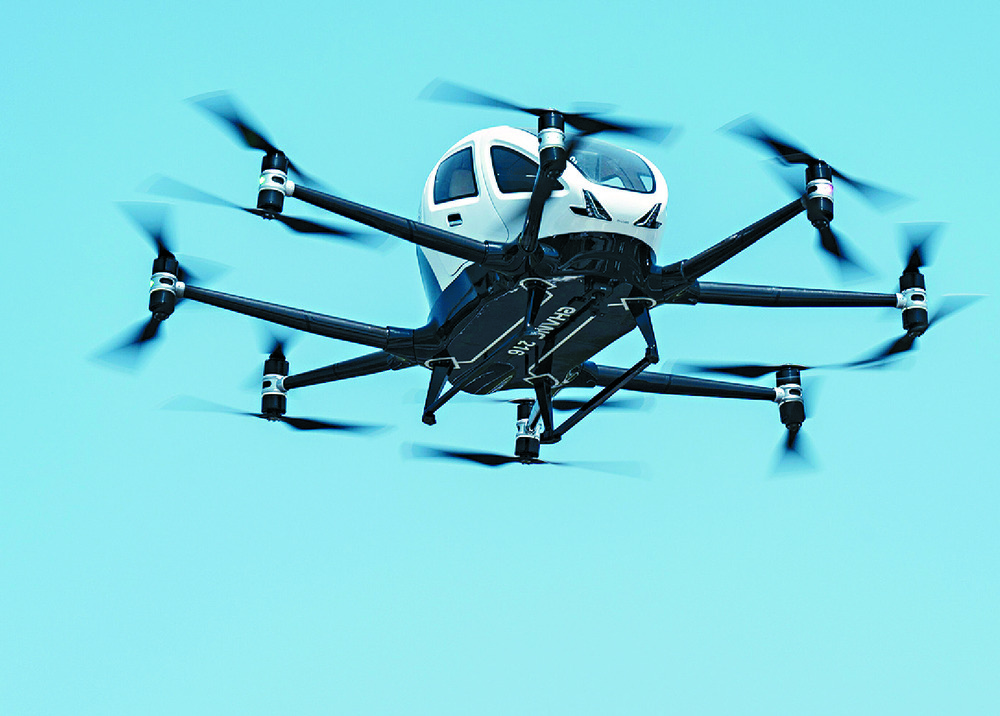
In the not too distant future, tourists headed to the Chinese city of Taiyuan will be able to hop onto an unmanned air taxi and enjoy views of the Xishan mountains and Fenhe River as they fly across the city in Shanxi province.
The partners behind this pioneering initiative are Xishan Tourism and the Nasdaq-listed EHang, which in April got the green light to manufacture its two-seater electric vertical take-off and landing or eVTOL aircraft called the EH216-S, priced at 2.16 million yuan (HK$2.33 million).
Last week's deal, in which the tourism operator will buy 50 of these eVTOLs from the Guangzhou-based drone manufacturer for 113 million yuan with an option to buy 450 more, is just another example of how China's "low-altitude economy" is taking off.
CHINA LEADS THE WAY
So what exactly is a "low-altitude economy" and can it achieve lift off in Hong Kong?
Put simply, it encompasses both manned and unmanned aviation within low-altitude airspace, extending from 1,000 meters up to 3,000m upwards. Manned and unmanned eVTOLs, which hover, take off and land vertically, are used to transport both goods and passengers. Together with drones, they are integral to the development to the low-altitude economy.
While this market in the mainland was worth 500 billion yuan in 2023, it is expected to significantly increase to 2 trillion yuan by 2030.
But the concept is in its nascency in Hong Kong and the city needs to take a leaf out of the mainland's book - where drones are even used to deliver food - and develop a comprehensive strategy for its development, Hong Kong's lawmakers say.
Cities across China are pressing ahead with supportive measure and regulations to develop the low-altitude economy.
Guangdong province alone expects its market to be worth 300 billion yuan by 2026 and last month's annual Drone World Congress in its capital Guangzhou saw around 500 firms from over 100 countries showing off their products, up about 100 from the last event.
GROWING USE OF UAVs
Unmanned aerial vehicles, more commonly known as UAVs or drones, are today routinely used for events such as the recent Doraemon show in Hong Kong, search and rescue operations, three-dimensional digital mapping, aerial surveys and filming, utility and power line inspections and environmental protection.
But while Hong Kong uses drones for these purposes, it is yet to adopt their use in logistics unlike the mainland, which has swiftly developed regulatory support for this sector.
Across the border, the hi-tech city of Shenzhen is one of China's low-altitude economy pioneers.
Home to leading drone manufacturer DJI, Shenzhen produced UAVs worth 75 billion yuan in 2022.
Food delivery platform Meituan (3690) has been using drones to deliver orders since 2021 in Shenzhen, giving it wider coverage, shorter delivery times, and better food quality.
Shenzhen recently conducted a trial flight of an eVTOL to Zhuhai in just 20 minutes - approximately two hours faster than traveling by land - and plans to start transport passengers using eVTOLs in the next two years.
XPENG'S AMBITIONS
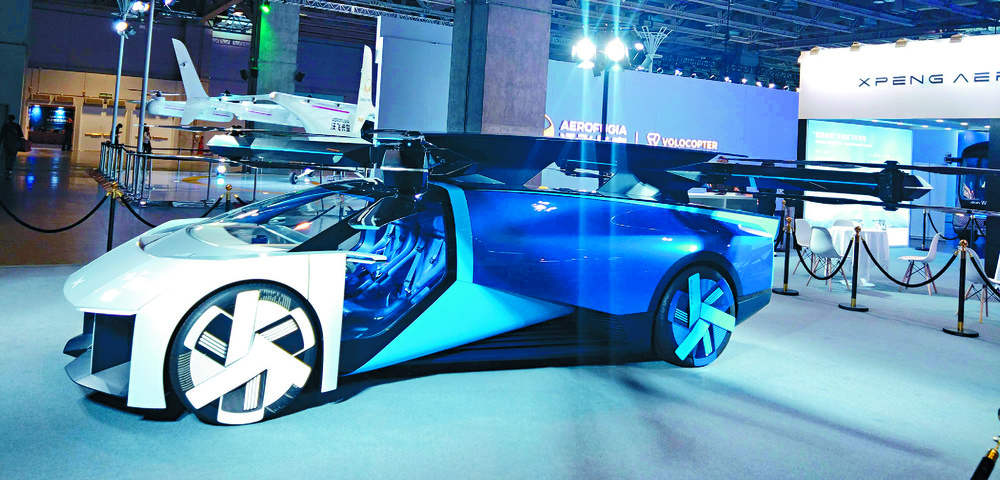
Meanwhile, Guangzhou-based electric vehicle manufacturer XPeng (9868) has set up a subsidiary called XPeng AeroHT to produce a dual-mode eVTOL which will function as a car on land and detach a flying module for air travel.
It hopes the manned flying car will be available in the market at a price of around 1 million yuan next year.
XPeng has been at the forefront of developing flying cars in China, having created five generations of intelligent manned eVTOL flying cars since 2013. It has conducted over 15,000 test flights and the first global public flight of its flying car took place in Dubai in October 2022.
GEELY FLIES IN
Meanwhile, Aerofugia, a subsidiary of Geely Technology, is another significant player in low-altitude travel, consumer drones and smart solutions.
Its AE200 eVTOL air taxi can carry one pilot and four passengers weighing a total of 500 kilograms and fly at speeds of up to 248km per hour. The AE200 may initially focus on tourism in Chengdu in 2026, where Aerofugia is based. As a sister company of Geely Automobile (0175), Aerofugia's "1+1" air plus land operation model provides a unique advantage.
DRONES AT WORK
Drones are also extensively used in agriculture, with the market estimated to be worth 11.5 billion yuan by 2025.
XAG, a Guangzhou-based agriculture drone service provider, has sold over 100,000 drones in the mainland and 150,000 in more than 60 countries since its establishment in 2007 and is said to be the second largest dronemaker after DJI.
Its drones, which incorporate the Internet of Things, artificial intelligence, robotic and autopilot technologies, are used for tasks such as spraying water and seeds, as well as remote sensing.
In addition to drones, XAG also manufactures unmanned ground vehicles.
At the recent Beyond Expo in Macau, XAG co-founder Justin Gong Jiaqin told The Standard that XAG is committed to scaling up production and lowering costs, backed by policy support for the low-altitude economy and agricultural machinery.
XAG has made significant efforts in research and development to scale up production and reduce costs: a drone that's capable for carrying a 60 liter payload today costs only 40,000 yuan compared to six-liter models that cost 200,000 yuan a decade ago.
Gong says that the battery operated drones have helped save 15.41 tonnes of harvest, 58.21 million tonnes of water and 620 million tonnes of fuel. The carbon emissions reduced through these measures are equivalent to planting 78.02 million trees, he adds.
Also, XAG has also established the XAG Academy, which has trained over 120,000 professionals in smart agriculture applications.
XAG once planned to list in Shanghai in 2022 but called off the plan amid unfavorable market conditions.
Prior to that, the company received funding from top investors, including GL Ventures, Baidu Capital, Sinovation Ventures, and SoftBank Vision Fund.
Despite remaining in the red for five years until 2021 due to heavy investment in R&D, it will continue to commit to advancing its technology and production capabilities and will await for a more favorable timing for a potential listing, he says.
Meanwhile, Hong Kong's lawmakers Elizabeth Quat Pei-fan, Yiu Pak-leung and Andrew Lam Siu-lo - who are part of a group tasked with promoting smart living in the city - are urging the government to set up an interdepartmental working group and formulate comprehensive strategies to develop the city's low-altitude economy, following a visit Shenzhen last month where they got to ride in UAVs.
They are now calling on the government to start trials of unmanned aircraft in tourism, logistics and city management, and this would provide a "practical foundation" to ease laws on the use of UAVs.