Read More










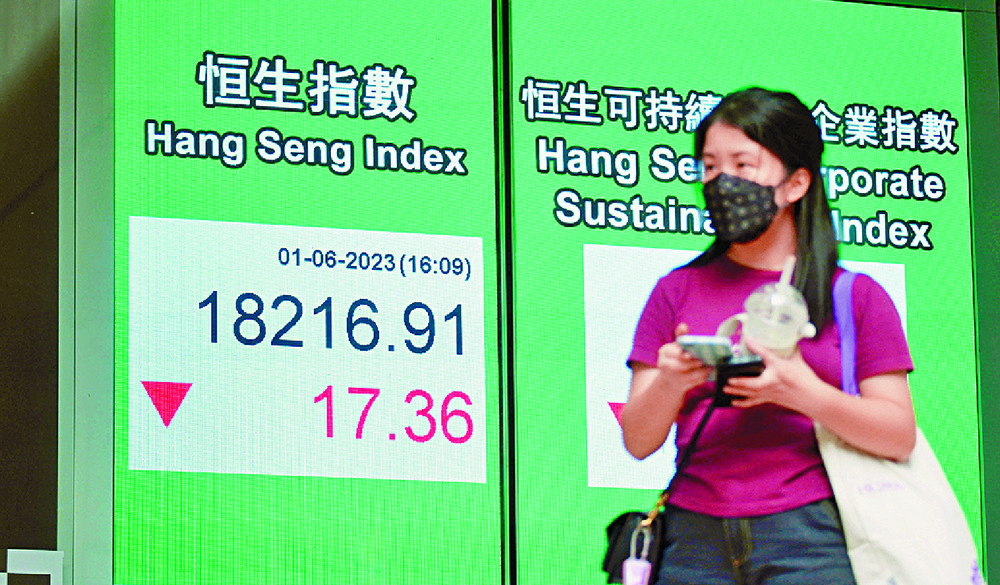
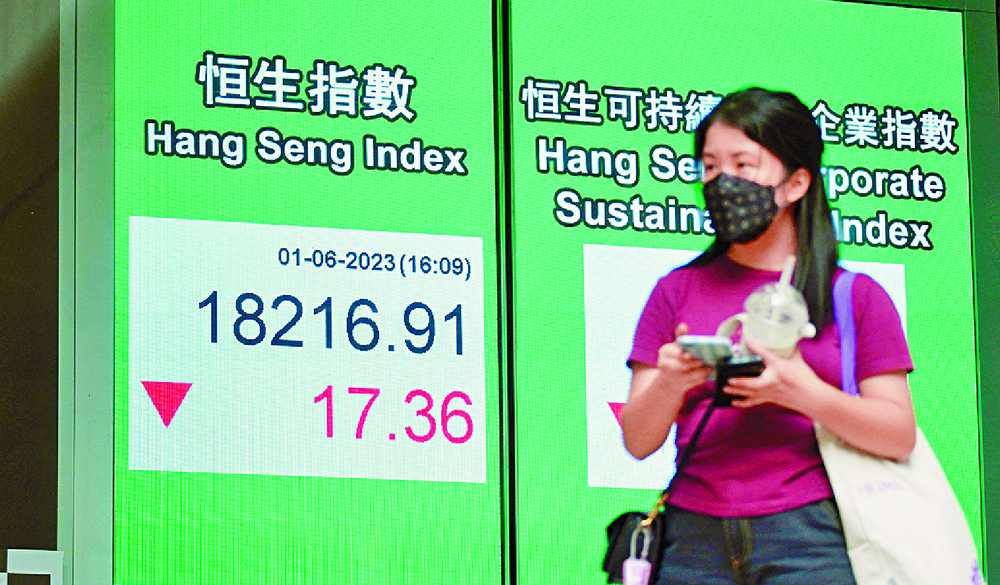
Hong Kong stocks and the yuan fell yesterday, reversing an earlier gain as China's surprising manufacturing activity expansion and the approval of the debt-ceiling deal in the US House of Representatives failed to impress investors.
The onshore yuan also pulled back and dipped 114 basis points to a fresh six-month low at 7.1179 per US dollar.
The HSI plunged by more than 8 percent and the tech gauge by 7 percent in May, prompting foreigners to sell US$1.71 billion (HK$13.3 billion) worth of mainland shares via the Stock Connect, after selling US$659 million in April, Refinitiv data showed.
The Caixin manufacturing purchasing managers index - which mainly covers smaller and more export-oriented businesses than the official PMI - rose to 50.9 from 49.5 in April, rebounding above the 50 level that separates contraction from expansion. Economists had predicted the index would be unchanged. The official manufacturing PMI published one day earlier, though, dropped to 48.8.Economists said the divergence in the PMIs was likely due to the different sample sizes, geographic locations, and types of businesses surveyed.
The country's new home prices among 100 cities also fell for the first time in four months in May by 0.01 percent from April, according to data from the China Index Academy.This came as official data showed Eurozone inflation eased to 6.1 percent in May from 7 percent in April, below expectations of 6.3 percent but PMI fell to 44.8 from April's 45.8 for an 11th consecutive month of contraction. European Central Bank president Christine Lagarde said yesterday the inflation remains too high, so further ECB policy tightening is necessary, even if there is a growing body of evidence that past rate hikes are starting to work.