Read More

AI is coming for every company, Nvidia boss says
16-10-2026 19:54 HKT
Anthropic co-founder renews call for robust regulation of frontier AI
16-10-2026 18:50 HKT


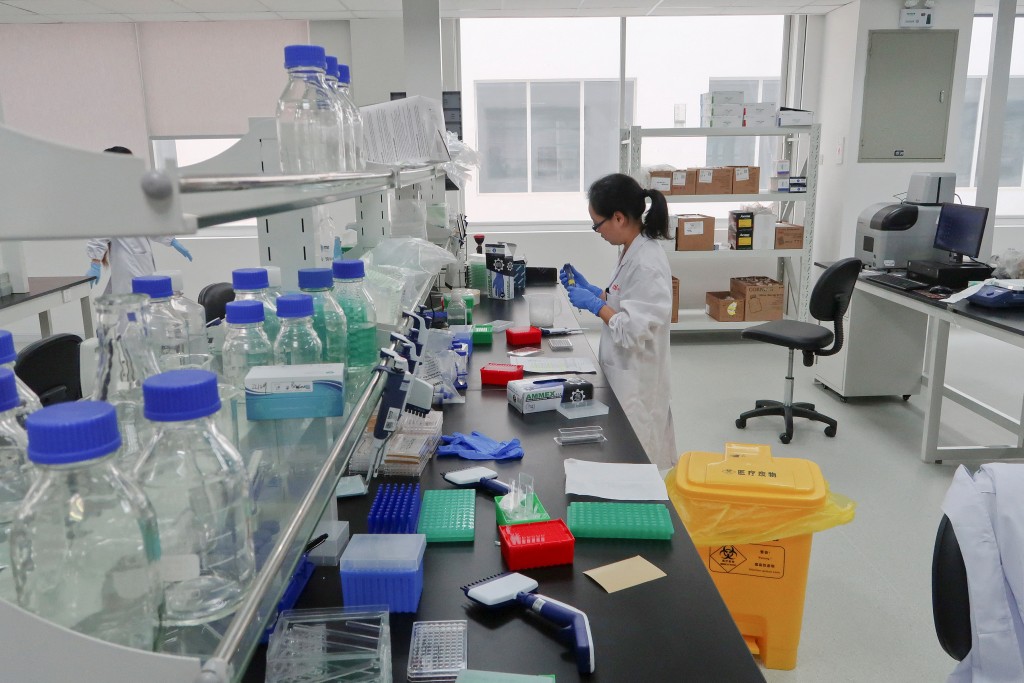
AI-driven drug discovery (AIDD) is gaining momentum in China, driven by the speed and cost advantages AI offers, with significant market potential seen in the sector, according to Citi Research.
The traditional approach requires synthesizing and testing around 5,000 molecules over 4 to 6 years to identify a pre-clinical candidate, while AI reduces this to screening billions of molecules virtually, with only a few hundred synthesized and tested in 2 to 3 years, the report said.
AI could save US$26 billion (HK$202.8 billion) at the drug discovery phase and US$28 billion at the clinical research phase, bringing the total industry savings to US$ 54 billion - a 50 percent reduction, Citi said, citing data from Frost & Sullivan.
Compared with Frost & Sullivan's global pharmaceutical research&development cost estimate of US$313 billion, current AIDD penetration remains at only 6 percent, representing significant room for expansion, the bank said.
The AI drug discovery ecosystem is expected to bring a US$50 billion opportunity globally in 2030, with growth increasingly concentrated in data generation, wet-lab validation and AI-native discovery services, the report said.
Besides, several Chinese AIDD companies are already profitable and should see earnings accelerate as robust demand translates into stronger utilization and operating leverage, outpacing many in the United States that remain loss-making, Citi noted.
More than 100 AIDD companies are now active in China alone, yet only a handful have advanced assets into the clinic, Citi added.