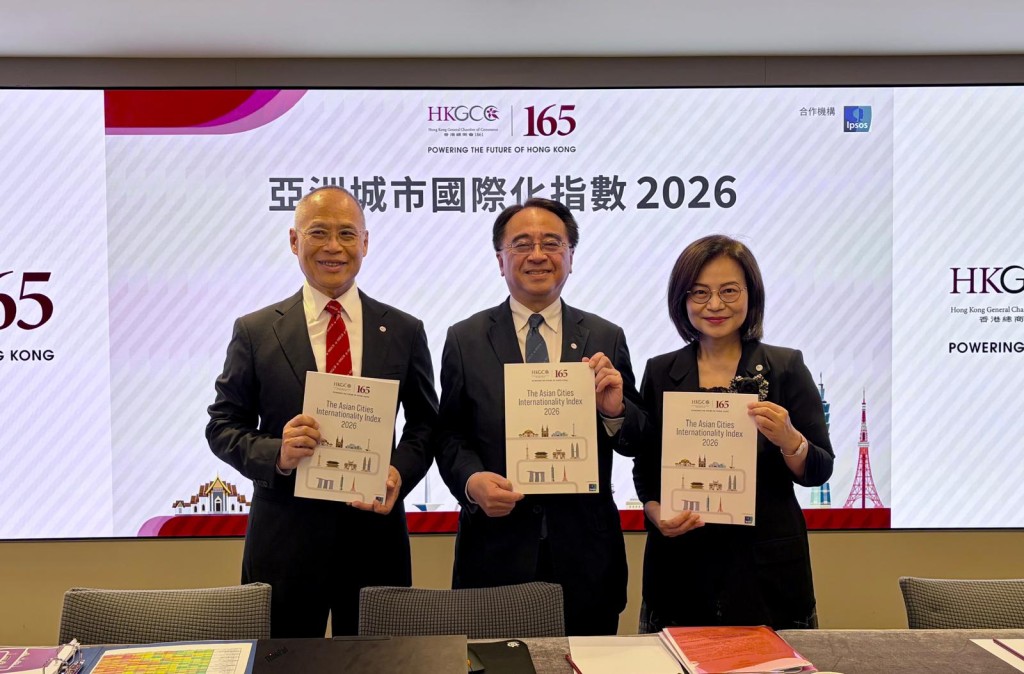
Hong Kong scored 74.6 points to top the Asian Cities Internationality Index 2026, outperforming its 2025 benchmark as its open business climate and vibrant innovation ecosystem continue to draw global talent.
Hong Kong General Chamber of Commerce commissioned Ipsos to conduct an independent, transparent, and credible study to evaluate the internationality of 11 Asian cities: Hong Kong, Singapore, Seoul, Tokyo, Shanghai, Ho Chi Minh City, Jakarta, Kuala Lumpur, Mumbai, Bangkok, and Taipei.
Singapore followed Hong Kong closely in second place with 72.6 points, maintaining its appeal as a leading destination for foreign enterprises setting up headquarters in the Asia-Pacific. Seoul climbed to third with 69.2, overtaking Tokyo, which fell to fourth with 68.6. Shanghai rounded out the top five at 65.3.
HKGCC chairman Jacob Kam Chak-pui noted that Hong Kong ranked first in the "Business and Economy" dimension with 78.6 points, driven by its diversified financial markets, high trading volumes, and open business model. The city also ranked among the top three in “Quality of Life,” “Infrastructure & Connectivity,” “Human Capital Diversity,” and “Government & Legal System for Business.”
But while Hong Kong's “Innovation & Ideas” ranking improved from fourth to third, greater efforts are needed in innovation investment, cultural diversification beyond flagship events, and more structural policies for major initiatives like the Northern Metropolis, Kam stressed.
He said Shanghai, which ranked first in this dimension, is backed by strong unicorn numbers as it aims to cultivate 100 unicorn firms by 2027 under an action plan spanning three years, with US$3.9 billion (HK$30.4 billion) in startup funding in 2025.
HKGCC chief executive Patrick Yeung Wai-tim noted that the Northern Metropolis is a 20-year long-term plan that aims to house 2.5 million people – about a third of Hong Kong’s population – creating a massive domestic market beyond just tech innovation. Yeung cites the University Town, which focuses on specialized fields ranging from biotech to nurturing talents for industrial development, as an example.
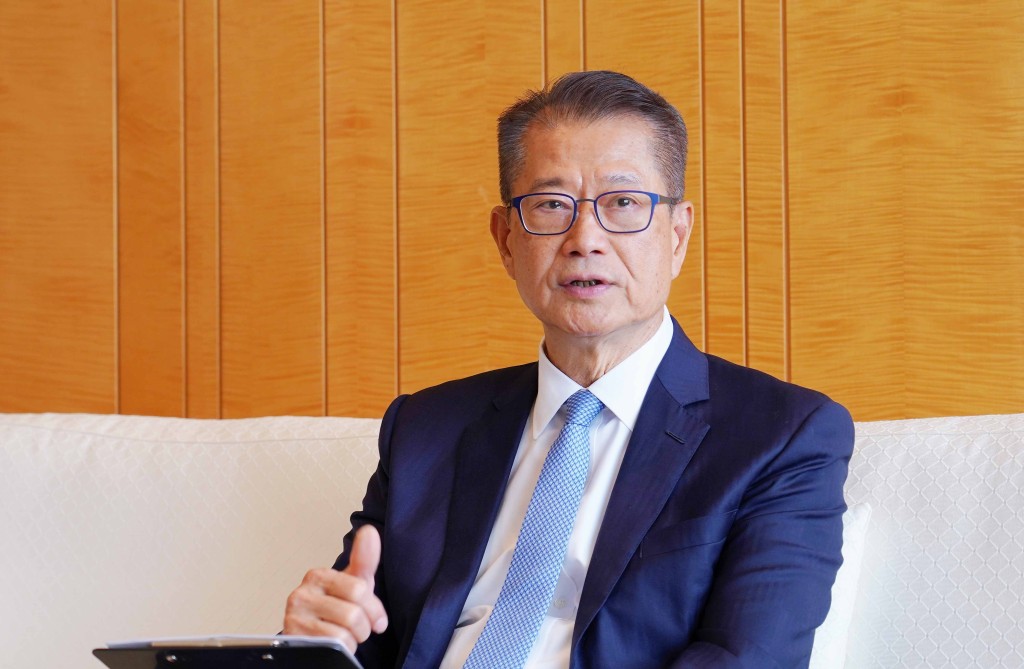
Kam also reaffirmed Hong Kong's position as a global leader in cross-border wealth management this year. With Asian economies projected to contribute roughly 60 percent of global GDP growth, he stressed that Hong Kong must adapt to ongoing financial and policy changes to solidify its role as the premier gateway for regional and global operations.