An anticipated influx of compliant mainland capital and surging listing interest from emerging markets will drive strong confidence in Hong Kong's financial outlook, the Financial Services Development Council (FSDC) said today.
Beijing's efforts to curb illicit capital outflows will effectively channel investments into Hong Kong through legitimate avenues, Amy Lo, board member of FSDC noted.
She remains optimistic about the sector's future as the council actively works with regulators to expand the Wealth Management Connect scheme's quota and product offerings.
The market should look beyond pure fundraising volumes and focus on the quality and diversity of incoming enterprises when addressing concerns over mega-IPOs opting for US listings, Benjamin Hung, chairman of FSDC stated.
Amid a fragmented global economy, Hong Kong is uniquely positioned as both a platform for growth and a harbour for risk diversification, he added.
Energy and resource firms from ASEAN and Central Asia are increasingly considering Hong Kong for fundraising and secondary headquarters over traditional hubs due to geopolitical shifts, a positive trend highlighted by vice chairman Daniel Fung. He attributed the city's growing appeal to the "one country, two systems" framework and strong mainland backing.
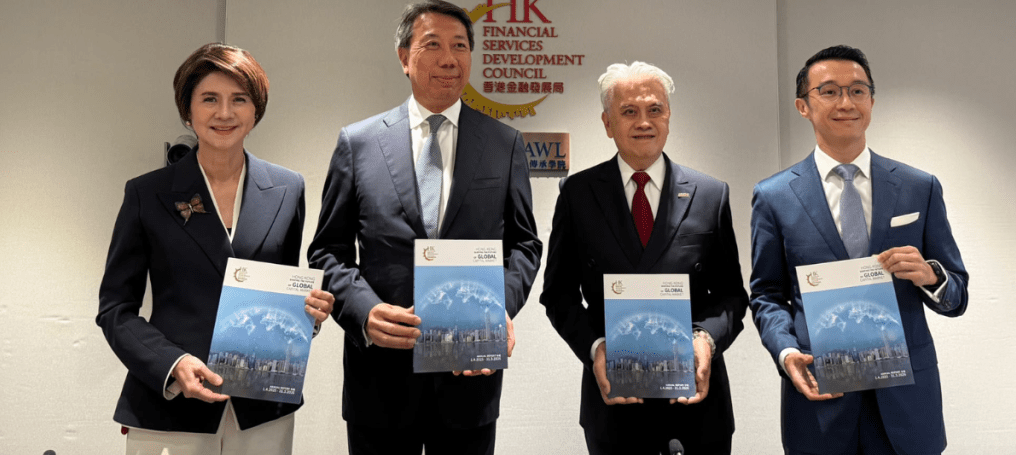
The FSDC today released its annual report for the 2025-26 financial year, highlighting its key initiatives and achievements in advancing Hong Kong's financial services industry from April 1, 2025, to March 31, 2026.
New policy reports will be published in the coming months, including a capital market proposal next month focused on attracting long-term patient capital, upgrading financial infrastructure, and optimizing mutual market access and IPO exit mechanisms, Rocky Tung, executive director of the FSDC announced. Another report addressing the economic impact of new technologies is scheduled for release next year.
During the year, the FSDC published six policy research reports and publications, including a high-impact concept paper outlining a strategic blueprint for capital market development, and a report examining ways to enhance the commodity market as a key pillar in the city's ongoing transformation. Since its establishment in 2013, the council has made 275 policy recommendations, with 201 of them followed up by the HKSAR Government, representing a 73 percent adoption rate.