Read More


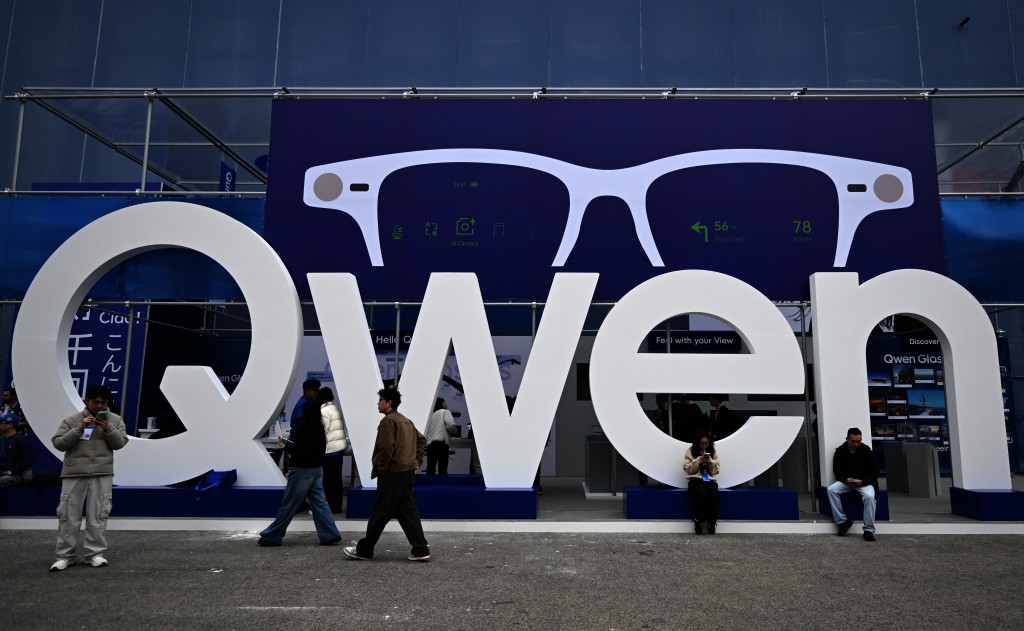
Alibaba unveils new AI glasses
16 hours ago






The International Monetary Fund on Wednesday inched its 2026 global growth forecast lower again to 3.0 percent, warning of ongoing risks posed by the war in the Middle East, trade fragmentation and potential corrections in market expectations for AI.
The global lender said the world economy had dodged a sharper downturn as a result of the war, with demand-driven momentum in the tech sector helping to offset a war-related drop in energy supplies. Growth should rebound to 3.4 percent in 2027, but that is still below the average of 3.5 percent seen in 2024 and 2025.
The IMF raised its 2026 headline inflation forecast by 0.3 percentage points to 4.7 percent from April, but said it should drop to 3.9 percent next year. Energy prices were 25 percent higher now than before the war began on February 28 and would remain higher, it said. The new forecast assumes the Strait of Hormuz will start to reopen in mid-July, reaching prewar conditions by March 2027.
"The global economy as a whole has, so far, weathered the shock from the war better than feared," the IMF said in an update to its World Economic Outlook, noting the outlook was brighter for energy exporters and countries that are closely integrated into the technology sector, while commodity importers that are not well-positioned to benefit from AI developments generally saw downgrades in their growth forecasts.
Growth in global trade was projected to slow sharply to 3.5 percent in 2026 from 5 percent in 2025, a year marked by heavy front-loading ahead of U.S. tariffs, before rebounding to 4.3 percent in 2027.
Deniz Igan, chief of the IMF Research Department's World Economic Studies division, said the global economy was proving more resilient than expected in April, despite the impact of the war and the closure of the Strait of Hormuz. Prices were higher, confidence was down, but the release of strategic oil reserves and commercial inventories - along with rising energy efficiency - had helped to offset supply shortages. The private sector had also adapted quickly, finding alternative routes and supplies.
"So far things have been okay, but that doesn't take away the risk factors that are there, particularly with the war," she told Reuters. A collapse of the peace deal and renewed fighting could pose big risks, since countries have largely tapped out their reserves and would have less room to maneuver.
The U.S. military unleashed a new wave of strikes against Iran on Tuesday and revoked a license allowing the country to sell oil after three tankers were hit in the Strait of Hormuz, putting pressure on an already fragile ceasefire.
"A renewed conflict in the region is going to catch the global economy in a worse position than it was the first time," Igan said, adding that a simultaneous push by many countries to rebuild their oil reserves could also trigger a spike in prices.
"If there is a perception that this is going to be more prolonged, then both the incentive and the room to use those reserves is going to shrink very fast," she said.
Inflation and inflation expectations have risen, but mostly in the short-term, and there was little evidence thus far that expectations were shifting in the medium term, Igan said.
The IMF's updated World Economic Outlook dropped the three separate scenarios it had released in April, before the United States and Iran reached a ceasefire deal, reverting to a more traditional baseline forecast. Comparisons were made to the April reference forecast that assumed a shorter war.
The IMF left its 2026 growth forecast for the U.S. economy unchanged at 2.3 percent and raised its 2027 forecast by 0.1 percentage point to 2.2 percent from the April forecast.
It lowered the 2026 growth forecast for the euro area to 0.9 percent from its previous forecast of 1.1 percent in April, and left its 2027 forecast unchanged at 1.2%.
Japan's growth forecast for 2026 edged lower by 0.1 percentage point to 0.6 percent, with the 2027 forecast raised by the same amount to 0.7 percent.
Emerging market and developing economies also saw a 0.1 percentage point cut in their growth forecast to 3.8 percent in 2026, while the 2027 forecast was raised by 0.3 points to 4.5 percent.
China's growth was now expected to reach 4.6 percent in 2026, up from the April forecast of 4.4 percent, with 2027 growth expected to reach 4.1 percent, up from 4 percent in April.
India, one of the world's fastest-growing economies, also got a small downgrade to 6.4 percent for 2026 from 6.5 percent in April, but the IMF lifted its 2027 forecast to 6.7 percent from 6.5 percent.
The Middle East and Central Asia region, hardest hit by the war, saw its growth forecast cut by 1.2 percentage points to 0.7 percent from the April forecast, although the IMF also raised its 2027 forecast by 1.9 percentage points to 6.5 percent.
Reuters