Read More






Seven arrested over Kwai Chung illegal gathering
14-09-2026 12:33 HKT
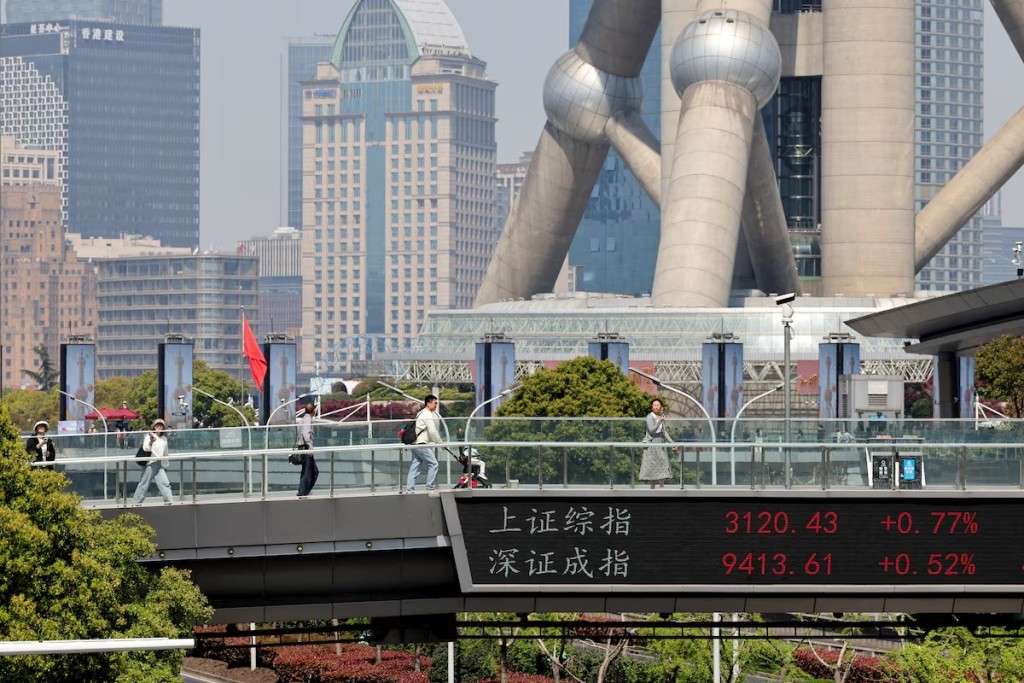
China's onshore technology IPOs are on track for their strongest year since 2023 as Beijing seeks to bolster listings of chip and artificial intelligence companies in a push for tech self-reliance amid the country's rivalry with the US.
Technology companies have raised a total of US$3.1 billion from stock market listings in China this year to June 18, more than five times the volume in the year-earlier period, according to LSEG data.
Nearly 50 companies, including robotics startups and semiconductor firms, have applied for initial public offerings in Shanghai and Shenzhen, with fundraising plans totalling at least 126.1 billion yuan (US$18.7 billion), according to Reuters calculations based on filings.
One of the listing hopefuls, memory-chip maker ChangXin Memory Technologies (CXMT), is planning to launch a 29.5 billion yuan Shanghai IPO, which would be the largest this year and boost total listing value to a three-year high, LSEG data showed.
The pickup in onshore listing momentum comes as Chinese regulators said on June 17 that they would support listings of startups in "future industries" like quantum technology, nuclear fusion and brain-computer interfaces.
The Shanghai Stock Exchange has also published rules to facilitate public share sales by large-language-model companies on the STAR Market as part of its efforts to promote homegrown AI companies.
"The acceleration of technology IPOs has provided long-awaited exit opportunities for private equity and venture capital funds that have backed these companies," said Li He, co-head of law firm Davis Polk's Asia (ex-Japan) practice.
The tech IPO push comes amid a China-US tech war and marks a reversal of a listing hiatus that had persisted since 2024, when some domestic companies rushed to list in Hong Kong to raise offshore capital.
Annual proceeds from stock market listings by technology companies in China fell to US$2.7 billion in 2024 from US$15.7 billion in 2023, before recovering to US$3.6 billion in 2025, LSEG data showed, compared with US$6.6 billion raised by Chinese tech companies in Hong Kong in 2025.
The China Securities Regulatory Commission (CSRC), in its address to a high-level financial forum in Shanghai earlier this month, said that it would back qualified Hong Kong-listed companies that are seeking mainland listings.
Kenny Ng, a strategist at China Everbright Securities International, said the CSRC support could broaden access to mainland markets and improve liquidity.
"If companies from other regions listed in Hong Kong can be included in the future, it can provide investors with more diversified choices and bring better liquidity to the market," Ng said.
Zhipu AI, which raised HK$4.35 billion (US$555.2 million) in a Hong Kong IPO in January, for example, is aiming to raise 15 billion yuan from a STAR Market listing, it said earlier this month.
Baidu's chip unit, Kunlunxin, which is awaiting regulatory approval for a US$2 billion Hong Kong listing, is planning a smaller domestic float, said a person with knowledge of the matter who declined to be named as they were not authorised to speak to the media.
Baidu and Kunlunxin did not respond to emailed requests seeking comment.
Ho-Yin Lee, Asia-Pacific co-head of technology and communications at Citigroup C.N, said a mainland listing could help Hong Kong-traded companies reach a broader market and domestic investors.
"They would get access to a deep pool of capital, funding to grow businesses and great domestic branding," Lee said.
Hopes of a revival in the domestic listing market have also been fueled by strong investor demand for recent mainland tech IPOs.
SJ Semiconductor Corp 688820.SS has surged more than eightfold from its IPO price. Shares of Semight Instruments 688808.SS have jumped nearly 28-fold from their IPO price.
"The pickup in Chinese tech issuance is part of a broader global AI wave, with China and the US the two markets that set the tone," said James Wang, head of Asia ex-Japan equity capital markets at Goldman Sachs.
Reuters