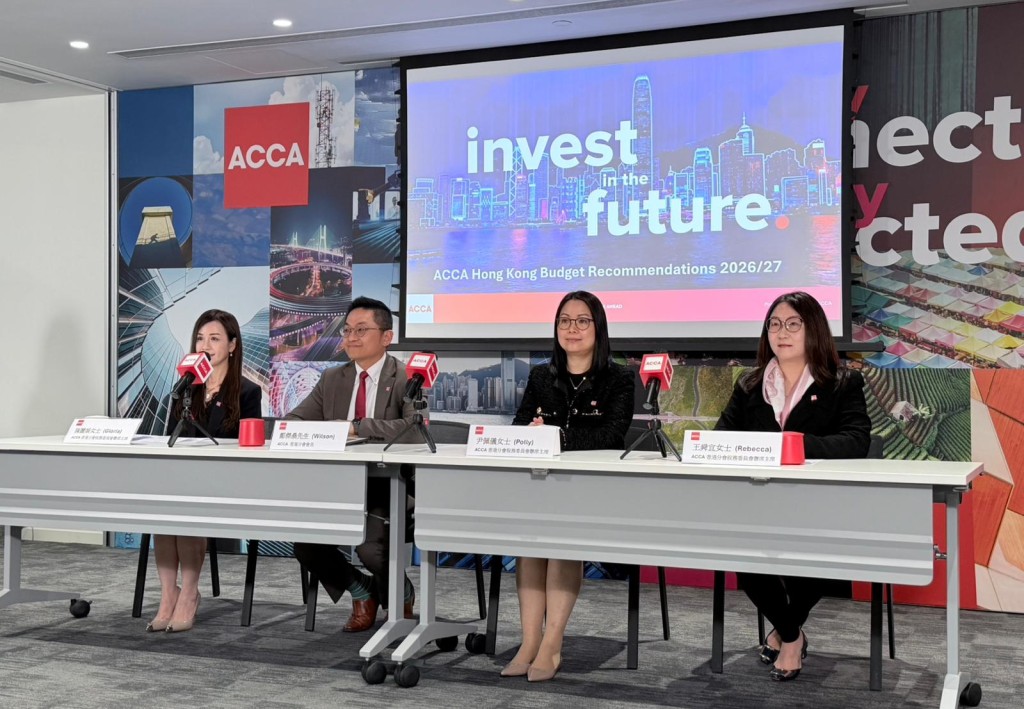
ACCA on Thursday forecast the Hong Kong government's consolidated surplus of HK$4.1 billion for 2025/26, with fiscal reserves of HK$658.4 billion, implying an even larger surplus in the operating account.
It is also estimated that average daily turnover in Hong Kong's stock market would increase by about HK$100 billion year-on-year, boosting stamp duty revenue by around HK$200 million per trading day and making it one of the major sources of government revenue. If the investment environment remains healthy, contributions from stock market stamp duty are expected to be sustained.
ACCA had submitted 15 recommendations for the 2026/27 Budget Plan to the Hong Kong Government, including restoring the one-time tax relief ceiling from HK$1,500 to HK$10,000.
Polly Wan Pui-yee, co-chair of the tax sub-committee of ACCA Hong Kong, said the current tax-paying workforce numbers about 2 million, and raising the cap on one-off tax concessions is expected to reduce government revenue by around HK$4 billion to HK$5 billion.
ACCA also proposed introducing a tax deduction for domestic helper expenses with a cap of HK$30,000, as well as raising the tax deduction cap for private health insurance under the Voluntary Health Insurance Scheme to HK$16,000. Each of the two proposals was estimated to reduce government revenue by about HK$1.9 billion.
Wilson Cheng Git-san, chairman of ACCA Hong Kong, said that Hong Kong's property prices have stabilised while rents continue to rise, reflecting persistently strong housing demand. He believes the government should first observe how economic gains are reflected at the grassroots level before considering any adjustments to property stamp duty policies, in order to avoid overheating the property market.
He suggested that the government should adopt long-term financing solutions to address long-term capital expenditure, including increasing the scale of bond issuance for the Northern Metropolis. Given the current downward trend in interest rates, he believes the government has the fiscal capacity to take on longer-maturity debt, and that future debt repayments would also reflect the economic returns generated by related development projects.
ACCA also proposed collaboration between the entertainment industry and the Kai Tak Sports Park to develop a year-round "concert economy".
In terms of innovation and technology development, ACCA recommended expanding deductible research and development expenditure, as well as clarifying and broadening tax deductions for intellectual property acquisition.
Cynthia ZHONG