Read More









Nobel laureate inspires HK students at St. Joseph’s College forum
19-03-2026 23:11 HKT


Hong Kong Chu Hai College pushes for university status
11-03-2026 18:20 HKT


Evolution has brought all living things on a wondrous path to where they are now. Once in a while there are exemplary creatures that remind us of this resilient force of nature constantly at work.
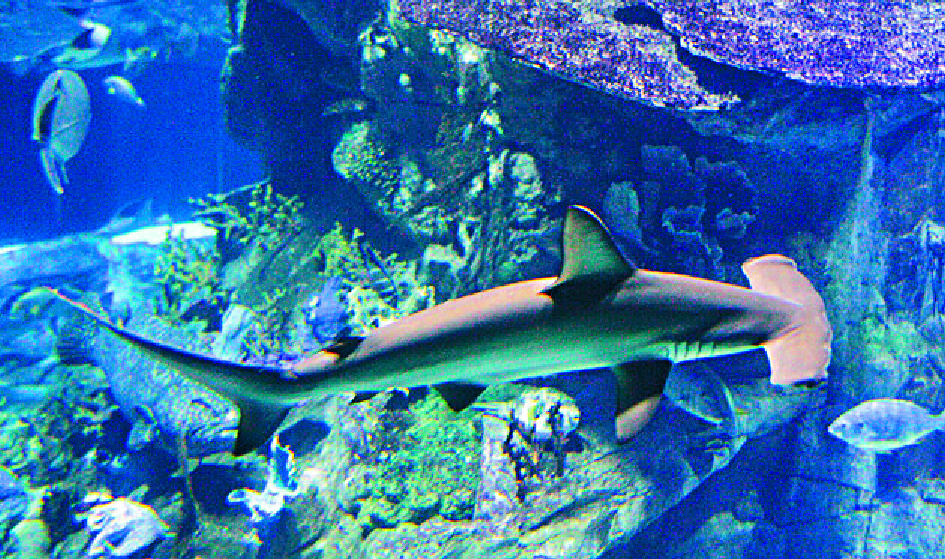
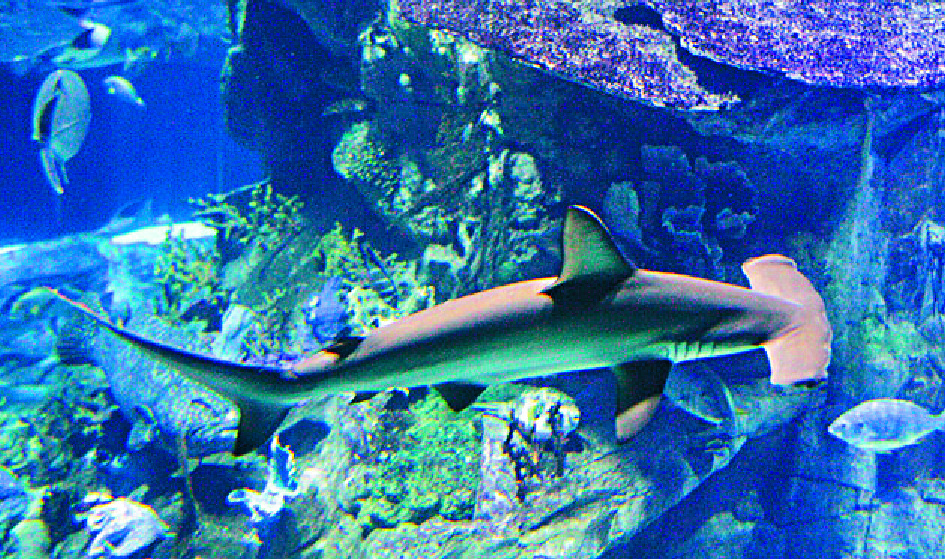
The scalloped hammerhead shark is one.
Its scallop-like cephalofoil, or outward lateral extension of the head, inspired a number of hypotheses about its functionality. Some of the common speculations are that it aids precise movement or it is a super sensory receptor.
What has indeed been known is that the hammerhead shark's broad, narrow-bladed head allows its eyes to be located far apart at both ends of the cephalofoil.
As the shark rotates its eyes and sweeps its head from side to side, it is endowed with exceptional binocular vision and a full 360-degree view.
With a forked tail and a body color shading from greyish brown on top to white below, the hammerhead shark has excellent camouflage in open water. Up to 4.3 meters long and weighing about 150 kilograms, this majestic fish is generally found in warm temperate and tropical seas around the globe.
Adults spend most of their time offshore. As females migrate to coastal waters to give birth during breeding seasons, the juveniles are usually coastal as well.
Scalloped hammerhead sharks feed on smaller sea creatures such as fish, cuttlefish, lobsters, shrimps, as well as other sharks and rays.
But that does not mean the mighty and the puny are necessarily rivals. In fact, nature has her way of putting the unlikely ones together as partners.
Parasites that pester the powerful sharks can actually be a feast for smaller fishes. These cleaner fishes cluster to form "cleaning stations" in the sea, which the scalloped hammerhead sharks often visit to have parasites picked off from their skin, gills and mouths. In this way, a mutually beneficial relationship is formed.
Despite the ecological significance of scalloped hammerhead sharks, they are, unfortunately, threatened around the world. This species is listed as Critically Endangered on the International Union for Conservation of Nature Red List and in Appendix II of the Convention on International Trade in Endangered Species of Wild Fauna and Flora, which states that international trade of the species must be strictly regulated to prevent its extinction.
Yet, the sharks' populations are still on a steep decline worldwide. They have been caught globally as target and bycatch, with their meat, liver oil, skin, cartilage and jaws harvested. But most of all, their fins are much sought after - hammerhead sharks are among the main shark species in the fin trade and one of the preferred species for shark fin soup.
As a change agent of the conservation community, Ocean Park removed shark's fins from its menu 25 years ago. Since 2009, the park has been offering sustainable seafood dishes to visitors. By 2015, a corporate sustainable seafood policy was in place and only sustainably-sourced seafood is used in all restaurants and food kiosks.
One great example of Ocean Park's efforts is its reinvention of Hong Kong's signature street food, fish balls and fish dumplings, available at the park cooked using sustainable fish sources certified by the Marine Stewardship Council.
Perhaps this too is an evolutionary step reflecting the adaptations that we should all make. So are you willing to make a commitment to protect the sharks?