Read More

Experts to convene on border reopening
15-09-2021 00:00 HKT
Iran demands transit fees in yuan, stablecoins for Strait of Hormuz passage
03-04-2026 02:45 HKT
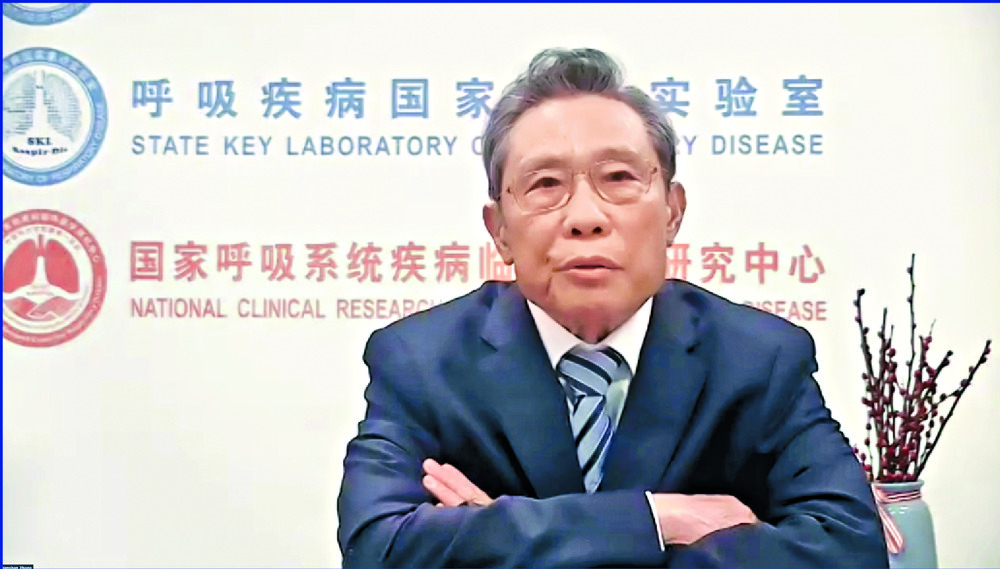
China's best known respiratory disease expert Zhong Nanshan poured a bucket of cold water as he effectively ruled out the mainland reopening its border anytime soon when stressing its aggressive zero-infection policy was preferred to that of co-existence practiced in other countries.
Zhong's comments were bound to disappoint many people.
His categorical statement that the current policy will stay in force for a long time may be distressing, but it helps dismiss speculation that Hong Kong would be able to reopen its international border after securing quarantine-free travel between the SAR and the mainland.
In an interview with CCTV's international arm CGTN, Zhong said that, while the policy will remain for a long time, how long this is going to last will depend on how well the rest of the world is able to control the pandemic.
If this is read together with what Hong Kong expert David Hui Shu-cheong has said separately, it is the logical conclusion that Hong Kong would have to close its international borders except for some quarantine-mandated arrivals.
Recalling the ongoing talks with the mainland on reopening the SAR/mainland border, Hui said mainland officials were expecting Hong Kong to succeed in preventing external cases from getting into the city in addition to maintaining a record free of local infection cases.
If there was any ambiguity in the past, Zhong's defense of the zero-transmission policy clarified a situation over which Hong Kong residents, including foreigners doing business here, are getting increasingly impatient after seeing some countries - including Australia, which has been most stringent in keeping its border shut - are starting to open up to allow quarantine-free international travel.
Zhong's comment was categorical, leaving no room for speculation.
As more and more countries desperate to restart their economic activities have changed their strategy from strict prevention to co-existence, it is foreseeable the gap will continue to diverge to make it increasingly unlikely for the rest of the world to bridge with China in the near future.
An analyst quoted by Reuters speculated this could last at least another year.
Although it is impossible to give the future a timetable, a longer-than-anticipated divergence would force foreign companies to give up doing business in Hong Kong.
Zhong may be right to defend the policy, saying it is relatively cheaper to enforce. Back in August, state media estimated the cost of treating Covid patients averaged 20,000 yuan per patient and could be over 1 million yuan for the critically ill.
The total expenses borne by the government was reported to be around 2.8 billion yuan as of June.
Although medical expenses may be cheaper with prevention as opposed to treatment, that does not include the greater costs to the economy as a whole.
Even if the mainland reopened its border to 1,000 Hong Kong residents per week before year-end on a trial basis, as claimed in reports quoting pro-establishment sources, Hong Kong as an international city will continue to suffer from considerable pressure economically before the world can "normalize" to the mainland's standards.