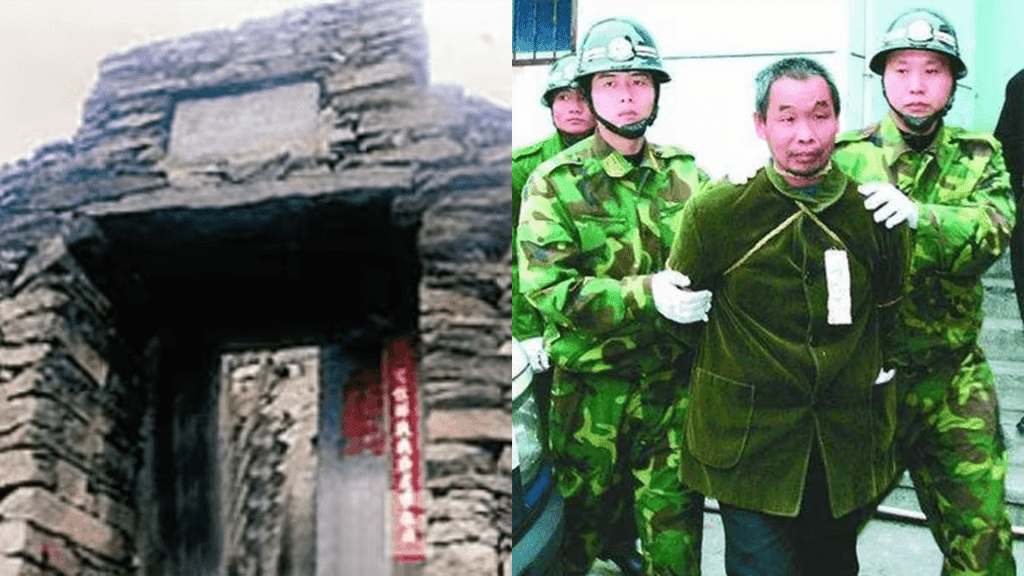
Nearly two decades later, one of China’s most shocking murder cases — the Iron Tile Temple massacre — continues to haunt public memory for its brutality and grisly details.
In July 2006, a Taoist temple in Shaanxi province became the scene of a mass killing when farmer Qiu Xinghua killed 10 people in a late-night attack before fleeing across central China.
The killings took place at Tie Wa Dian, or Iron Tile Temple, on Phoenix Mountain in Hanyin county. According to investigators, the 47-year-old entered the temple armed with a machete and axe while priests and worshippers were asleep.
By morning, all 10 victims — including five Taoist priests, four worshippers and a 12-year-old boy — were dead.
Authorities later alleged that after killing temple abbot Xiong Wancheng, Qiu mutilated the body and removed internal organs, with some reports claiming they were cooked and fed to dogs. He also set parts of the temple on fire before fleeing.
Police believed the attack stemmed from superstition and a personal grudge.
According to reports at the time, Qiu had reportedly become convinced that stone tablets near the temple belonged to his ancestors. He later grew enraged after discovering the stones had allegedly been used as steps outside the temple. He also suspected the abbot had harassed his wife during a previous visit, though the allegation was never proven.
The case triggered a nationwide manhunt, with authorities issuing a Class-A wanted notice, China’s highest level of criminal alert.
While on the run in neighboring Hubei province, Qiu attacked another rural household after running out of money. One villager later died from injuries sustained in the assault, bringing the death toll to 11.
Qiu was arrested in August 2006 after returning to his hometown in Shaanxi. He later confessed and was sentenced to death.
The case remains one of modern China’s most notorious murder investigations, remembered for its disturbing mix of superstition, paranoia and extreme violence.