Read More






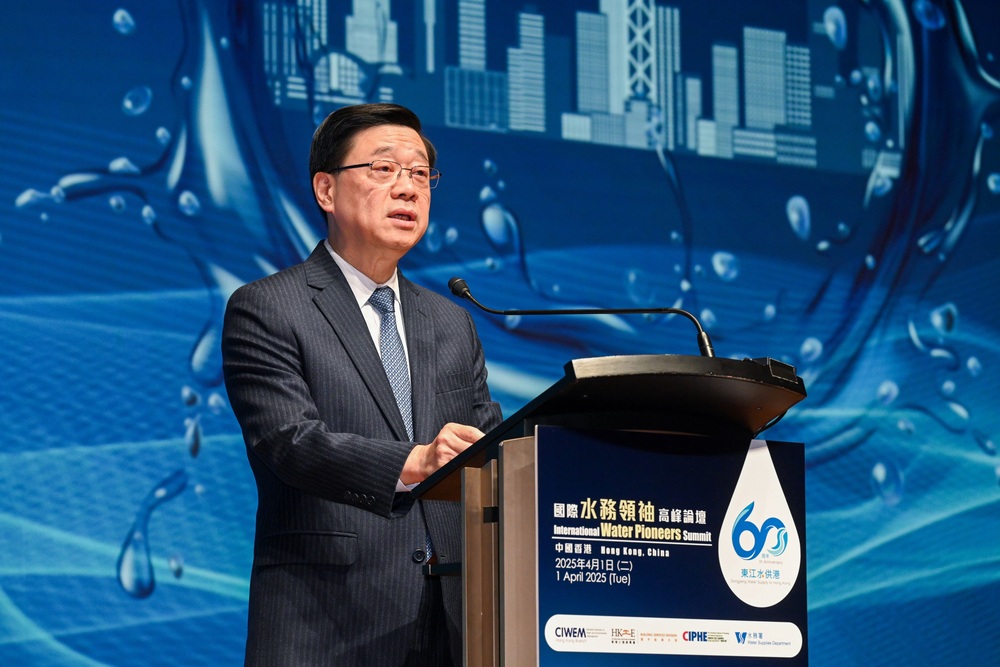
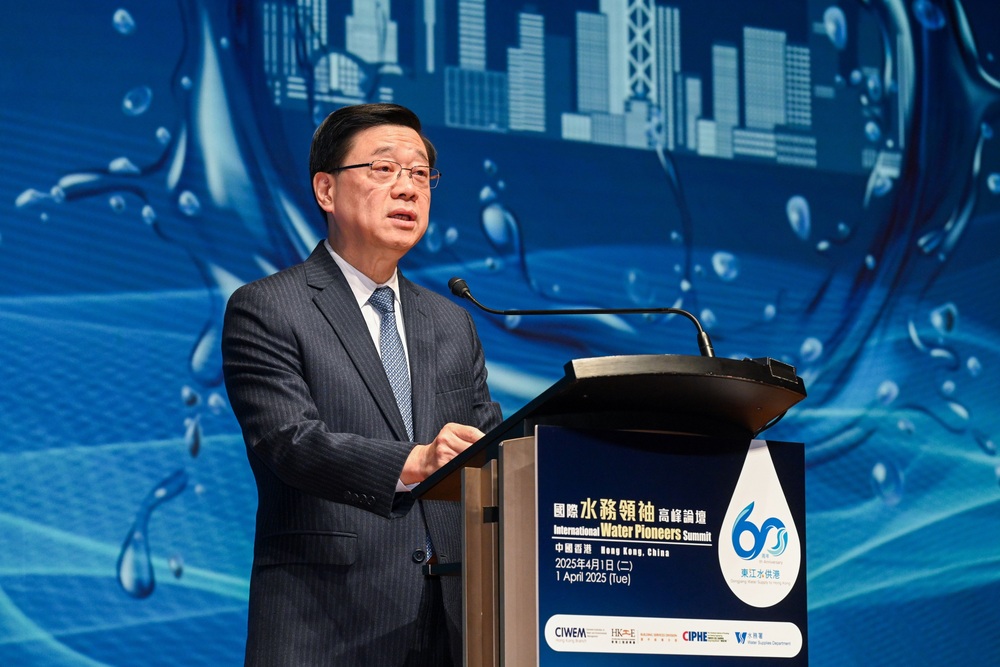
Hong Kong must invest in innovative ways to ensure a sustainable water supply, Chief Executive John Lee Ka-chiu said, emphasizing the integration of technology into water resource management.
Speaking at the International Water Pioneers Summit 2025 at the Hong Kong Palace Museum on Tuesday, Lee highlighted the government's establishment of a Digital Water Office last year to modernize water services through smart devices and artificial intelligence.
The initiative aims to achieve full automation in water supply operations.
Lee noted that Hong Kong’s infrastructure, including the High Island Reservoir and the Tseung Kwan O Desalination Plant, was ranked among the world’s top 10 in last year’s World Competitiveness Yearbook.
"Hong Kong's water story is one of transformation, illustrating how a city with limited resources can turn geographic challenges into engineering triumphs," Lee said.
He credited the decades-long partnership with mainland China, particularly the Dongjiang-Shenzhen Water Supply Scheme, for supplying 70 to 80 percent of Hong Kong’s water.
The system, expanded multiple times since the 1960s, now delivers 12 times more water than its original capacity.
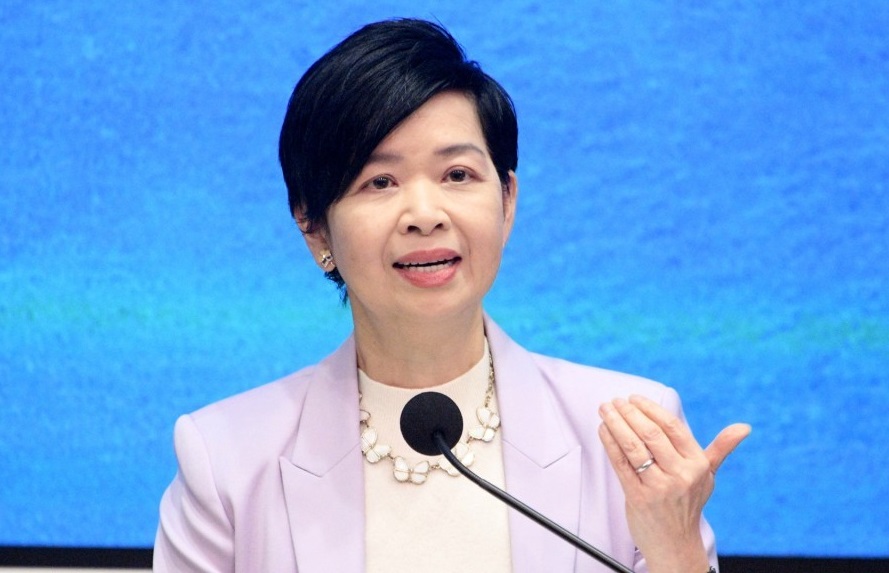
Secretary for Development Bernadette Linn Hon-ho echoed Lee’s call for innovation, warning that climate change demands urgent action.
She said the summit, which brought together nearly 400 water management leaders and officials from nine countries across four continents, will share solutions and gain fruitful results.
Minister of the Ministry of Water Resources Li Guoying said at the same event that intensifying climate change is complicating water security and the ministry will strengthen communication with the SAR to ensure water supply.
He also encouraged leveraging Hong Kong's unique advantages to share China’s water governance concepts globally.
Wang Weizhong, Governor of Guangdong Province, emphasized deepening cooperation in water resources and technology to enhance living conditions in the Greater Bay Area.
Meanwhile, Chief Secretary for Administration Eric Chan Kwok-ki reminisced about Hong Kong’s 1960s water crisis in a Facebook post, urging citizens to remember the mainland’s vital support.
He recalled water was rationed to just four hours every four days during the 1963 drought, severely impacting livelihoods.
Chan said the central government swiftly constructed an 83km Dongjiang water supply system in just 11 months, despite China’s economic challenges.
"Like a lifeline, Dongjiang water has nourished Hong Kong for six decades," Chan wrote, noting it remains the city’s primary water source today.
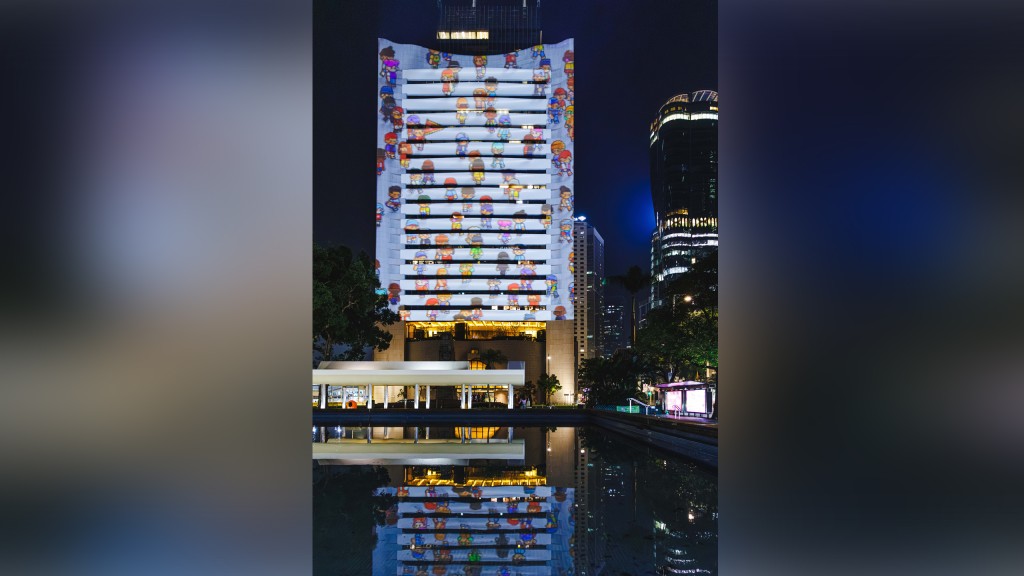
To mark the 60th anniversary, the HKSAR government launched a series of campaigns, including pop-up exhibitions and school tours.
The centerpiece is the "Dancing Water Drops Exhibition" at Tamar Park until June 13, featuring a towering 28.8-meter water-drop sculpture.
Dongjiang is one of the three tributaries of the Pearl River, flowing from northeast to southwest in Guangdong province. And as of 2020, the SAR has signed a total of 12 Dongjiang water supply agreements with the Guangdong government since the first signing in 1960.
The SAR has signed a new three-year agreement with Guangdong authorities in late 2023, with the annual ceiling of prices rising to HK$5.14billion in 2024, HK$5.26billion this year and HK$5.38billion next year, compared to HK$4.89 billion, HK$4.95 billion, and HK$5.02 billion from 2021 to 2023.
A water price deduction mechanism called "package deal deductible sum" remains, which allows a reduced price according to the actual amount of water supplied.
Under the arrangement, the discount rates for each cubic meter of untaken Dongjiang water from 2024 to 2026 increase to HK$0.315, HK$0.323, and HK$0.331, which will be deducted from the annual limit prices.
The mechanism will be maintained at least up to 2029 after its first adoption in 2020.
Hong Kong is not the only city facing water shortage while its neighboring city Singapore has adopted “four national tips”, including expanding local water catchment area, importing water from Johor, re-producing wastewater and seawater desalination, to ensure water supply.
(Ayra Wang)