Read More
The Hong Kong Museum of History (HKMH) has unveiled several exhibitions recently, including “Estórias Lusas - Stories of the Hong Kong Portuguese”. This exciting exhibition invites visitors to explore the rich lives of Hong Kong Portuguese through over 250 exhibits from local Portuguese families and organizations, along with more than 30 audio-visual and interactive multimedia programs.
ADVERTISEMENT
SCROLL TO CONTINUE WITH CONTENT
Hong Kong is a vibrant cultural melting pot, home to a diverse mix of ethnicities. With British colonial rule in Hong Kong creating numerous opportunities in the mid-19th century, many Macanese opted to relocate, seeking better prospects in this bustling city. From the mid-19th century onward, the Portuguese formed one of the earliest foreign communities in Hong Kong.
The exhibition at the HKMH highlights the Portuguese community’s contributions to various sectors, including governance, the legal profession, business, sports, botany, defense, and leisure. It also showcases the community’s unique traditions and cultural practices.
Guest Curator Francisco A. Da Roza offered insights into how the exhibition evolved from initial fragments of concepts into a cohesive and interactive experience. “We aimed to share the stories of the Portuguese community—our culture and contributions,” he explained. “Since settling in Hong Kong, we have integrated into society, with our members considering the city home.”
Da Roza, who has a deep connection to the community, articulated his own identity: “I grew up in Macau and Hong Kong and spent much of my life here. I consider myself a Hongkonger. I have family and friends here. I built my career here. At the same time, because of my heritage I also consider myself a cultural chameleon easily interacting with different peoples.”
The preparation for the exhibition involved extensive research and visits to Portuguese communities worldwide, including San Francisco, Vancouver, and Toronto. Da Roza leveraged his connections within the community to engage with members and gather stories and artifacts for the exhibition.
“I even traveled to Lisbon to meet with the people at the Archive and Library Division of the Foreign Affairs Ministry” Da Roza noted.
Family recipes from 1956 was Da Roza’s most remarkable exhibit in the exhibition. Some Portuguese housewives used phonetic translation of Cantonese names in recipe collections, with the weights in catties and taels, to buy specific ingredients from local grocers. A primary source of history, the recipes give a view of the everyday life of a Portuguese housewife and her family.
When asked about the central message he hopes visitors will take away, Da Roza answered, “To revive collective memory and to introduce our community. Our community has historically acted as a bridge between cultures, and our contributions are substantial.”
The exhibition also owes much to the support of Club Lusitano, a private club established in 1866 that serves the Portuguese community in Hong Kong.
Patrick Rozario, President of Club Lusitano, praised the interactive elements of the exhibition, emphasizing its significance for the community. “The exhibition is crucial for us, especially as we are a smaller community now. It showcases our history and contributions since the 1800s, reinforcing our integral role in Hong Kong’s development.”
Rozario elaborated on the significance of reconnecting with the diaspora. “Many young Portuguese Hongkongers have family ties here but have grown up abroad. This exhibition provides them with a chance to rediscover their roots and understand their heritage, which is vital for maintaining our community’s identity.”
He also highlighted the importance of collaboration between the Portuguese community and Hong Kong’s broader society. “Our contributions extend beyond our community; they enrich the city as a whole. We have always sought to integrate and give back, whether through education, sports, or cultural initiatives.”
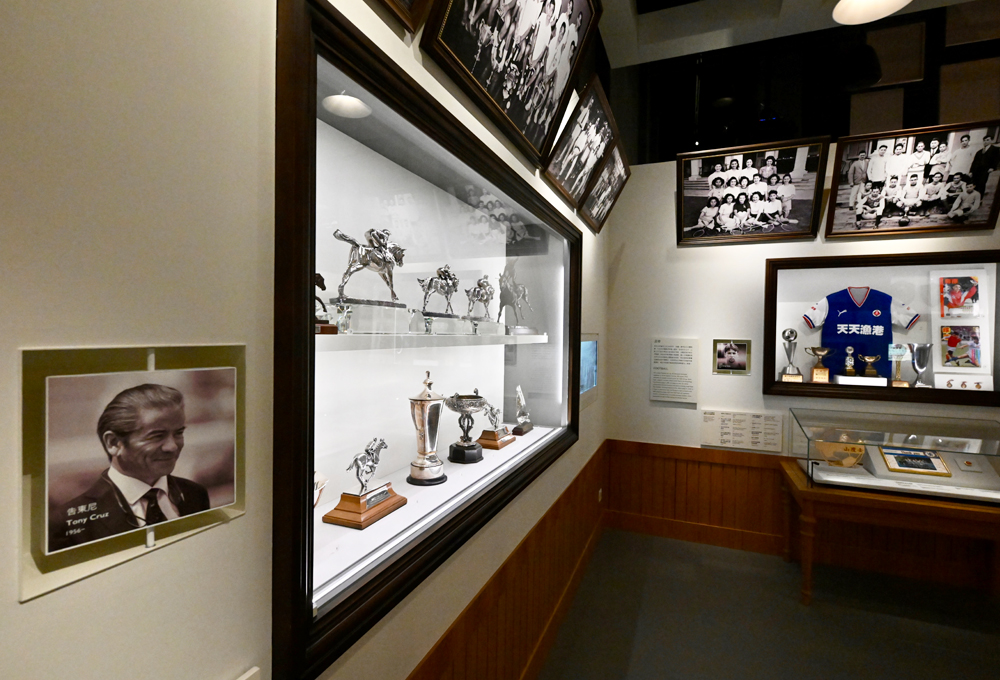
The Portuguese community are sporting enthusiasts. The exhibition showcases contributions of well-known local sporting figures including Arnaldo de Oliveira Sales, Tony Cruz and Leslie George Santos, who greatly helped promote Hong Kong sports.
Reflecting on the legacy the exhibition aims to leave, Rozario concluded with a hopeful vision, “We aspire to inspire the next generation to carry forward this legacy of contribution. By fostering a sense of belonging, we encourage them to return and actively participate in our community’s future.”
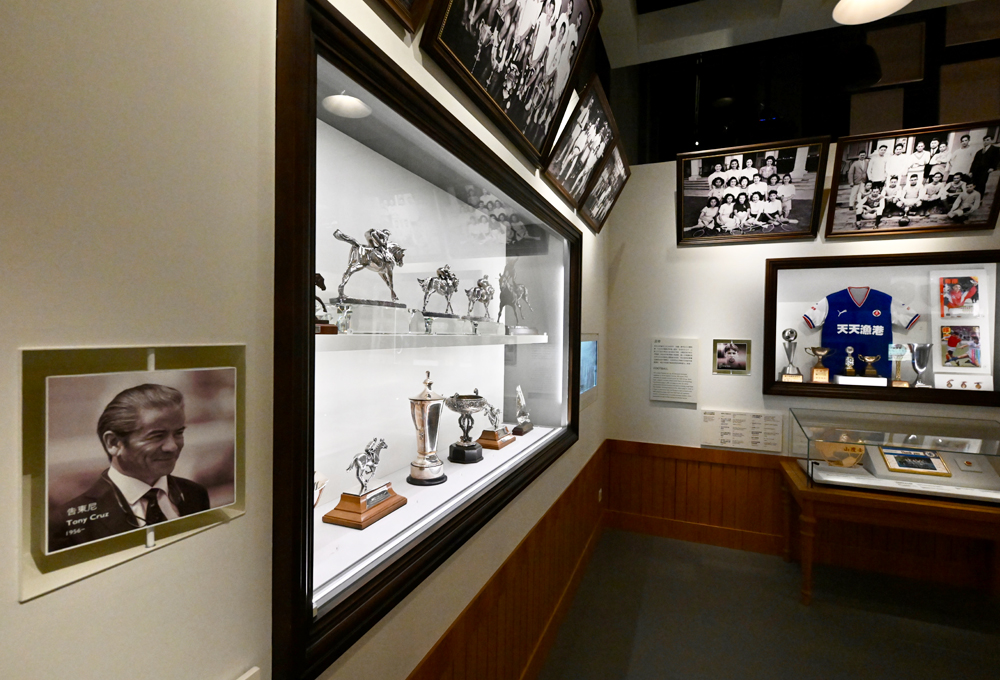
Sporting contributions from the Portuguese community in Hong Kong.
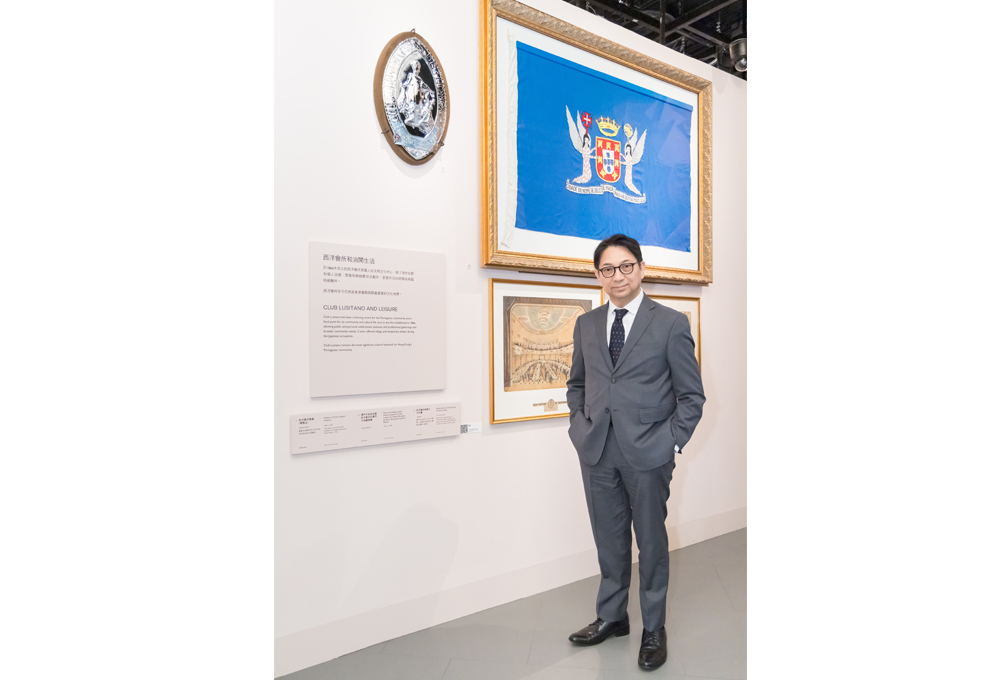
Patrick Rozario, President of Club Lusitano.
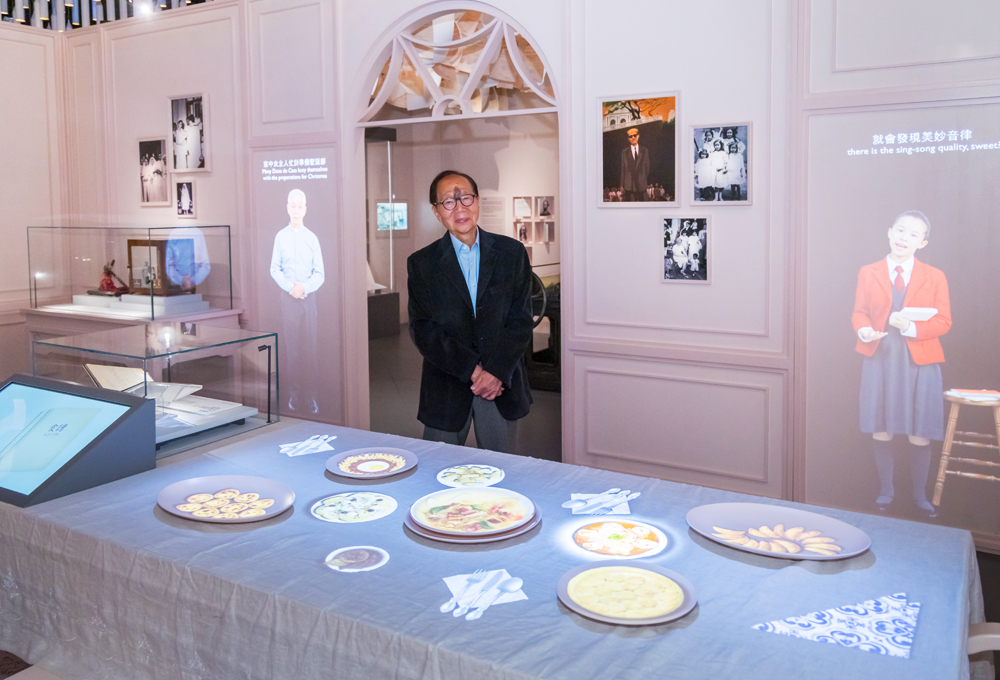
Francisco A. Da Roza, Guest Curator.
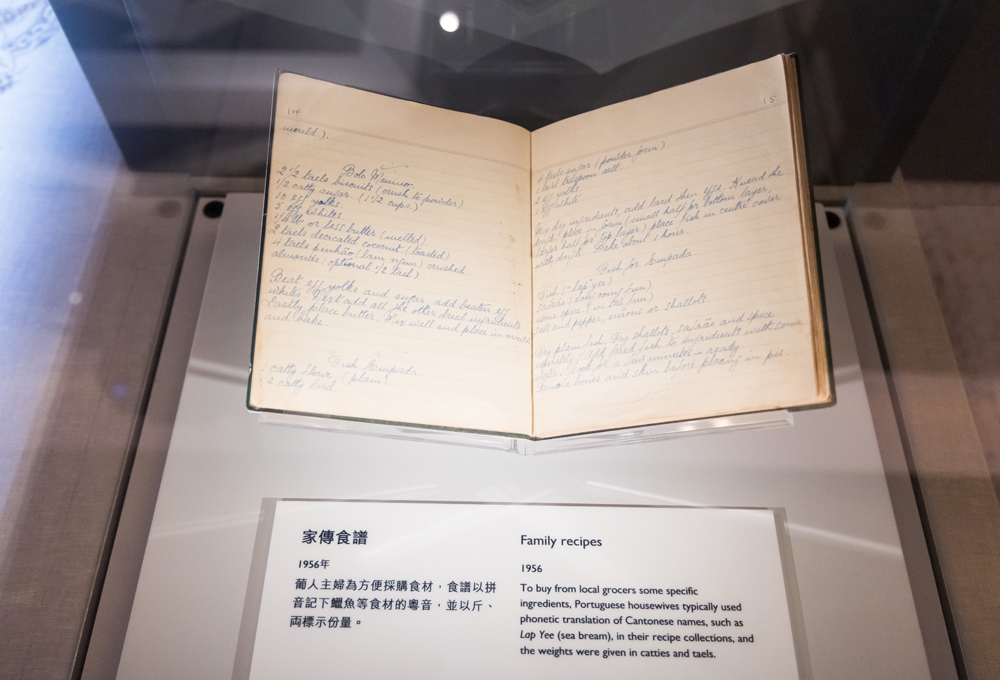
Family recipes from 1956.