Read More












Six senior counsel appointed
31-03-2026 13:54 HKT


Approval granted for Kai Tak’s six-stop Smart & Green Mass Transit System
31-03-2026 16:27 HKT



The Construction Industry Council (CIC), in collaboration with the Development Bureau (DEVB), proudly hosted the CIC Global Construction Digitalisation Forum and Exhibition 2024 (GCDFE) at the Hong Kong Convention and Exhibition Centre from 29 to 30 October. The two-day event concluded triumphantly, drawing over 10,000 physical and online visits, underscoring the growing interest and commitment to digital transformation in the construction industry.
The event’s success was amplified by the participation of key industry leaders, professionals, and government officials. Ir Prof. Thomas Ho, Chairman of CIC, noted, “This event marks a significant milestone in our industry’s journey. Our focus today extends beyond it, encompassing a wide array of digital technologies... revolutionising every aspect of construction.”
Ms. Bernadette Linn, Secretary for Development, Development Bureau remarked, “The construction industry has been a cornerstone of Hong Kong’s remarkable success. However, we must confront a series of pressing challenges. I firmly believe that one of the keys... to overcoming these challenges lies in embracing digitalisation.” She emphasised the government’s proactive measures since 2018 to advance digital transformation within the construction sector.
A highlight of the event was the Forum on Future Construction, which explored the transformative potentials of digital technologies in construction. The afternoon session on Smart Built Asset introduced upcoming initiatives like the “CIC Construction Innovation Award 2025” and the “CIC Construction Innovation Expo 2025.”
The forum featured more than 30 industry experts from around the world, sharing insights on technologies like Building Information Modelling (BIM) and Modular Integrated Construction (MiC), and discussing their practical applications in shaping the future of construction.
The CIC is constantly facilitating workers in the industry to incorporate new robotics and pays more attention to technologies that emphasise onsite safety. “Last year we had recorded a number of fatal construction accidents, which is a lot and this year, we’ve also learnt some disheartening news; to minimise the number of accidents, we’re running the Smart Site Safety System Labelling Scheme (4SLS) with the government with an aim to foster a wider application of 4S in the industry,” Ir Albert Cheng, Executive Director of the CIC said. He specifically mentioned the importance of safety-related technology: “Zero accidents is the vision for our industry colleagues. In 2023, there were nearly 20 fatal accidents, and so far this year, there have been around 8. We are committed to promoting digital technology, hoping to further assist the industry in enhancing safety performance and improving efficiency.”
Cheng pointed out that with the development of innovative technology, the industry can improve construction site safety through various innovative technologies and solutions, and better respond to challenges such as labour resources and cost-effectiveness. “For example, the Smart Safety Site System (4S) allows managers to comprehensively grasp the safety situation of the site, effectively respond to potential safety risks, and improve site safety and management efficiency.” He is pleased to see that GCDFE has received support from many technology practitioners in the industry, actively participating in exhibitions to showcase the latest technological solutions.
The exhibition component of GCDFE was thematically divided into “Smart Site Safety System (4S)”, “Digitalisation Platform”, “Robotics”, and “Research and Innovation”, showcasing cutting-edge technologies such as Digital Twin and Layout Robot. Over 40 exhibitors have participated to showcase their latest products and technical achievements.The Main Stage and Business Matching Area facilitated knowledge exchange and business networking among exhibitors and visitors.
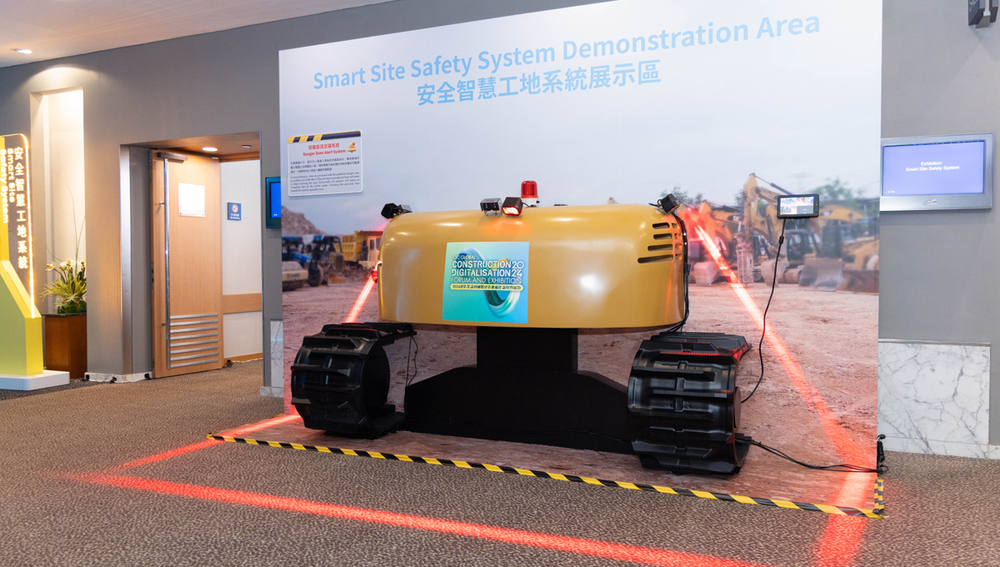
Another highlight of the exhibition was the “Danger Zone Alert System,” showcased in the 4S area at the entrance of GCDFE. This system, employing sensors and AI cameras, is designed to alert personnel immediately if they enter hazardous areas like those with heavy machinery or lifting operations. The system triggers alarms and lights to warn individuals, ensuring safety by preventing accidental intrusions into danger zones.
isBIM and Revizto are innovative leaders in the architecture, engineering, and construction (AEC) industry, dedicated to enhancing collaboration and efficiency through advanced BIM solutions. isBIM specialises in BIM solutions for the AEC industry. While Revizto, a collaborative software platform that enhances communication and coordination among project stakeholders in the AEC industry. By integrating 3D models with real-time issue tracking and project management tools, it streamlines BIM intelligence, making it accessible and actionable for the entire project team.
Varadise Limited are at the forefront of architectural and construction innovation, delivering cutting-edge BIM consultancy and digital twin solutions that empower clients to optimize project outcomes and foster sustainable projects.
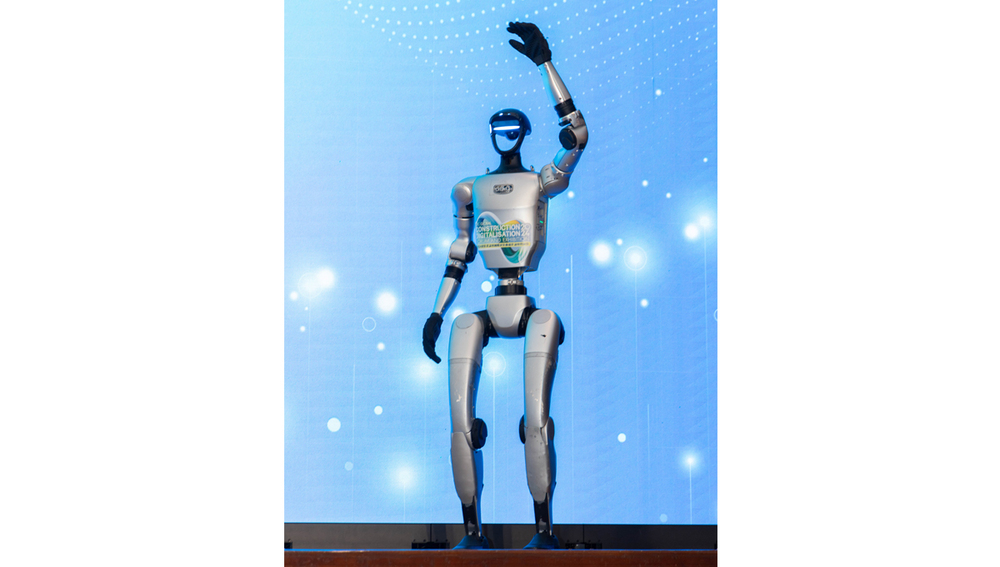
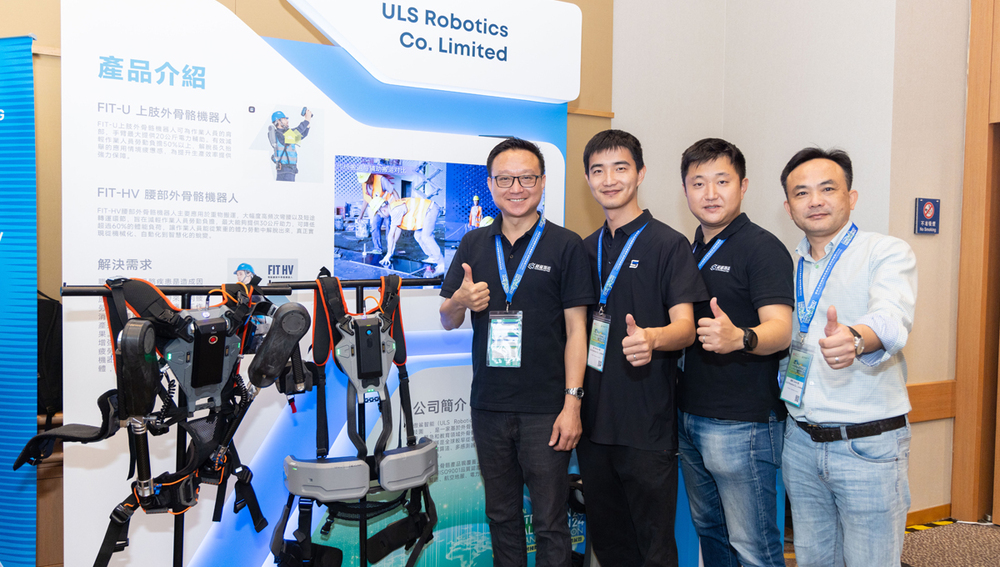
Googol Robot and ULS Robotics Co. Limited are two out of the many onsite robotics showcased in the exhibition. Googol Robot offers layout robots that help to transform BIM to the construction site. It utilises long-distance, high-speed millimeter-level tracking and positioning technology, allowing for wire laying accuracy of ±2mm within a 60-meter range, notable projects include Shanghai Grand Theater and China National Convention Center. For physical support, ULS Robotics Co. Limited offers two exoskeletons. FIT-HV waist exoskeleton robot is primarily used for heavy lifting, providing up to 50 kg of assistance, which can reduce physical strain by over 60% and FIT-U upper limb exoskeleton robot can offer up to 20 kg of powered assistance to the operator’s shoulders and arms.
The “CIC Construction Digitalisation Award 2024” ceremony at GCDFE recognised local projects and organisations for promoting digitalisation. Cheng said, “The award highlights the remarkable achievements of digitalisation leaders... fostering a culture of continuous improvement.”
In the face of issues such as labour shortages, high construction costs, and an aging workforce, Cheng reiterated that digital transformation is key to solving these related problems. He mentioned that the CIC has developed relevant roadmaps in coordination with the government, including the requirement for all projects over $300 million to be fully digitised starting in 2026, and from 2029, private buildings must use BIM to submit plans. Cheng also stated that the CIC will fully support the industry, “To support the industry’s transformation, the government has provided a fund of $2.2 billion for innovation and technology in the construction industry, which will be managed and approved by the CIC, including assisting enterprises in purchasing equipment and training personnel. We are also developing an AI chatbot to assist workers in instantly querying safety information, expected to be launched in the first quarter of next year. We hope to further enhance construction site safety levels and promote the construction industry towards a new milestone of intelligent development.”
In the future, the CIC remains committed to fostering digital transformation within the industry, promising ongoing support through events, training courses, webinars, and workshops.