Read More









Officer injured in 2005 knife attack dies after over 20 years paralysed
17-09-2026 00:27 HKT

Naked woman spotted strolling through Lan Kwai Fong late at night
16-09-2026 18:04 HKT



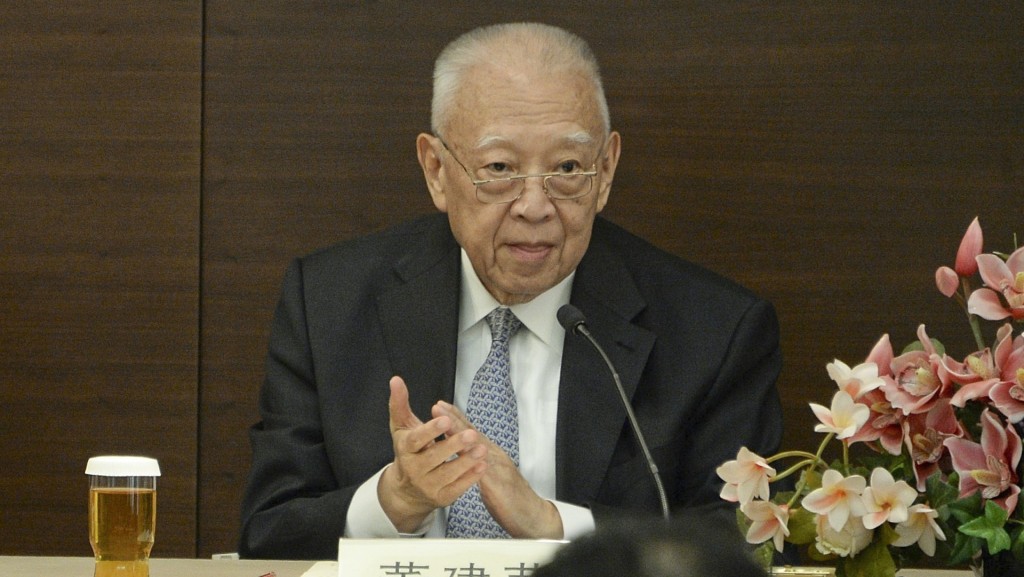
This article is extracted from “NSL Chronicles II”, an RTHK programme aiming to facilitate the general public to better understand the National Security Law. The programme is hosted by Hong Kong member of CPPCC Thomas So and Head of Centre for the Rule of Law of HKPRI CM Chan. Starting from 24 June, the English language programme will be aired every Saturday on RTHK TV31 at 8pm. Archives are available at rthk.hk, RTHK YouTube Channel and mobile apps RTHK Screen.
********************
Most regions of the world today have laws safeguarding national security, with special agents to enforce such laws. This is an inescapable duty for any responsible governments. Safeguarding national security and Hong Kong’s rule of law so that it is safe for the long term is the cornerstone to society’s good and sustainable development — it helps maintaining life in peace and contentment, stabilises the atmosphere for trade and investment, and raises confidence in local as well as foreign investors.
Since the introduction of the Hong Kong National Security Law (the NSL), real cases have emerged and our courts ruled on them. These rulings make certain revelations about how the NSL has been carried out. In a common law jurisdiction, court rulings help the public understand the law better. From cases already concluded, our citizens can know more about the meaning behind the written law. The discussion that remains is: can the current NSL protect our country adequately?
Mr. Chris Tang Ping-keung, our Secretary for Security, explained the NSL for us, ‘National security is ensuring security of our territories, sovereignty, right of administration and our people, so that happiness can be attained and our economy can be developed.’ Article 2 of the Chinese NSL defines national security: the power to govern, sovereignty, unity and territorial integrity, the welfare of the people, the sustainable economic development, as well as other major national interests being in a state without relative danger and without international or domestic threats, and the ability to ensure a continued state of security.
We can understand how the NSL affects us by knowing its traditional sense and its extended, non-traditional sense. Traditionally, national security is about protecting the physical territory as well as the governing regime. Secretary Tang explained more, ‘We need to ensure that the people are safe and that the government is stable and steady, so that our citizens can live and work safely and our economy can develop steadily. In 2019, we saw social unrest in Hong Kong, when our citizens were so worried about personal safety they did not dare go outdoors, with lots of shops closed for business as well. When the people lose their sense of well-being, our economic development is obstructed as well.’
As for territorial security, Secretary recalled that, after the Opium Wars that started in 1840, our country was forced to sign the Treaty of Nanking and the Convention of Peking, which ceded Hong Kong to the British Empire. During the Japan Invasion of China, more territories were occupied by the Japanese Imperial army and national security was under dire threat.
For the past two years, foreign countries have frequently raised concerns about the freedom of speech and freedom of demonstration in Hong Kong, in the expense of noticing one fact: Articles 4 and 5 in the NSL states that the International Covenant on Civil and Political Rights still applies to Hong Kong. According to the covenant, national security is safeguarded while respecting and guaranteeing human rights. This principle is written into the NSL. On the other hand, the covenant itself states that human rights are not without limits: for public safety and public hygiene reasons, reasonable and proportional limits can be placed. The principle is also reflected in past court rulings.
The NSL specifies that trials related to national security must be done under a special system. When determining whether a defendant will be allowed bail or given a trial by jury, the words in the NSL, instead of usual practice under the legal system, form the grounds for decisions. As past court rulings have already become precedents for similar future cases, a trial by jury is not the only basis of a fair trial; juries are not usually given for trials in Hong Kong’s district courts or their lower courts; for certain serious offences against national security in the USA, defendants are usually denied bail.
Since the introduction of the NSL, public discussion has extended from the tradition sense of territorial and regime security to some non-traditional senses because of new court rulings. They include disease control, cyber security, financial security, as well as science and technology security, all of which merit our concern.
In the past two years, with the COVID-19 pandemic in Hong Kong, some of our measures and quarantine practices included blocking nationals from other countries entering our borders, which placed limits to freedom and immigration. These very measures show us that public health and hygiene do form part of national security.
Some non-traditional topics of national security involve cyber security. As Hong Kong is an international financial centre, the flow of funds is not restricted. This means more care must be taken so that the operation of our financial system does not undermine national security. In foreign countries, economic activities are often restricted in the name of national security. If a transaction can affect national security, many nations feel entitled to block or ask to terminate a transaction.
The United Kingdom introduced their National Security Bill in 2022 specifically against activities by foreign intelligence in the UK. Laws against the crimes of sabotage and foreign interference are also introduced, prohibiting foreign powers from destroying their financial system and cyber network through their own activities or with the help of local agents. The bill also grants powers to law enforcement agencies to detain suspects for up to 14 days and to stop them from receiving legal aid. Activities of suspects is also restricted. This shows us that laws on national security are very common in European and North American countries as well.
Having experienced the ‘black riots’ in 2019-2020, our nation promulgated the Hong Kong National Security Law. Most people are focused on the four crimes against national security, namely secession, subversion, terrorist activities and collusion with a foreign country or with external elements to endanger national security. There remains to be done legislation on Article 23 of the Basic Law, which specifies seven types of crimes, five of which are not listed in the NSL. These are treason, sedition, theft of state secrets, foreign political organisations or bodies conducting political activities in Hong Kong, and political organisations or bodies in Hong Kong establishing ties with foreign political organisations or bodies. These are still awaiting legislation.
As legislation on Article 23 of the Basic Law is yet done, for now, prosecutors must cite Articles 9 and 10 of the Crimes Ordinance (Cap. 200), in which sedition refers to bringing in people’s hatred against the government or inciting hatred and conflict between different social classes. Secretary Tang commented, ‘Many cases concluded in the last two years tell us that, such as in the Tam Tak Chi case (HKSAR v TAM TAK CHI, DCCC 927, 928 and 930/2020), the court has made clear that Articles 9 and 10 in the Crimes Ordinance fit the requirements in the Basic Law as well as the Hong Kong Bill of Rights Ordinance (Cap. 383). Also, in the “Sheep Village case” (HKSAR v LAI MAN LING AND OTHERS, CDCC 854/2021), the court makes clear again that when inaccurate or seditious messages incite hatred among people in society for the government, hence causing social instability and even endangering the nation, it becomes a crime.’
Secretary Tang continued, ‘Under current laws, there is already certain safeguards for national security. Nevertheless, these laws must also progress with the times along with social development. We already have laws against computer-based crimes; on cyber security, legislation sanctioning crowdfunding must also be done, so that people trying to break the law cannot use it to endanger national security. We also need to make laws to protect our essential infrastructure and cyber network, so as to continuously perfect our laws.’ He went on, ‘Safeguarding national security, the government, through law enforcement, prosecutions and rehabilitation of offenders, stops and punishes them. On defensive work, the government must continue legislation, publicity and education of the public, so that our citizens understand more about national security and the risks it faces, and so that we can do our best to lower these risks, prevent them and defend against them. To cultivate a sense of national security, we must start with knowing and self-identifying with our country and our people.’