Read More











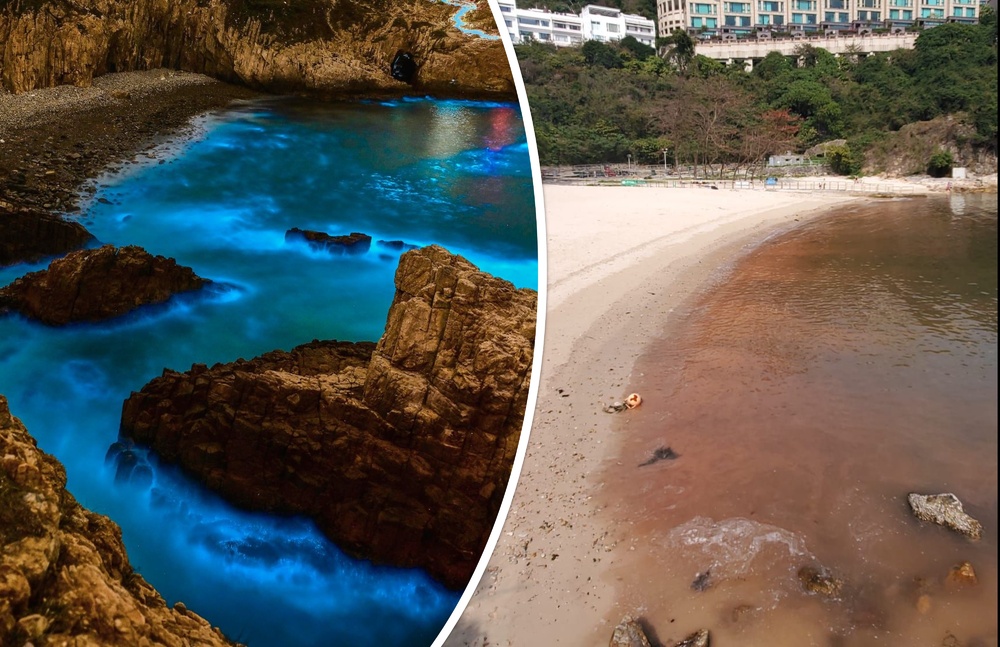
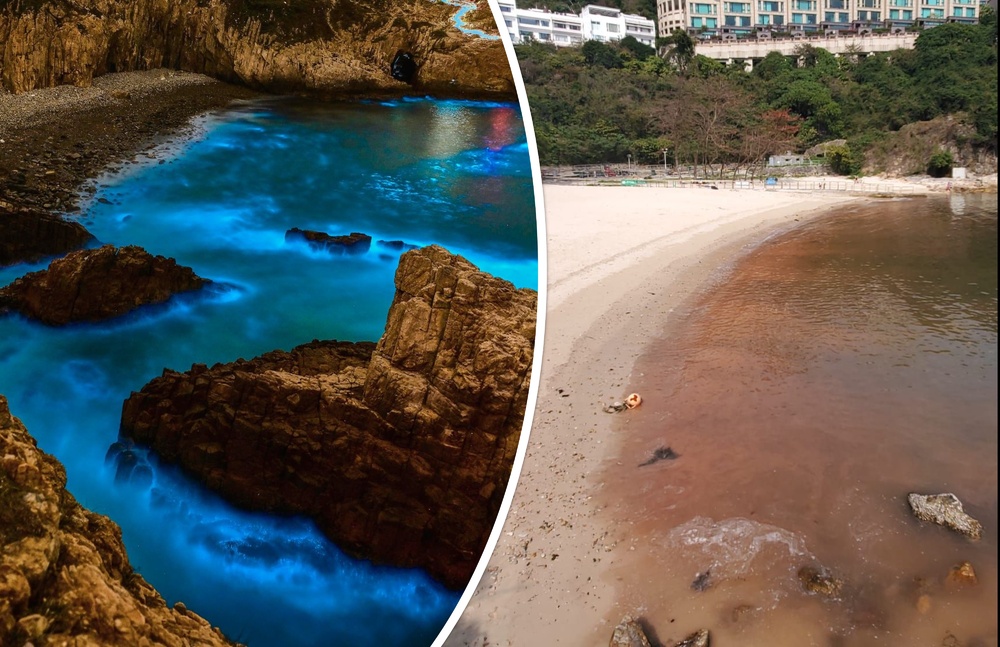
A blue fluorescent glow known as “blue tears” spotted along Sai Kung’s coasts over the weekend is actually red tide during daytime, and the condition of the bloom at Hong Kong beaches today is showing improvement.
The blue tears are caused by Noctiluca scintillans through a chemical reaction called bioluminescence. Although these bioluminescent organisms can create scenic splendor, they are a form of red tide that can harm marine life.
On Tuesday afternoon, the condition of the red tide sighted in Turtle Cove beach in Tai Tam since yesterday has been improved.
The bloom can be seen cleared away from the waters offshore, with a small amount of red-colored water still remaining on the shoreline of the beach.
The Leisure and Cultural Services Department has also put up notices on the beach notifying the public not to enter the water for the sake of their own safety due to the suspected red tide.
?In view of multiple red tide sighting reports in Hong Kong waters over the last few days, the Inter-departmental Red Tide Working Group on Monday reported that sample analysis results showed that all these red tides caused by Noctiluca scintillans are non-toxic.
A spokesman for the working group said, from March 12 to 14, eight red tides were spotted at Big Wave Bay Beach, Rocky Bay Beach, Middle Bay Beach, South Bay Beach, Repulse Bay Beach, Deep Water Bay Beach, Stanley Main Beach and Chung Hom Kok Beach, Hong Kong Island, respectively.
Another three were spotted at the Tathong Channel to Lei Yue Mun, Victoria Harbour near Hung Hom and the Southern waters of Hong Kong respectively.
“Various factors, such as nutrient level, water temperature, salinity, current, water stratification may contribute to red tide formation. It is difficult to isolate a single cause. Given the wide extent of the red tides, the situation may last for several days,” said the spokesman.
The spokesman noted that as the weather and hydrological conditions change, the red tides will naturally dissipate when the number and density of algae in the water decrease.
Meanwhile, the Agriculture, Fisheries and Conservation Department said no abnormality has been observed for the fish in all fish culture zones as at 4.30pm yesterday.
The department said it will continue to closely monitor the situation and provide appropriate assistance when needed.
(Photo: Facebook - Brian Chiu)