Read More


Amber rainstorm warning issued at 11am
33 mins ago


Night Recap - April 3, 2026
16 hours ago

Iran demands transit fees in yuan, stablecoins for Strait of Hormuz passage
03-04-2026 02:45 HKT
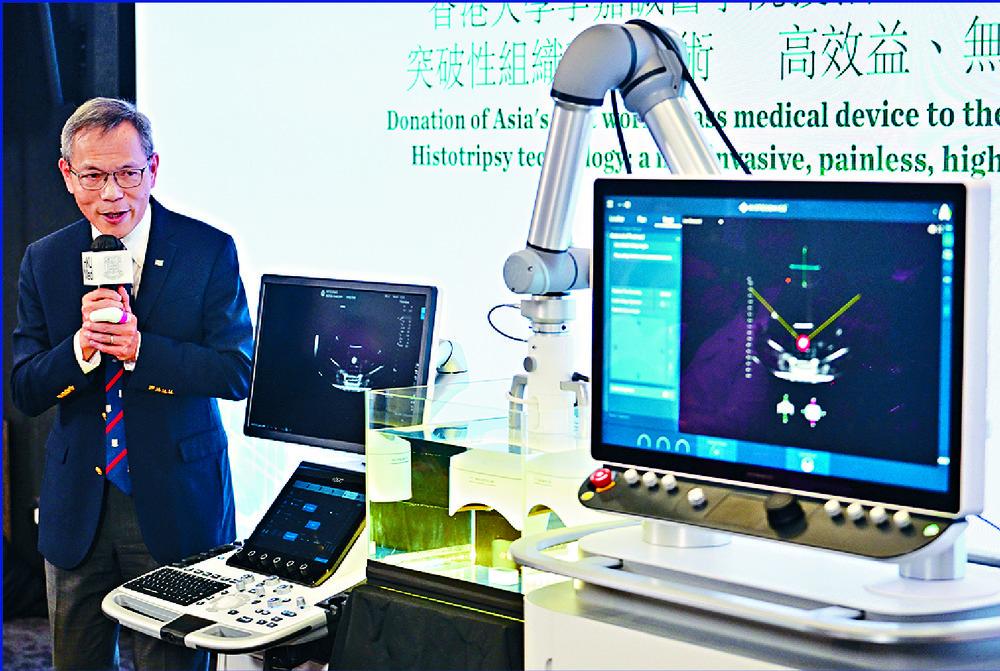
A noninvasive and painless treatment for liver cancer will be available after the University of Hong Kong medical school received new equipment that utilizes high-intensity ultrasound waves to precisely destroy cancer cells.
It is understood that each histotripsy treatment costs US$8,000 (HK$62,400).
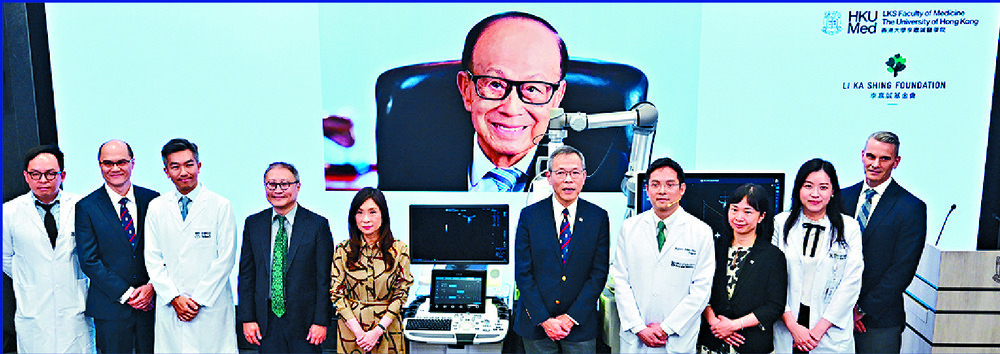
The game changer was made possible by equipment donated to HKU by the Li Ka Shing Foundation, which also supported six doctors and radiologists to undergo specialized training at US manufacturer HistoSonics to ensure they are comprehensively versed in utilizing it.
Li Ka-shing, the 96-year-old chairman of the foundation, joined yesterday's press conference via video."[The technology] is incredible!" he said.
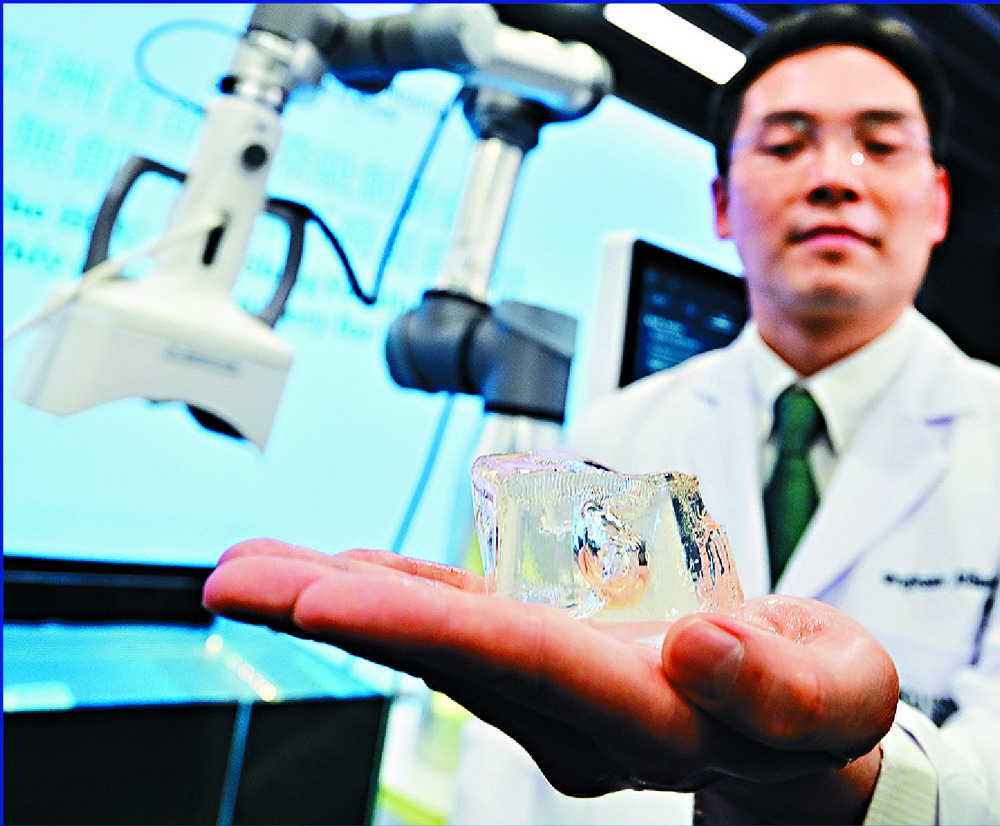
The foundation has set aside more than US$6 million as part of the donation of the equipment and patient treatment, as well as to help cover the training of medical staff in the United States.Albert Chan Chi-yan, clinical professor at the School of Clinical Medicine at HKU, said the equipment can transmit high-intensity, focused ultrasound to the cancer tissue, forming microbubbles.
The bubbles will cause rapid cell expansion and collapse, creating mechanical waves to liquefy and kill the cancer cells without damaging healthy tissue."The technology kills cancer tissue 100 percent. The high precision would minimize patients' adverse effects. The whole procedure only takes five minutes," Chan said.
"Compared to existing treatments, the procedure involves no incisions or radiation, and offers a painless, noninvasive, scarless, bloodless and highly efficient surgery with no risk of infection or metastasis of liver cancer."The histotripsy treatment is suitable for primary and metastatic liver cancer patients who have single or multiple tumors with a volume of less than five centimeters but have good liver function.
Patients with mild to moderate liver scarring and cancer patients waiting for liver transplantation for controlling treatment can also benefit from the therapy, he said. Eligible patients should be able to undergo general anesthesia.The technology was approved by the US Food and Drug Administration in October last year.
Nearly 400 US patients have received the treatment, with clinical data showing those who underwent the procedure recovering well after the operation. The patients also did not suffer from any local recurrence of the targeted tumors or major complications, indicating the treatment was safe and effective.Ten patients will be sponsored by the foundation to receive the treatment as part of the initial clinical trials to be conducted at Queen Mary Hospital.
A second system has been donated by the foundation to Chinese University's Faculty of Medicine and is expected to arrive by year-end. Another 10 patients will be treated at CUHK in Sha Tin.Liver cancer is the fifth most common cancer in Hong Kong, with 1,700 to 1,800 new cases a year.
The equipment's developer is studying to cure more types of cancer, including kidney and pancreatic cancer, with the new therapy.henry.siu@singtaonewscorp.com