Read More



Night Recap - June 2, 2026
4 hours ago




Typhoon signals depend on low-pressure system’s track and speed, say HKO
01-06-2026 20:17 HKT
HK to bake in 36-degree heat on Friday before five-day rain spell
01-06-2026 17:31 HKT
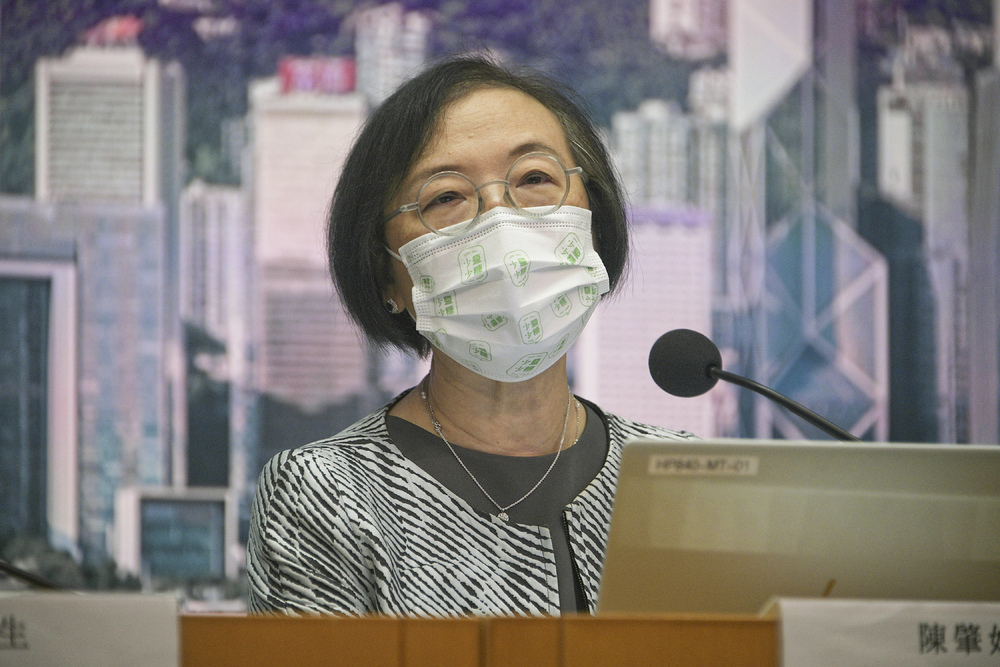
Specialists who are non-permanent residents will be allowed to work in Hong Kong's public medical facilities to solve the brain drain of doctors under a special scheme, Secretary for Food and Health Sophia Chan Siu-chee announced.
The Executive Council yesterday approved relaxing the requirements for qualified non-local trained doctors to apply for special registration to practice in Hong Kong.
It covers non-Hong Kong permanent resident doctors with recognized medical and specialist qualifications.
In a press briefing yesterday, Chan announced three revisions of the Medical Registration (Amendment) Bill 2021 and said she hoped the amendment bill could be passed by the Legislative Council by the end of term on October 30.
The bill, which was tabled to Legco in June, initially only covers Hong Kong permanent residents who graduated from a list of some 100 prestigious medical schools allowing them to work in local public hospitals without licensing exams.
But the first revision Chan proposed will allow non-locally trained specialists to work in public hospitals and the Department of Health under special registration, as long as their qualifications have been approved by the Hong Kong Academy of Medicine.
The second amendment will allow permanent residents who graduated with medical degrees overseas to take the licensing examination in the SAR and receive internship training afterwards.
The third will let non-locally trained specialists who are already working in public hospitals under limited registration enjoy a transition arrangement to special registration.
Chan said Hong Kong will be short of 1,610 doctors in 2030 and 1,694 in 2040. The brain drain of public doctors at the Hospital Authority and the Department of Health is the most serious, lacking 660 specialists and 49 specialist trainees.
"The adjustment came after considering the Hospital Authority lacks specialists the most," Chan said.
"These non-locally trained specialists can also help train local specialists."
But Chan said it was difficult to estimate how many foreign-trained doctors would come to Hong Kong under the scheme. When she explained to stakeholders and members of the bills committee, many said the requirement that doctors must be permanent residents was too strict and feared it would shut the door on those who do not fit the criteria.
"Mainstream opinions from the bills committee questioned the previous proposal's effectiveness in solving Hong Kong's problem of a serious manpower shortage, and [they worried] it cannot improve the quality of public health-care services," she said.
Asked if the amendments will open the floodgates to importing foreign doctors from anywhere, Chan said non-permanent residents are only allowed to practice in Hong Kong if they are specialists.
"Some [opined] we should completely ditch the requirement, even if the doctors are not specialists, but we're striking a balance here," she said.
Foreign trained non-specialists can only practice in the SAR if they are permanent residents and graduated from the list of recognized universities.
Chan assured the quality of foreign-trained specialists will be guaranteed as those working under the current "limited registration" and the new "special registration" pathways must pass the requirements upon the approval of the Medical Council.
Those with "special registration" must work full time for one of the four public health-care institutions - the Hospital Authority, the Department of Health and medical schools at the University of Hong Kong and the Chinese University of Hong Kong - for five years before they can switch to full registration and are able to turn to the private sector.
Director of Health Constance Chan Hon-yee said her department lacked specialists in pediatrics, family medicine, dermatology and pathology, but she said requirements for qualifications and medical performance would not be compromised just because of the brain drain.
The Hospital Authority welcomed the amendments, as it vowed to assess non-locally trained doctors' qualifications and experience to ensure the quality of its services. It added it would also try all means to retain doctors, as well as hiring more full-time and part-time medics.
Medical Association president Gabriel Choi Kin said he would "wait and see" whether the amendments could appeal to more foreign doctors.
"Specialists from poorer countries may be willing to practice in Hong Kong for a higher income but I'm not sure for those from other places," he said.
Non-governmental group Society for Community Organization welcomed the amendments and said they were likely to alleviate the overstretched manpower in public hospitals.
Exco member and Liberal Party lawmaker Tommy Cheung Yu-yan, who initiated importing non-locally trained doctors by a private bill, said Chan's announcement was "the most welcome news that can provide Hong Kong people with more choices."
But medical sector lawmaker Pierre Chan Pui-yin strongly opposed the amendments, which he said were "even more unacceptable than the initial proposal."
"[The amendments] will create fundamental destruction of professional autonomy in the medical sector. It's a wrong diagnosis and wrong prescription to the loss of manpower," he said.
Chan said to address the issue, authorities must improve the welfare and working environment in the public institutions to retain medics.