Amazon confirmed Friday it is financing a massive, private gas power plant in Texas that could become the single largest source of greenhouse gas emissions in the United States.
It is the latest example of tech giants going off the grid to get their AI operations online faster.
The news was first reported by market intelligence company Cleanview, which reviewed satellite imagery to connect three data center construction permits filed this week by Amazon to the gas plant, which is being developed by Pacifico Energy and is known as GW Ranch.
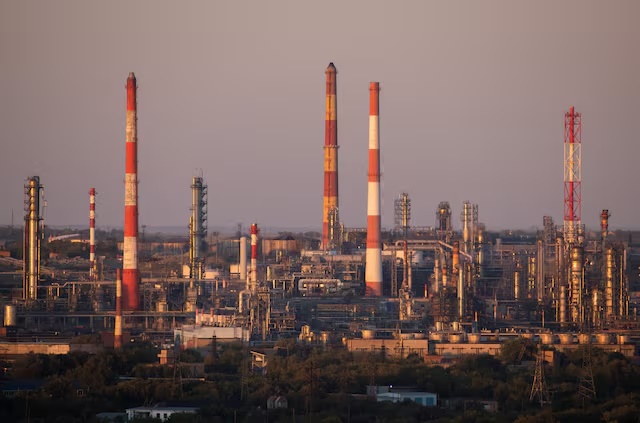
Previously filed permits for the plant show it would have 35 turbines and generate 7.65 gigawatts -- larger than any gas plant currently operating in the United States.
A bigger facility, at 9.2 gigawatts, is planned in Ohio under a public-private partnership involving SoftBank. That plant would connect to the grid as well as power a data center.
The Pecos County, Texas, plant would be permitted to emit more than 30 million metric tonnes of greenhouse gases a year -- more than any other single source in the country, though facilities rarely emit at their permitted ceiling.
Amazon said that by generating its own power, it would avoid passing the cost on to ordinary Americans, whose electricity bills have spiked as utilities charge consumers for the new infrastructure feeding the AI boom.
"Amazon believes in paying the full costs of powering our operations," a spokesperson said.
"Our new planned data center campus in Pecos County does just that: it's powered by new on-site generation that won't raise electricity costs for Texas families and designed to transition to grid-connected service as interconnection timelines allow."
The company added it was "exploring opportunities" for solar energy and battery storage on site, and it would make use of "non-potable, brackish groundwater" which it said would avoid putting pressure on the watershed.
Amazon added it remained committed to reaching net-zero carbon emissions by 2040 under The Climate Pledge, and had enabled 40 carbon-free energy projects totaling nearly 10 gigawatts in Texas.
Building so-called "behind-the-meter" power was once a niche practice, exemplified by Elon Musk's xAI deploying mobile gas turbines to its data center in Memphis in 2024.
xAI still accounts for most of the two gigawatts of behind-the-meter power online today, according to research by Cleanview, which estimates that around 97 gigawatts of such projects are planned involving every hyperscaler -- including Meta, Microsoft and Oracle, with enormous climate implications.
The precise figure depends on how many are built, how efficient the turbines are and how often they run, but the total emissions could easily top 200 million tons of carbon dioxide emissions a year, roughly equivalent to the annual emissions of more than 45 million cars, or about the entire carbon output of Pakistan.
"There are more efficient ways to use gas," John Rogers, an energy analyst for the Union of Concerned Scientists, told AFP. "Virtually none of these plants are proposing to use those, and that matters for on-site pollution, both direct and climate."
While less polluting than coal, gas plants are still significant sources of planet-warming emissions, and their operations, particularly upstream, also leak methane, the main component of natural gas and itself a powerful greenhouse gas.
Beyond their carbon footprints, they emit fine particulate matter, linked to a range of heart and lung problems; nitrogen oxides, which aggravate respiratory disease; and hazardous air pollutants including mercury, formaldehyde and benzene.
AFP